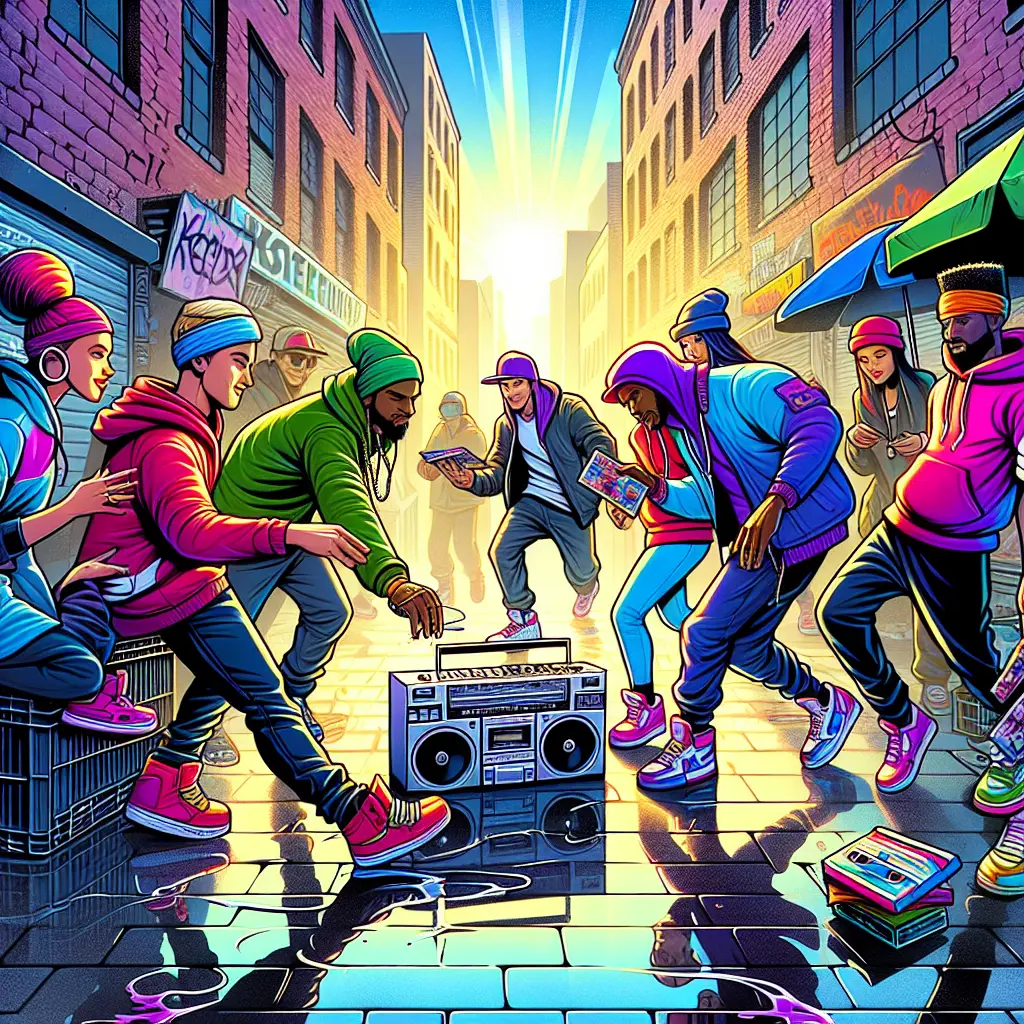
East Coast Boom-Bap and the 1990s Renaissance refers to a vibrant period in hip-hop when New York artists revitalized the genre with hard-hitting beats, soulful samples, and intricate lyricism. Characterized by its raw, drum-heavy production, this era saw legendary acts like Nas, Wu-Tang Clan, and The Notorious B.I.G. rise to prominence, shaping hip-hop’s sound and culture while emphasizing storytelling, street narratives, and lyrical prowess.
East Coast Boom-Bap and the 1990s Renaissance
East Coast Boom-Bap and the 1990s Renaissance refers to a vibrant period in hip-hop when New York artists revitalized the genre with hard-hitting beats, soulful samples, and intricate lyricism. Characterized by its raw, drum-heavy production, this era saw legendary acts like Nas, Wu-Tang Clan, and The Notorious B.I.G. rise to prominence, shaping hip-hop’s sound and culture while emphasizing storytelling, street narratives, and lyrical prowess.
💡 Key Takeaways
- Identify the defining sonic traits of East Coast boom-bap—drum-heavy, soul/jazz samples, and hard-hitting rhythms—and how they set the era's sound.
- Name key artists and groups (Nas, Wu-Tang Clan, Mobb Deep, The Notorious B.I.G.) and describe their contributions to the 1990s Renaissance.
- Explain how lyrical complexity, storytelling, and social commentary flourished in 1990s East Coast hip-hop.
- Describe the cultural and production factors— NYC crews, sampling culture, and independent labels—that fueled the revival and influenced future hip-hop.
❓ Frequently Asked Questions
What is East Coast boom-bap?
A hip-hop style from the East Coast, especially New York, defined by drum-heavy, sample-based production and a strong focus on lyricism and rhythm.
What does the '1990s Renaissance' refer to in this context?
A period when East Coast artists revitalized hip-hop in the mid-1990s with innovative beats and intricate rhymes, renewing interest in lyric-driven rap.
Which artists are emblematic of this era?
Nas, the Wu-Tang Clan, Gang Starr, and Mobb Deep are among the iconic acts associated with this movement.
What are the defining production traits of boom-bap?
Hard-hitting drums, crisp snares, soulful or funk samples, and a raw, gritty sound that foregrounds rhythm and lyricism.
When did this era peak or take shape?
Primarily in the mid-1990s, roughly 1994–1998, though its influence extends beyond those years.