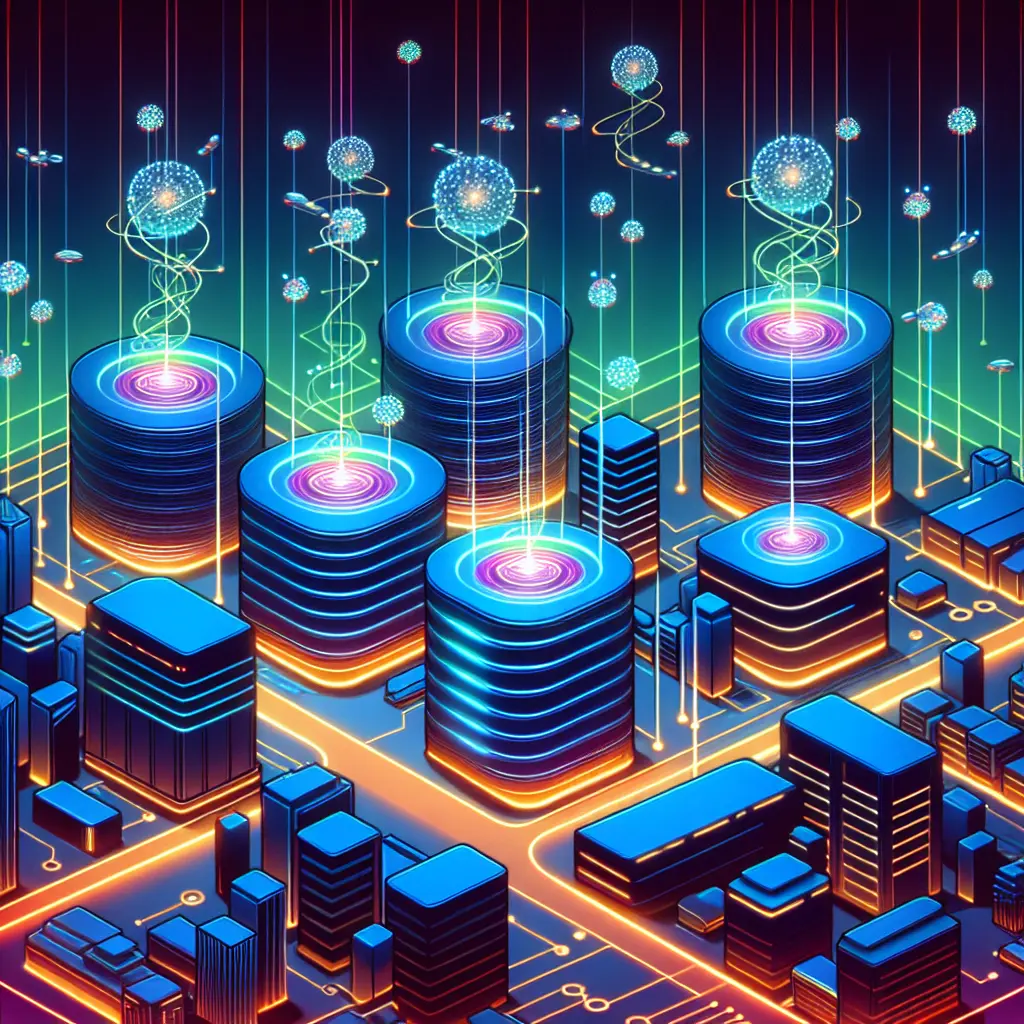
Edge Computing refers to processing data closer to its source, reducing latency and bandwidth usage by avoiding reliance on centralized cloud servers. Swarm AI draws inspiration from collective behaviors in nature, enabling decentralized, collaborative problem-solving among multiple AI agents. Combining Edge Computing with Swarm AI allows distributed devices to make intelligent decisions locally and collaboratively, enhancing efficiency, reliability, and scalability in real-time applications such as autonomous vehicles, smart cities, and industrial automation.
Edge Computing & Swarm AI
Edge Computing refers to processing data closer to its source, reducing latency and bandwidth usage by avoiding reliance on centralized cloud servers. Swarm AI draws inspiration from collective behaviors in nature, enabling decentralized, collaborative problem-solving among multiple AI agents. Combining Edge Computing with Swarm AI allows distributed devices to make intelligent decisions locally and collaboratively, enhancing efficiency, reliability, and scalability in real-time applications such as autonomous vehicles, smart cities, and industrial automation.
💡 Key Takeaways
- Explain edge computing and how processing data near its source reduces latency and bandwidth usage.
- Describe Swarm AI and how decentralized, collaborative AI agents can solve problems without a central controller.
- Compare edge and cloud computing, highlighting trade-offs in privacy, reliability, maintenance, and scalability.
- Discuss sci-fi and cyber-future implications of combining edge computing with swarm AI, including distributed decision-making and autonomous systems.
❓ Frequently Asked Questions
What is edge computing?
Edge computing processes data near its source on local devices or nearby servers, reducing latency and bandwidth usage.
How does edge computing differ from cloud computing?
Edge uses local or nearby processing with often limited resources and intermittent connectivity, while cloud relies on centralized data centers with scalable capacity. Edge lowers latency and can improve privacy; cloud offers extensive scalability.
What is Swarm AI?
Swarm AI is a decentralized approach where multiple AI agents collaborate, share insights, and coordinate actions to solve problems, inspired by collective behaviors in nature.
Why combine edge computing with swarm AI?
Combining them enables fast, distributed decision-making across devices, reduces reliance on central servers, lowers latency, and enhances resilience and privacy.
What are common challenges of edge + swarm AI?
Coordinating many agents, maintaining data consistency, limited device resources, security risks, and updating software across distributed devices.