Electrochemistry and battery materials focus on the study and application of chemical processes that involve the movement of electrons, particularly in energy storage and conversion devices like batteries. Careers in this field within engineering and technology involve developing new materials, improving battery performance, enhancing energy efficiency, and creating sustainable solutions for renewable energy storage, electric vehicles, and portable electronics. Professionals work in research, design, and manufacturing roles across industries driving technological innovation.
Electrochemistry & Battery Materials
Electrochemistry and battery materials focus on the study and application of chemical processes that involve the movement of electrons, particularly in energy storage and conversion devices like batteries. Careers in this field within engineering and technology involve developing new materials, improving battery performance, enhancing energy efficiency, and creating sustainable solutions for renewable energy storage, electric vehicles, and portable electronics. Professionals work in research, design, and manufacturing roles across industries driving technological innovation.
💡 Key Takeaways
- Understand the basic electrochemistry of batteries, including redox reactions, cell potential, and how electrons flow from anode to cathode through an external circuit.
- Learn how electrode materials (anode, cathode) and electrolytes determine a battery's capacity, voltage, rate capability, and safety.
- Get an overview of common battery chemistries (e.g., Li-ion, NiMH, lead-acid, solid-state) and how their operating principles differ.
- Identify typical degradation mechanisms—SEI formation, dendrite growth, structural changes—and general strategies to improve cycle life and safety.
❓ Frequently Asked Questions
What is electrochemistry?
The branch of chemistry that studies chemical reactions involving electron transfer and the conversion between chemical energy and electrical energy.
How does a rechargeable battery work (in simple terms)?
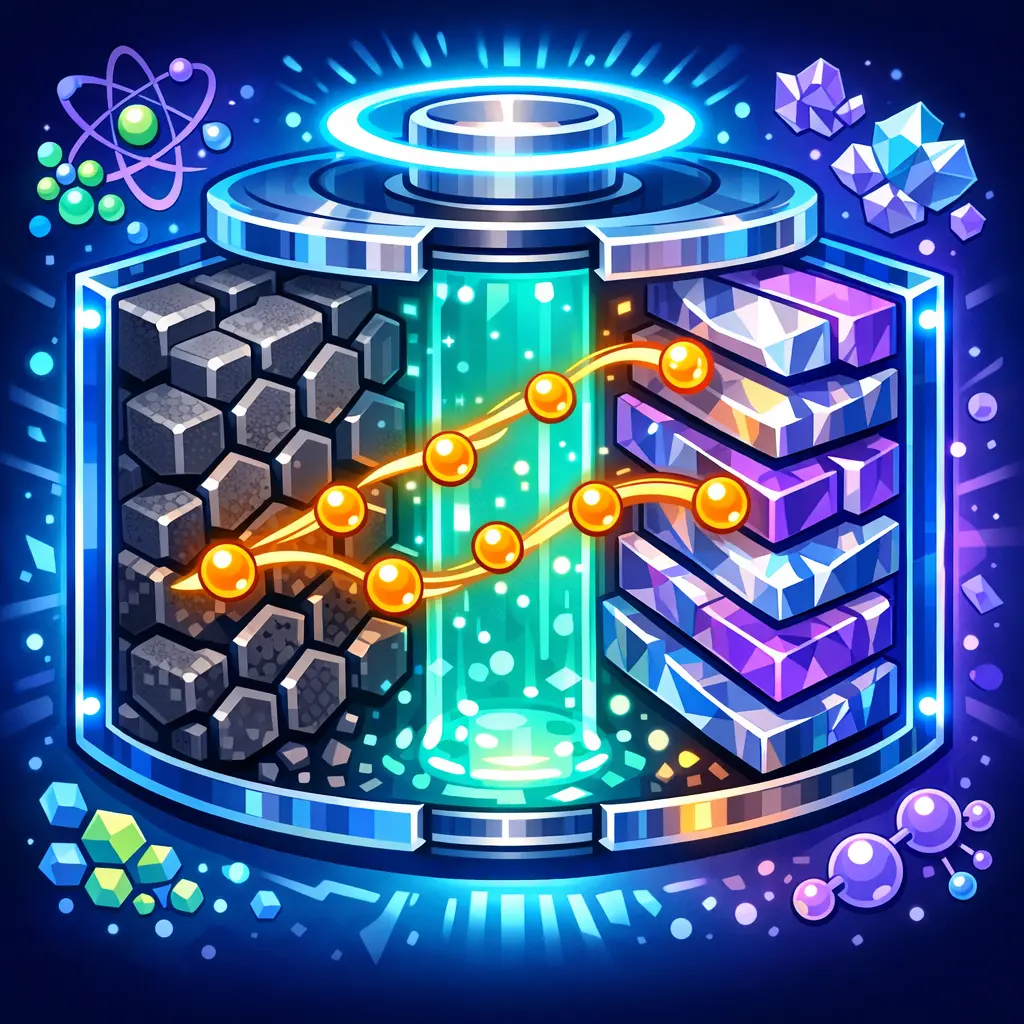
During discharge, ions move from the anode to the cathode through the electrolyte while electrons flow through an external circuit, delivering electrical energy; charging reverses the ion flow, restoring chemical energy.
What are the main components of a battery and their roles?
Anode: negative electrode where oxidation occurs; Cathode: positive electrode where reduction occurs; Electrolyte: medium allowing ion transport; Separator: prevents direct electrode contact.
What materials are commonly used in lithium-ion batteries?
Anode: graphite (silicon is explored); Cathode: LCO, NMC, or LFP; Electrolyte: lithium salt in organic solvents; Separator: porous polymer film.