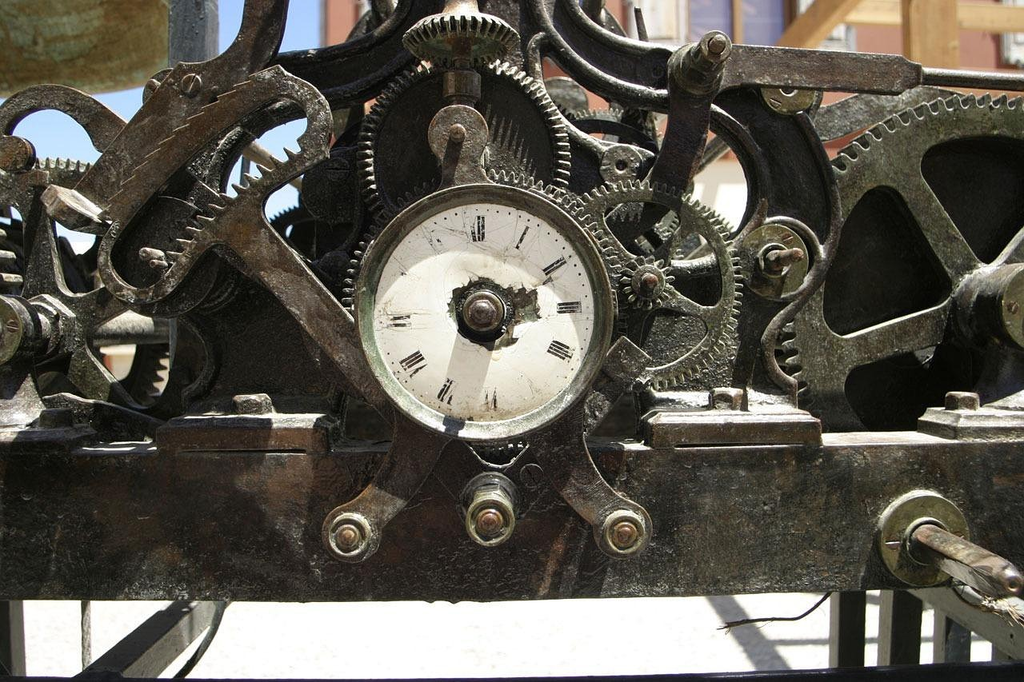
Elliptic Curve Cryptography (ECC) is a modern encryption technique that uses mathematical structures called elliptic curves to secure digital communication. In daily essentials like clocks and keys, ECC enables secure authentication and data exchange with minimal computational resources. Its efficiency and strong security make it ideal for devices with limited processing power, ensuring that everyday smart devices remain protected against cyber threats while maintaining performance and battery life.
Elliptic Curve Cryptography
Elliptic Curve Cryptography (ECC) is a modern encryption technique that uses mathematical structures called elliptic curves to secure digital communication. In daily essentials like clocks and keys, ECC enables secure authentication and data exchange with minimal computational resources. Its efficiency and strong security make it ideal for devices with limited processing power, ensuring that everyday smart devices remain protected against cyber threats while maintaining performance and battery life.

💡 Key Takeaways
- Understand the basic idea of elliptic curves in public-key cryptography and why ECC is used.
- Learn how ECC achieves comparable security with smaller key sizes than RSA.
- Identify common ECC primitives such as ECDSA for signatures and ECDH for key exchange.
- Recognize widely used curves (e.g., secp256k1, P-256) and considerations when choosing a curve.
- Grasp the concept of scalar multiplication on an elliptic curve and the elliptic-curve discrete logarithm problem.
❓ Frequently Asked Questions
What is Elliptic Curve Cryptography (ECC)?
ECC is a form of public-key cryptography that uses the math of elliptic curves over finite fields to create smaller, efficient keys for digital signatures and key exchange.
Why do ECC keys have smaller sizes than RSA keys for the same security level?
ECC relies on the Elliptic Curve Discrete Logarithm Problem, which is harder per bit. As a result, comparable security is achieved with much smaller keys (e.g., a 256-bit ECC key ≈ 3072-bit RSA key).
What are common ECC-based schemes used in practice?
ECDSA for digital signatures and ECDH for secure key exchange are the main uses; ECIES is also used for encryption in some systems.
How is a public key generated in ECC?
Choose a private key d (random integer) and multiply it by the curve's base point G to get the public key Q = dG. The private key must remain secret.