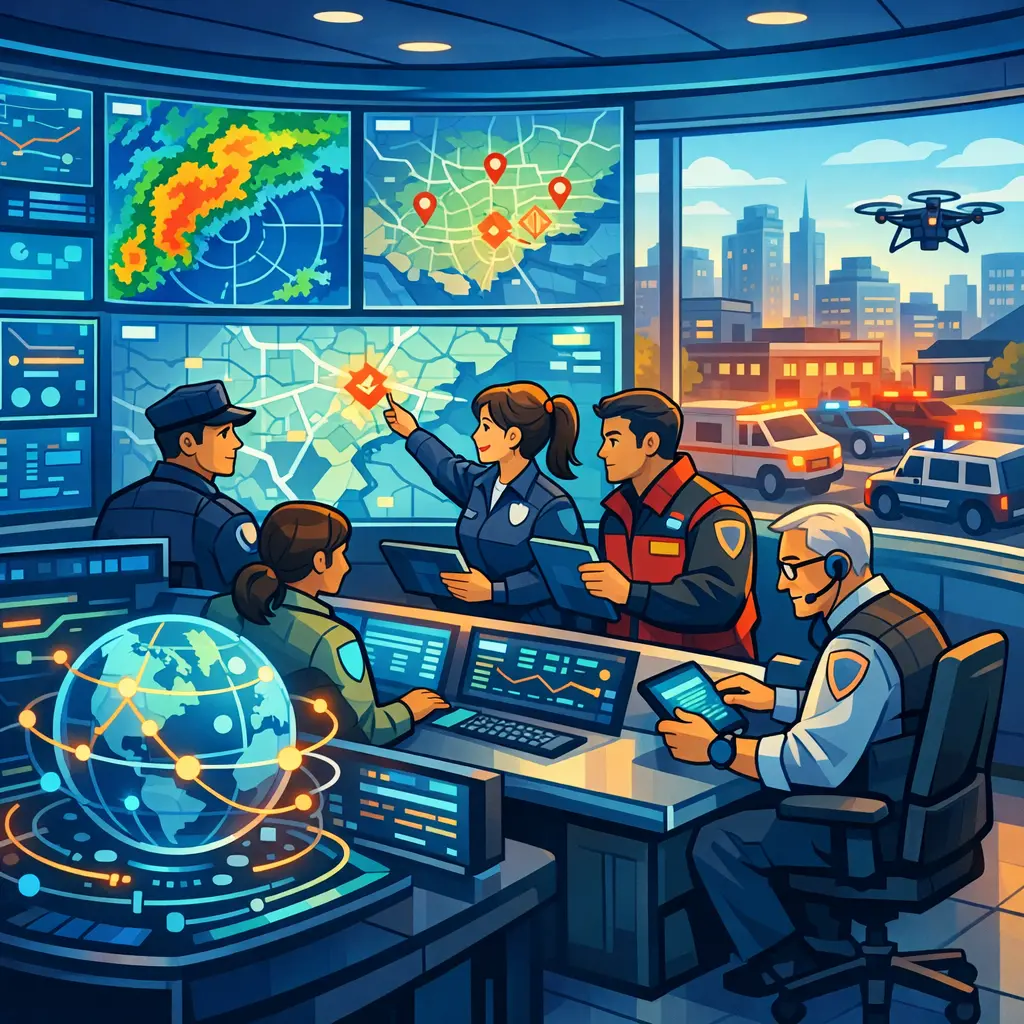
Emergency Management & Homeland Security (Law, Government & Public Service) refers to the coordinated efforts by government agencies and legal authorities to prepare for, respond to, and recover from disasters, emergencies, and security threats. This field encompasses the development of policies, enforcement of laws, and implementation of strategies that protect the public, ensure safety, and maintain national security during crises such as natural disasters, terrorism, and other large-scale emergencies.
Emergency Management & Homeland Security
Emergency Management & Homeland Security (Law, Government & Public Service) refers to the coordinated efforts by government agencies and legal authorities to prepare for, respond to, and recover from disasters, emergencies, and security threats. This field encompasses the development of policies, enforcement of laws, and implementation of strategies that protect the public, ensure safety, and maintain national security during crises such as natural disasters, terrorism, and other large-scale emergencies.
💡 Key Takeaways
- Grasp the four phases of emergency management: prevention, preparedness, response, and recovery.
- Understand how the incident command system coordinates multi-agency response in homeland security incidents.
- Identify risk assessment, threat identification, and mitigation strategies to reduce vulnerabilities.
- Learn emergency communications, public information, and continuity of operations planning during crises.
❓ Frequently Asked Questions
What is emergency management?
The coordinated, proactive process to prepare for, prevent, respond to, recover from, and reduce the impacts of disasters.
What are the four phases of the emergency management cycle?
Mitigation, Preparedness, Response, and Recovery.
What is the Incident Command System (ICS) and why is it used?
A standardized, on-scene command structure that enables multi-agency coordination with defined roles and span of control during emergencies.
What is Homeland Security's role in public safety?
To protect the nation from threats by coordinating with federal, state, and local partners, securing critical infrastructure, and promoting resilience.