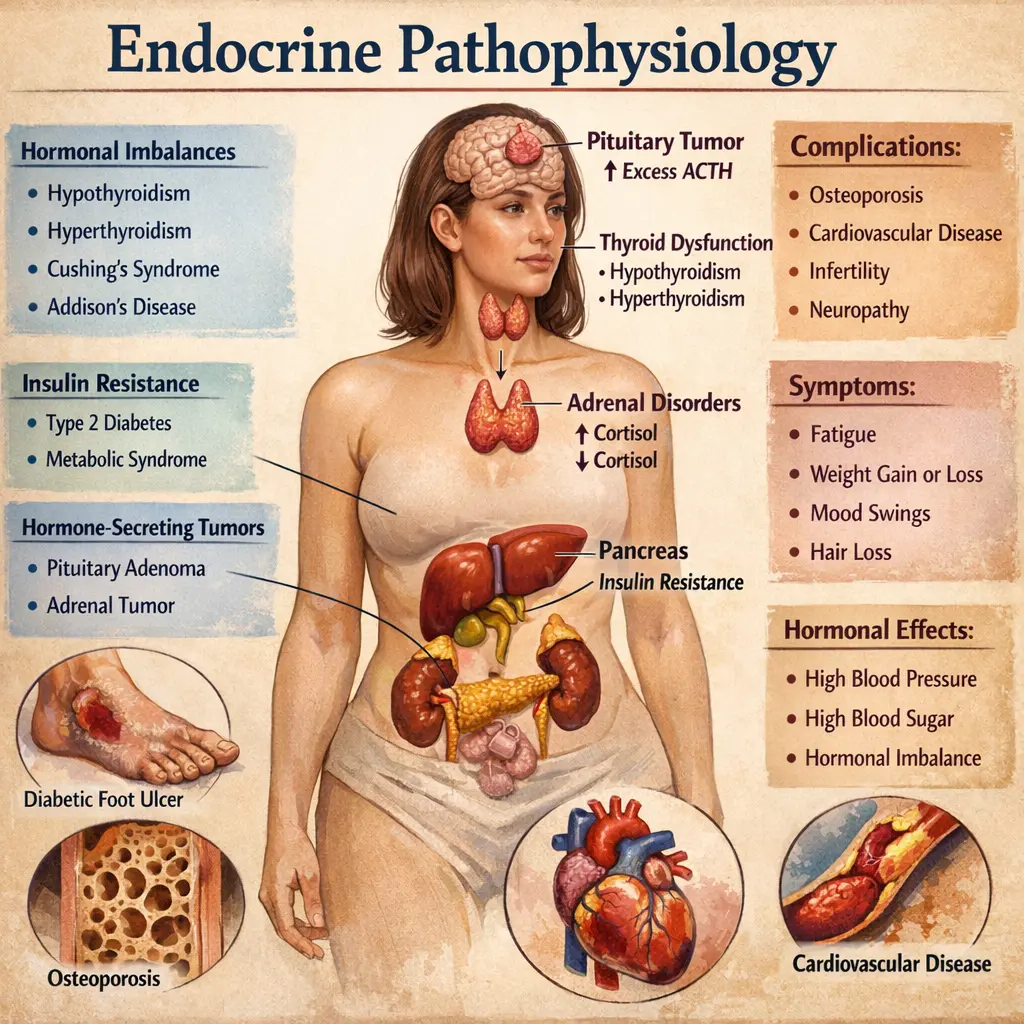
Endocrine pathophysiology refers to the study of disorders within the body’s hormone-producing glands, such as the thyroid, pancreas, and adrenal glands. These glands release hormones that regulate essential functions like metabolism, growth, and reproduction. When there is dysfunction—such as overproduction or underproduction of hormones—it leads to various health issues, including diabetes, thyroid disorders, and growth abnormalities, highlighting the critical role of endocrine balance in overall human health.
Endocrine Pathophysiology
Endocrine pathophysiology refers to the study of disorders within the body’s hormone-producing glands, such as the thyroid, pancreas, and adrenal glands. These glands release hormones that regulate essential functions like metabolism, growth, and reproduction. When there is dysfunction—such as overproduction or underproduction of hormones—it leads to various health issues, including diabetes, thyroid disorders, and growth abnormalities, highlighting the critical role of endocrine balance in overall human health.
💡 Key Takeaways
- Understand how hormones are produced, released, and regulated by feedback loops.
- Identify core pathophysiology of common endocrine disorders (diabetes, thyroid disease, adrenal disorders).
- Explain how receptor or signaling defects alter hormone action and lead to symptoms.
- Interpret basic endocrine lab tests (glucose, TSH, free T4, cortisol) and what abnormal results imply.
❓ Frequently Asked Questions
What is endocrine pathophysiology?
The study of how hormonal systems malfunction and cause disease, including gland dysfunction, hormone excess or deficiency, and disrupted signaling.
Which glands are the primary endocrine glands?
Pituitary, thyroid, parathyroid, adrenal, pancreas, gonads (ovaries/testes), and pineal gland; they regulate growth, metabolism, calcium balance, stress response, and reproduction.
How do hormones regulate body functions?
Hormones are released into the bloodstream, bind target receptors, and alter cellular processes; negative feedback helps maintain stable hormone levels.
What are common mechanisms of endocrine disorders?
Excess or deficient hormone production, resistance at target tissues, autoimmune destruction, genetic defects, or gland damage.