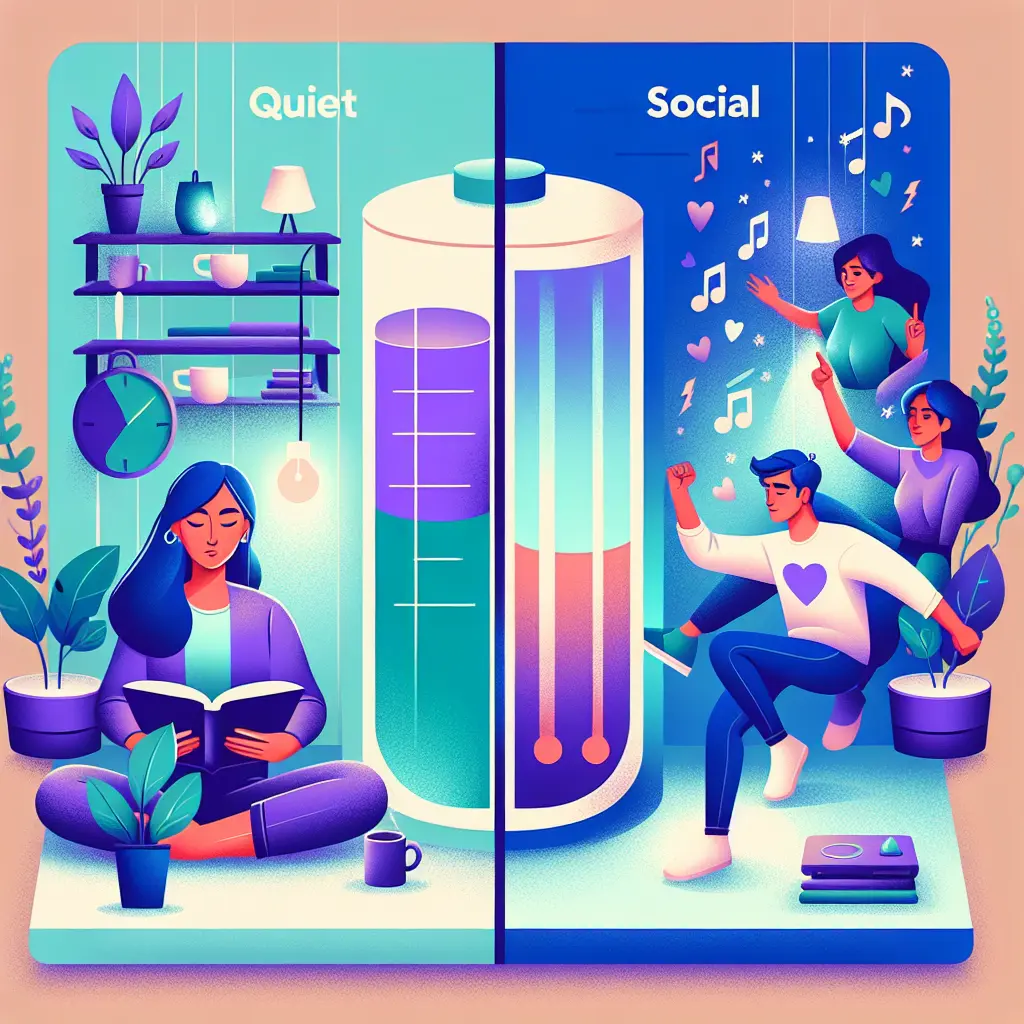
Energy management for introverts and extraverts involves understanding and respecting individual differences in how people recharge and expend energy. Introverts may need quiet time alone to regain energy after social interactions, while extraverts often feel energized by engaging with others. Effective energy management means recognizing these preferences and creating routines or environments that support optimal well-being, productivity, and balance for both personality types in personal and professional settings.
Energy Management for Introverts & Extraverts
Energy management for introverts and extraverts involves understanding and respecting individual differences in how people recharge and expend energy. Introverts may need quiet time alone to regain energy after social interactions, while extraverts often feel energized by engaging with others. Effective energy management means recognizing these preferences and creating routines or environments that support optimal well-being, productivity, and balance for both personality types in personal and professional settings.
💡 Key Takeaways
- Identify whether you recharge best through solitude (introvert) or social interaction (extravert) and recognize your own energy cues.
- Explain how your energy levels rise and fall with activities and how to schedule social time and downtime accordingly.
- Describe practical energy-management strategies: setting boundaries, planning breaks, and selecting activities that fit your energy.
- Practice communicating your needs to others and creating supportive environments to sustain energy throughout the day.
❓ Frequently Asked Questions
What is energy management in the context of introverts and extraverts?
Energy management means understanding what habits recharge or drain you. Introverts typically regain energy with quiet time alone, while extraverts often feel energized through social interaction. Knowing these patterns helps you plan your day.
How do introverts typically recharge, and what activities support them?
Introverts recharge with quiet, low-stimulation time, reflection, and routines. Supportive activities include alone time, small gatherings, and predictable schedules that prevent overstimulation.
How do extraverts typically recharge, and what activities support them?
Extraverts often regain energy through social engagement, group activities, and lively conversations. Supportive activities include planned social time, varied environments, and opportunities for interaction.
What are practical tips to balance energy for both introverts and extraverts?
Identify your energy cues, schedule downtime after stimulating events, mix tasks that require focus with rest, communicate your needs, and experiment with routines to find your personal rhythm.