Energy Performance and Part L Compliance in the UK refers to the requirement for buildings to meet specific energy efficiency standards as outlined in Part L of the Building Regulations. This ensures that new constructions and major renovations minimize energy use and carbon emissions. Compliance involves measures such as effective insulation, efficient heating systems, and sustainable building materials, all aimed at reducing environmental impact and improving overall energy performance within the construction environment.
Energy Performance and Part L Compliance (UK)
Energy Performance and Part L Compliance in the UK refers to the requirement for buildings to meet specific energy efficiency standards as outlined in Part L of the Building Regulations. This ensures that new constructions and major renovations minimize energy use and carbon emissions. Compliance involves measures such as effective insulation, efficient heating systems, and sustainable building materials, all aimed at reducing environmental impact and improving overall energy performance within the construction environment.
💡 Key Takeaways
- Understand what Part L compliance means for UK buildings
- Identify key elements used to demonstrate compliance (fabric, heating, lighting, ventilation)
- Learn how SAP/RdSAP and EPCs are used to prove compliance
- Recognize common energy-saving measures and their impact on costs and compliance
❓ Frequently Asked Questions
What is Part L compliance in the UK?
Part L is a Building Regulation standard that sets the minimum energy performance requirements for buildings to reduce fuel and power use. Compliance is demonstrated with design calculations (SAP for dwellings, SBEM for non-dwellings) and an Energy Performance Certificate (EPC).
How is Part L compliance demonstrated for new dwellings?
A SAP calculation shows the design’s energy performance meets the Target Emission Rate, and an EPC is produced to confirm compliance.
What is an EPC and how does it relate to Part L?
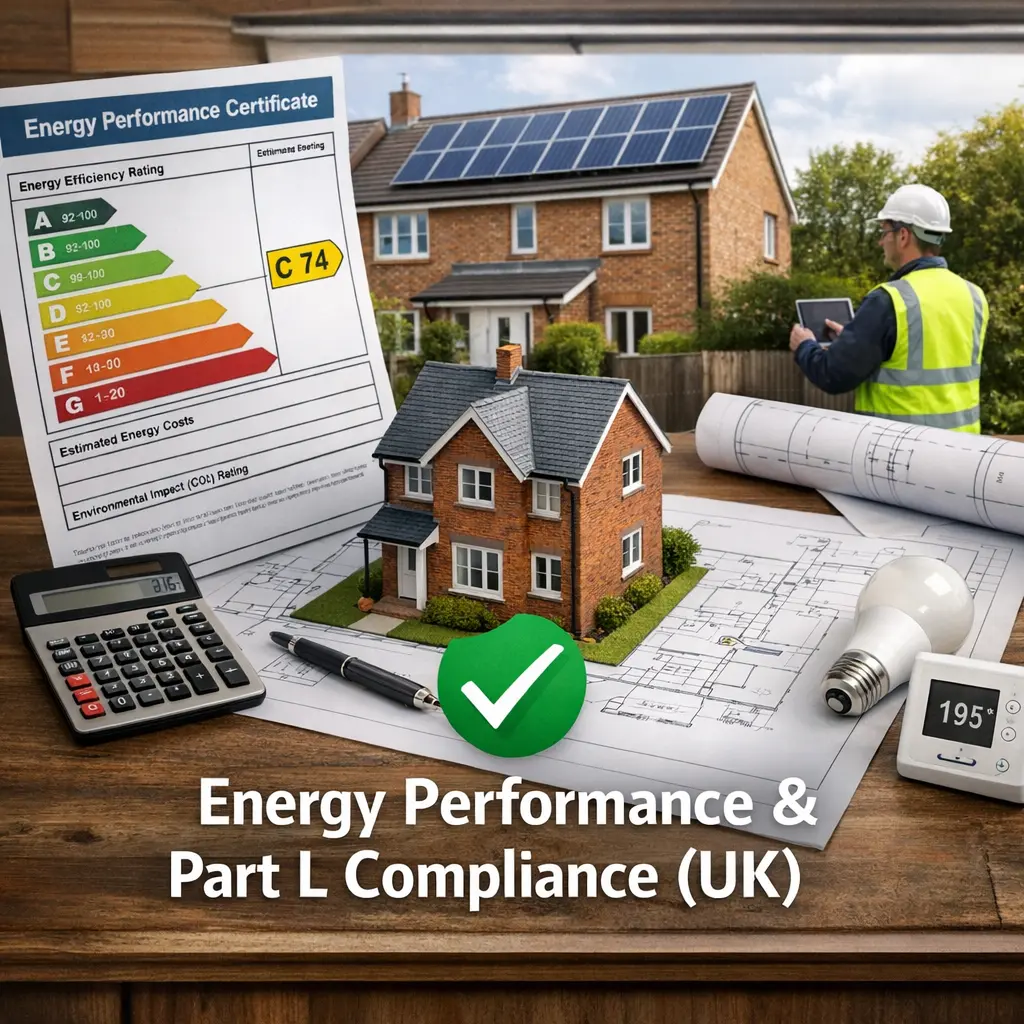
An EPC rates a building’s predicted energy efficiency (A–G) and CO2 emissions. It is required on completion and is used to demonstrate Part L compliance.
Do existing buildings need to meet Part L when they are altered?
Yes. If works involve replacing or modifying fabric, heating, hot water, or lighting, the altered parts must meet Part L standards, and upgrades to meet Part L may be required.