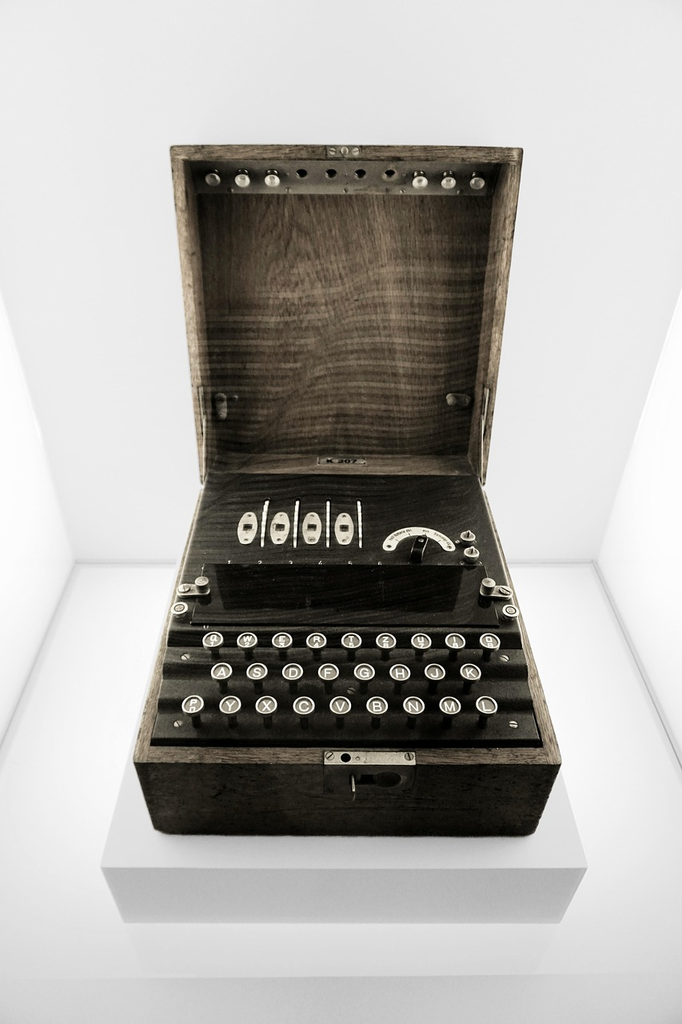
The Enigma Machine, often described as "hidden in plain sight," was a cipher device used by Nazi Germany during World War II to encode secret messages. Its appearance as a simple typewriter belied its complex encryption capabilities. Despite being widely used and visible, its true function and the intricacies of its code remained concealed for years, making it a powerful tool for covert communication and a symbol of cryptographic secrecy.
Enigma Machine
The Enigma Machine, often described as "hidden in plain sight," was a cipher device used by Nazi Germany during World War II to encode secret messages. Its appearance as a simple typewriter belied its complex encryption capabilities. Despite being widely used and visible, its true function and the intricacies of its code remained concealed for years, making it a powerful tool for covert communication and a symbol of cryptographic secrecy.
💡 Key Takeaways
- Understand how the Enigma machine uses rotors, a reflector, and a plugboard to create complex substitutions.
- See how rotor stepping on every keypress changes the cipher, making each letter’s encoding depend on previous inputs.
- Learn how daily keys, rotor order, and plugboard settings generate a large, variable key space.
- Explore the historical impact of Enigma and how Allied codebreakers cracked it, influencing WWII outcomes.
❓ Frequently Asked Questions
What is the Enigma machine?
A cipher device used mainly by Germany in WWII to encrypt radio messages, using rotors, a reflector, and a plugboard to scramble letters.
How do the rotors and rotor mechanism work?
Each rotor is a wired wheel that maps input letters to different outputs. As keys are pressed, rotors rotate, changing the mapping and producing different encryptions for each letter.
What roles do the plugboard and reflector play?
The plugboard swaps pairs of letters to add variety; the reflector sends the signal back through the rotors in reverse, creating a reciprocal mapping that makes decryption with the same settings possible.
Why is Enigma historically significant and how was it broken?
It represented a sophisticated encryption system of its time. Allied cryptanalysts at Bletchley Park developed methods and machines (like the Bombe) to determine daily keys, enabling many messages to be read.