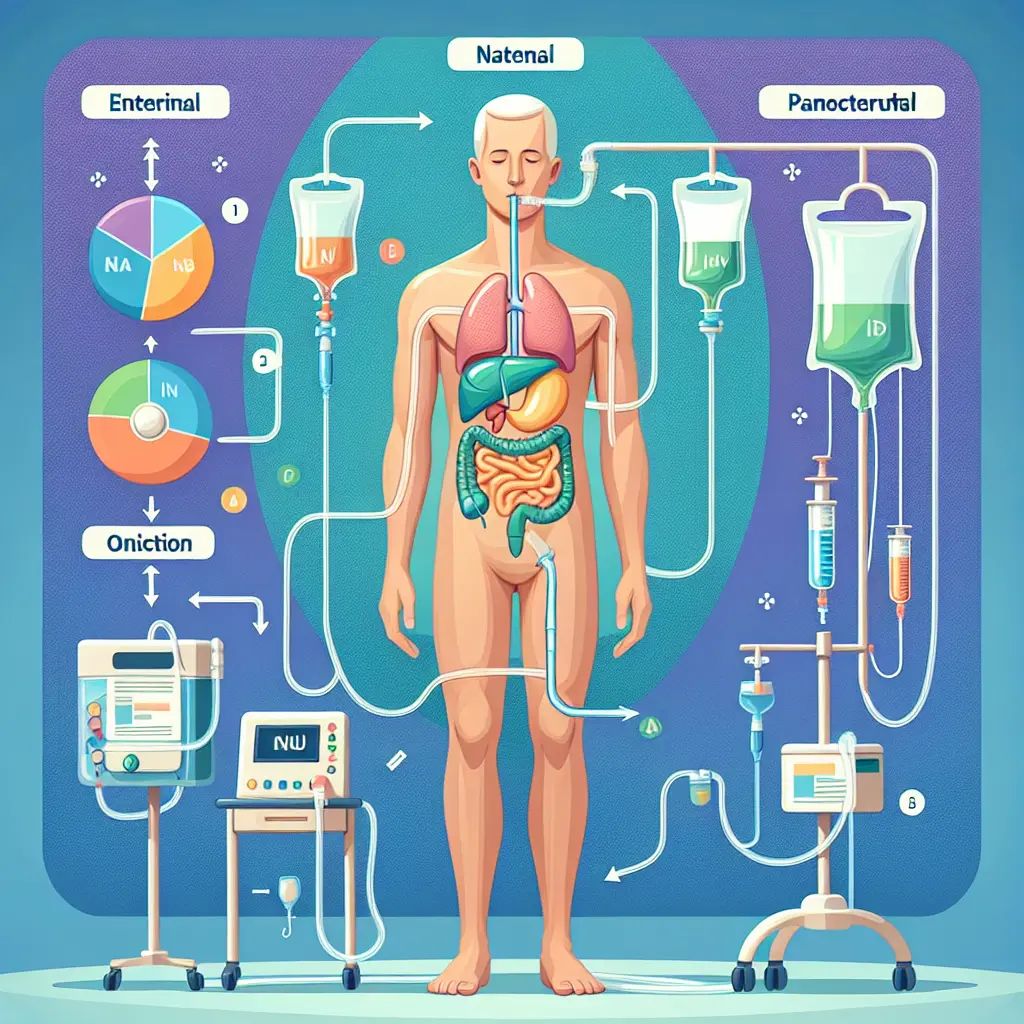
Enteral and parenteral nutrition principles guide how nutrients are delivered when oral intake isn’t possible. Enteral nutrition uses the gastrointestinal tract, typically via feeding tubes, preserving gut function and reducing infection risk. Parenteral nutrition delivers nutrients directly into the bloodstream through intravenous routes, bypassing the digestive system, and is used when the gut is nonfunctional or inaccessible. Both approaches require careful assessment of patient needs, monitoring for complications, and individualized nutrient formulations.
Enteral & Parenteral Nutrition Principles
Enteral and parenteral nutrition principles guide how nutrients are delivered when oral intake isn’t possible. Enteral nutrition uses the gastrointestinal tract, typically via feeding tubes, preserving gut function and reducing infection risk. Parenteral nutrition delivers nutrients directly into the bloodstream through intravenous routes, bypassing the digestive system, and is used when the gut is nonfunctional or inaccessible. Both approaches require careful assessment of patient needs, monitoring for complications, and individualized nutrient formulations.
💡 Key Takeaways
- Differentiate between enteral and parenteral nutrition and identify when each is indicated.
- Explain how enteral nutrition preserves gut function and can reduce infection risk compared with parenteral nutrition.
- Describe common enteral feeding routes and formulations (e.g., nasogastric/nasoenteric tubes and formula types).
- Outline the core components of parenteral nutrition (carbohydrates, amino acids, lipids, electrolytes) and typical monitoring considerations.
❓ Frequently Asked Questions
What is enteral nutrition?
Nutrition delivered through the gastrointestinal tract, usually via feeding tubes, helping maintain gut function and lowering infection risk when oral intake isn’t possible.
What is parenteral nutrition?
Nutrition delivered directly into the bloodstream, bypassing the GI tract, used when oral or enteral feeding isn’t possible or insufficient.
Why is enteral nutrition often preferred when possible?
It uses the gut, supports barrier function, reduces infection risk, and is generally safer and more cost-effective than parenteral nutrition.
What are common routes for enteral feeding?
Nasogastric or nasoenteric tubes reaching the stomach or small intestine (gastric or post-pyloric feeding).
What are key considerations and risks with parenteral nutrition?
Requires IV access, risk of catheter-related infection, metabolic/electrolyte imbalances, and potential liver complications; careful monitoring is essential.