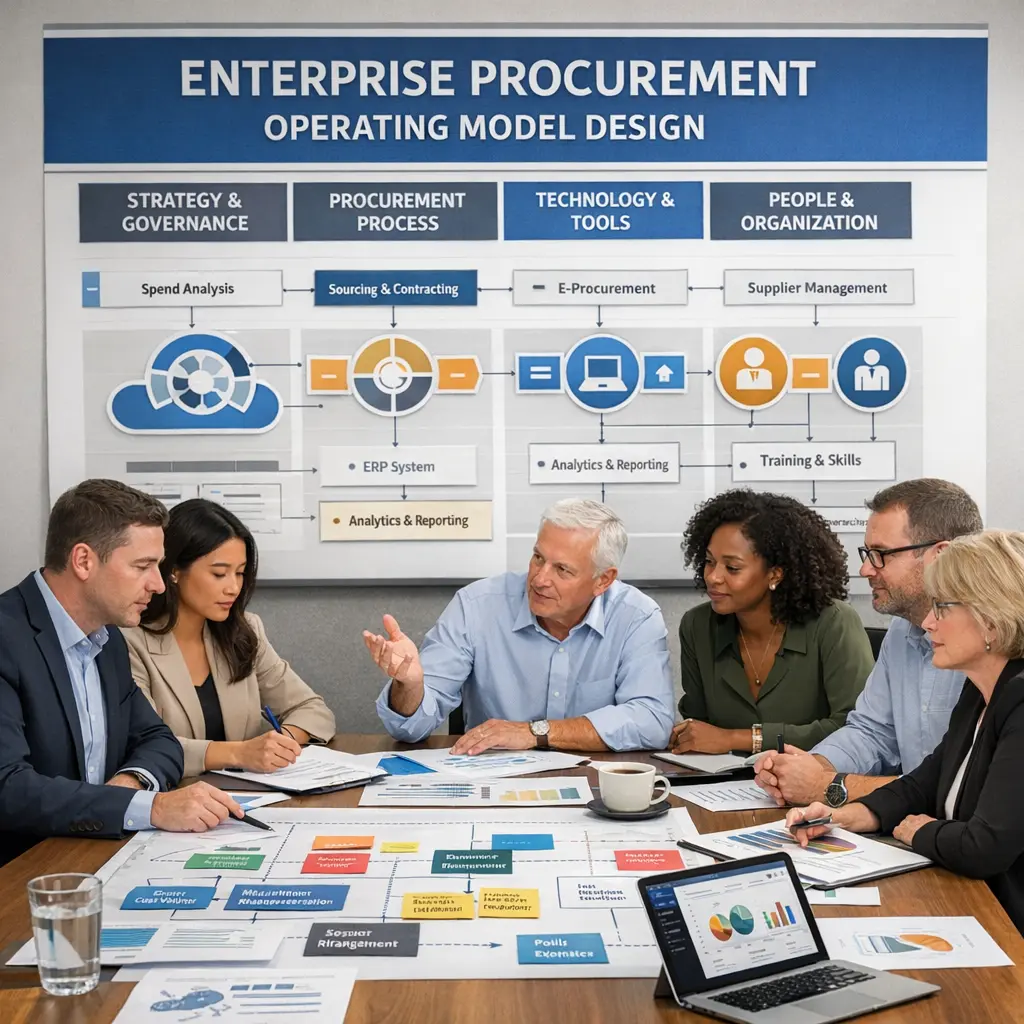
Enterprise Procurement Operating Model Design (Tender & Procurement) refers to the structured approach an organization uses to manage its purchasing activities, particularly through tenders. It encompasses the processes, roles, policies, and technologies involved in sourcing goods and services. The model aims to ensure transparency, efficiency, compliance, and value for money by defining how procurement decisions are made, how suppliers are selected, and how contracts are awarded and managed within the enterprise.
Enterprise Procurement Operating Model Design
Enterprise Procurement Operating Model Design (Tender & Procurement) refers to the structured approach an organization uses to manage its purchasing activities, particularly through tenders. It encompasses the processes, roles, policies, and technologies involved in sourcing goods and services. The model aims to ensure transparency, efficiency, compliance, and value for money by defining how procurement decisions are made, how suppliers are selected, and how contracts are awarded and managed within the enterprise.
💡 Key Takeaways
- Define an enterprise procurement operating model and its strategic value.
- Map end-to-end procurement processes from demand to payment with key control points.
- Design the organizational structure, roles, and governance to scale procurement.
- Align procurement strategy with business goals, supplier segmentation, and key performance metrics.
❓ Frequently Asked Questions
What is an enterprise procurement operating model?
It’s the framework that defines how procurement is organized, governed, and delivered across the enterprise—covering structure, processes, roles, data, and technology to create value.
What are the core components to design in a procurement operating model?
Organization design (centralized, decentralized, or hybrid), standardized processes (source-to-pay), governance and decision rights, people and skills, data/analytics, and technology enablement.
How does the operating model link to business strategy and value?
It translates strategic goals into procurement capabilities, drives value through savings and supplier performance, and uses metrics to ensure procurement contributes to business outcomes.
What are common operating models and their trade-offs?
Centralized offers scale and policy consistency; decentralized provides business-unit agility; hybrid combines both. Choose based on spend, supplier complexity, regulatory needs, and talent.