The phrase "Eras of Boxing: Golden Age to Modern" refers to the evolution of boxing from its celebrated early period, known as the Golden Age—marked by legendary fighters and widespread popularity—through various transitions in style, regulation, and global reach, up to the present day. This journey highlights changes in athleticism, media influence, and cultural significance, illustrating how boxing has adapted and thrived across generations.
Eras of Boxing: Golden Age to Modern
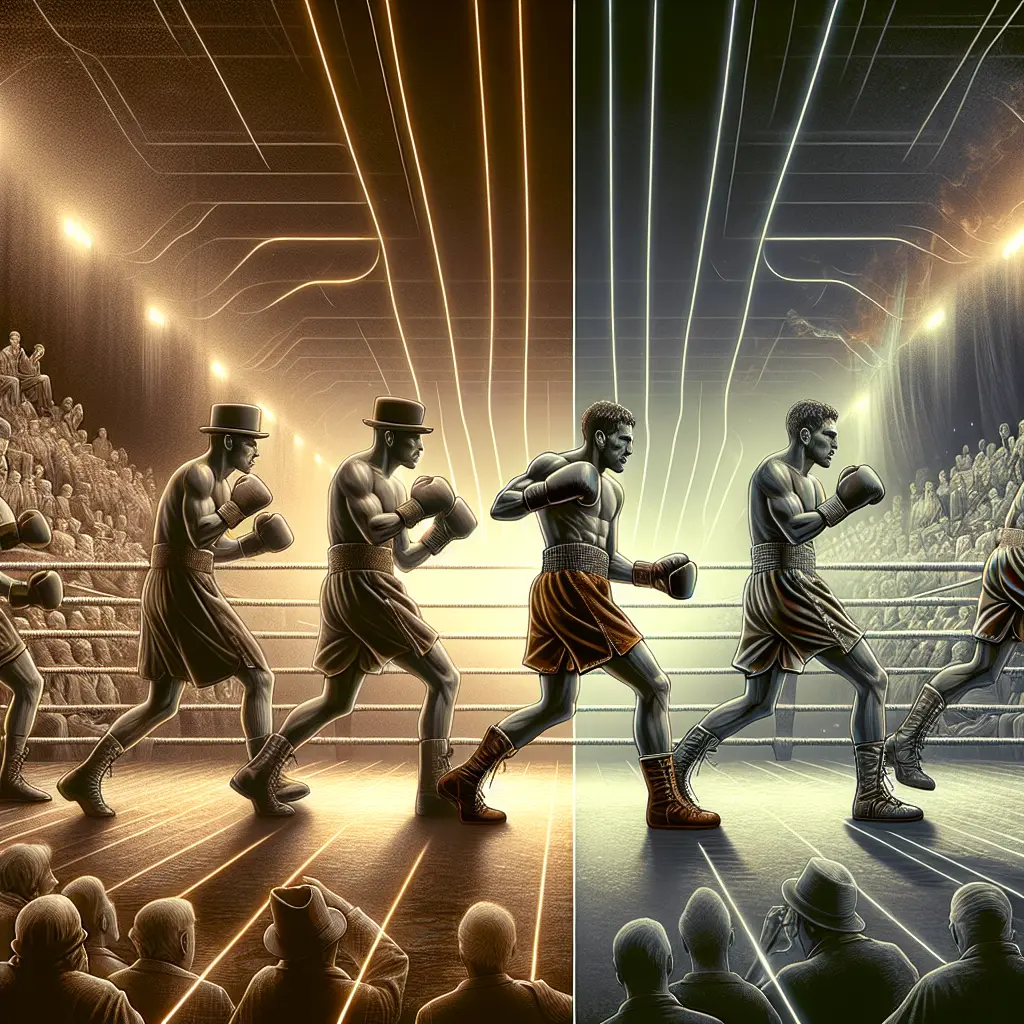
The phrase "Eras of Boxing: Golden Age to Modern" refers to the evolution of boxing from its celebrated early period, known as the Golden Age—marked by legendary fighters and widespread popularity—through various transitions in style, regulation, and global reach, up to the present day. This journey highlights changes in athleticism, media influence, and cultural significance, illustrating how boxing has adapted and thrived across generations.
💡 Key Takeaways
- Trace boxing's evolution from the Golden Age to today, noting key eras and figures.
- Compare shifts in style, training, and strategy across eras.
- Understand major regulatory changes and safety measures that reshaped the sport.
- Explore the global expansion of boxing and the emergence of international champions.
- Identify modern trends in boxing, including media, promotions, and governance.
❓ Frequently Asked Questions
What is the Golden Age of boxing?
A roughly defined period from the 1930s to the 1950s when boxing drew huge global audiences and produced many legendary champions, known for polished technique and big personalities.
How did boxing styles change from the Golden Age to the modern era?
Boxing moved from classic, defense-focused, textbook techniques to a broader mix of speed, athleticism, and scientific training, aided by advances in coaching, conditioning, and sports science.
How have rules and safety regulations evolved over time?
Pro title fights shifted to 12 rounds in the late 20th century; scoring generally uses the 10-point must system; there are stronger medical checks, drug testing, and improved gloves and safety practices.
What marks boxing as the modern era today, and who are its notable figures?
Today’s boxing is global, media-driven, and tech-enabled with unified champions across weight classes. Notable modern figures include Floyd Mayweather Jr., Manny Pacquiao, and Canelo Alvarez.