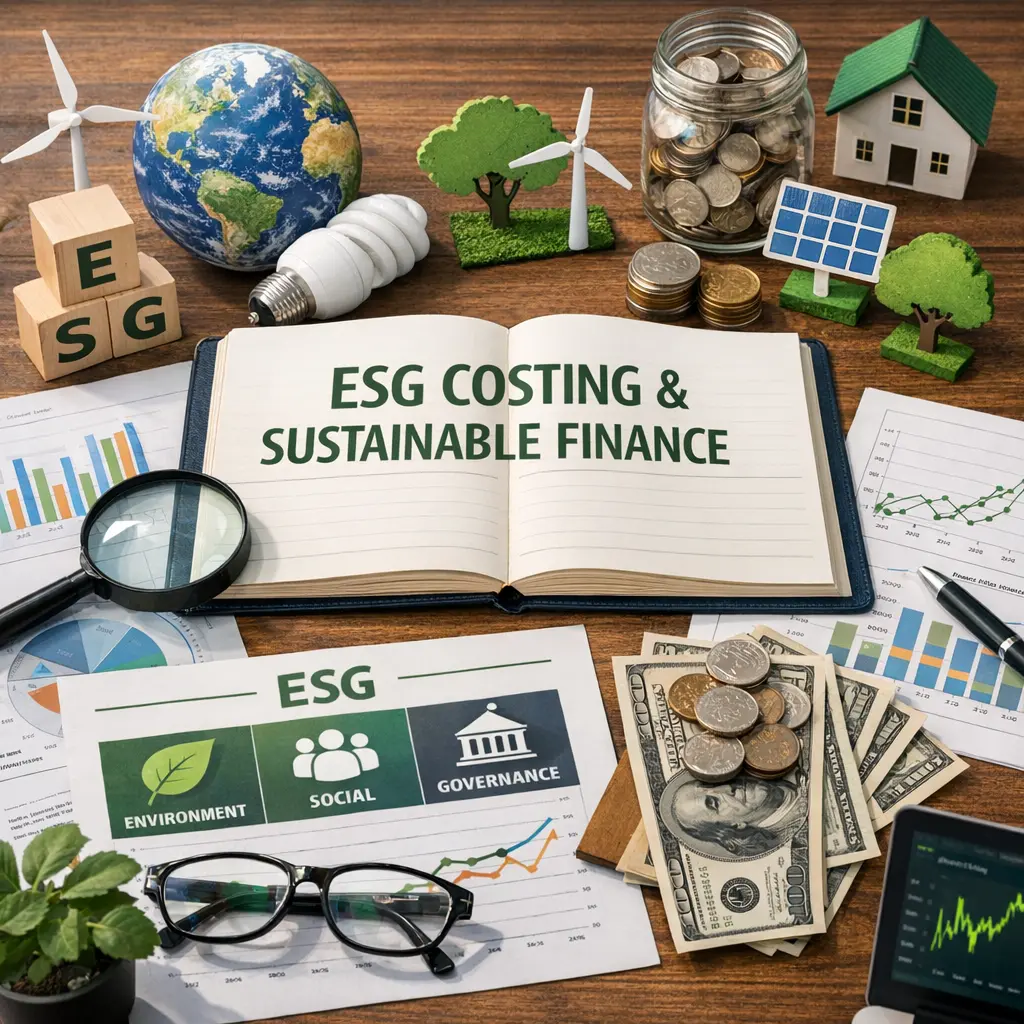
ESG Costing & Sustainable Finance refers to integrating Environmental, Social, and Governance (ESG) criteria into financial management and business practices. It involves assessing and allocating costs related to sustainability initiatives, ensuring that investments and operations align with ethical, environmental, and social standards. This approach aims to promote responsible resource use, reduce risks, and enhance long-term value by considering not just financial performance but also the broader impact on society and the environment.
ESG Costing & Sustainable Finance
ESG Costing & Sustainable Finance refers to integrating Environmental, Social, and Governance (ESG) criteria into financial management and business practices. It involves assessing and allocating costs related to sustainability initiatives, ensuring that investments and operations align with ethical, environmental, and social standards. This approach aims to promote responsible resource use, reduce risks, and enhance long-term value by considering not just financial performance but also the broader impact on society and the environment.
💡 Key Takeaways
- Understand how ESG factors influence costing, budgeting, and investment decisions
- Learn methods to quantify ESG-related costs and benefits (internalizing externalities)
- Explore how ESG risk affects the cost of capital and financial risk assessment
- Identify sustainable finance tools and instruments (green bonds, sustainability-linked loans) and their budgeting implications
❓ Frequently Asked Questions
What is ESG costing?
ESG costing integrates environmental, social, and governance factors into cost accounting to reflect true total costs and long-term value, including externalities like emissions or resource use.
What is sustainable finance?
Sustainable finance channels capital toward activities that meet environmental and social goals while considering financial risk and return.
How are externalities monetized in ESG costing?
Externalities are monetized using methods like carbon pricing, lifecycle costing, or social cost-benefit analysis to reflect their financial impact.
What ESG metrics are commonly used in finance?
Common metrics include carbon footprint, energy and water use, emissions intensity, waste, diversity and governance indicators, risk scores, and sustainability ratings.