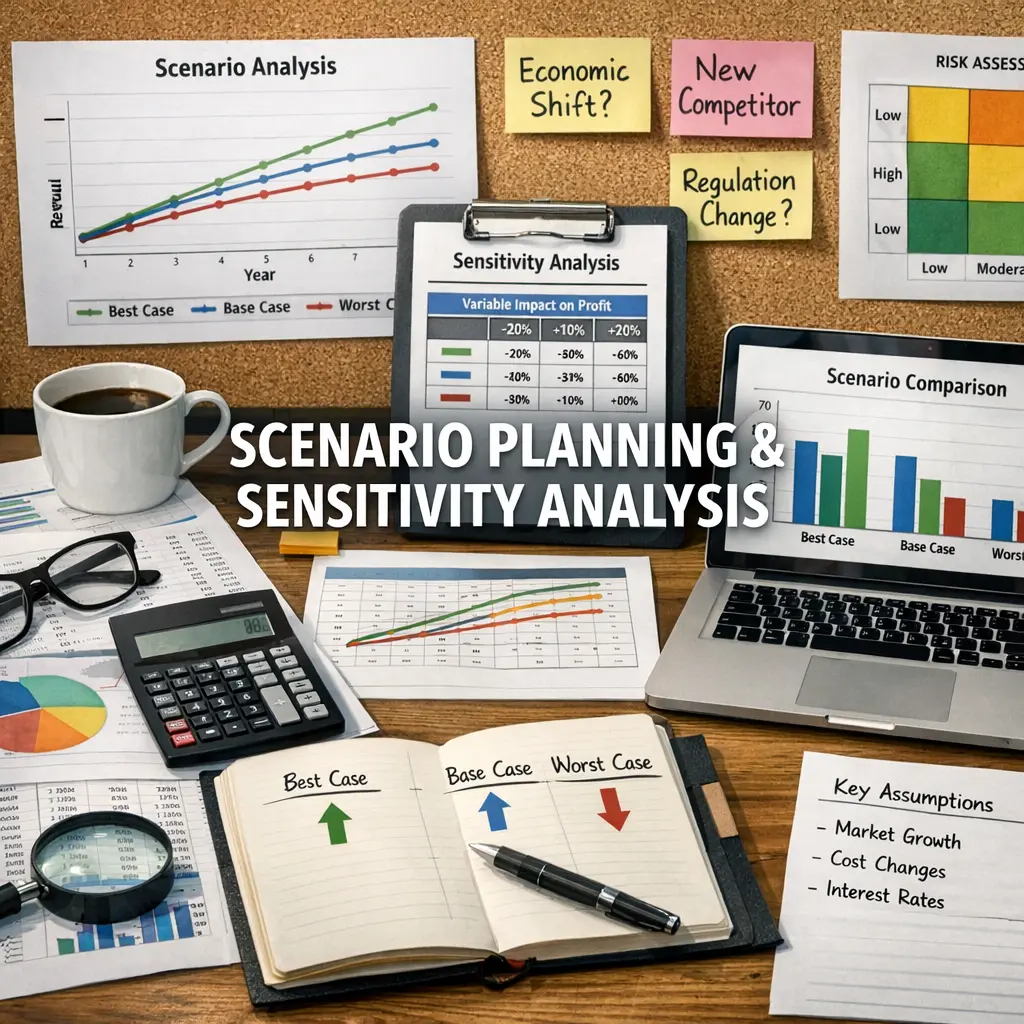
Estimating basics in financial management and business practices involve predicting future costs, revenues, and resource needs to support decision-making and strategic planning. This process uses historical data, market analysis, and forecasting techniques to develop accurate budgets and financial projections. Effective estimating helps businesses allocate resources efficiently, control expenses, and maximize profitability while minimizing risk. It is fundamental for project planning, investment analysis, and long-term financial stability in any organization.
Estimating Basics
Estimating basics in financial management and business practices involve predicting future costs, revenues, and resource needs to support decision-making and strategic planning. This process uses historical data, market analysis, and forecasting techniques to develop accurate budgets and financial projections. Effective estimating helps businesses allocate resources efficiently, control expenses, and maximize profitability while minimizing risk. It is fundamental for project planning, investment analysis, and long-term financial stability in any organization.
💡 Key Takeaways
- Understand what estimation is and when it's useful in everyday problem solving
- Master quick rounding and mental math techniques to produce reasonable estimates
- Practice estimating common quantities (length, area, time, counts) in real-world scenarios
- Learn how to judge the reasonableness of an estimate and refine it if needed
❓ Frequently Asked Questions
What is estimation?
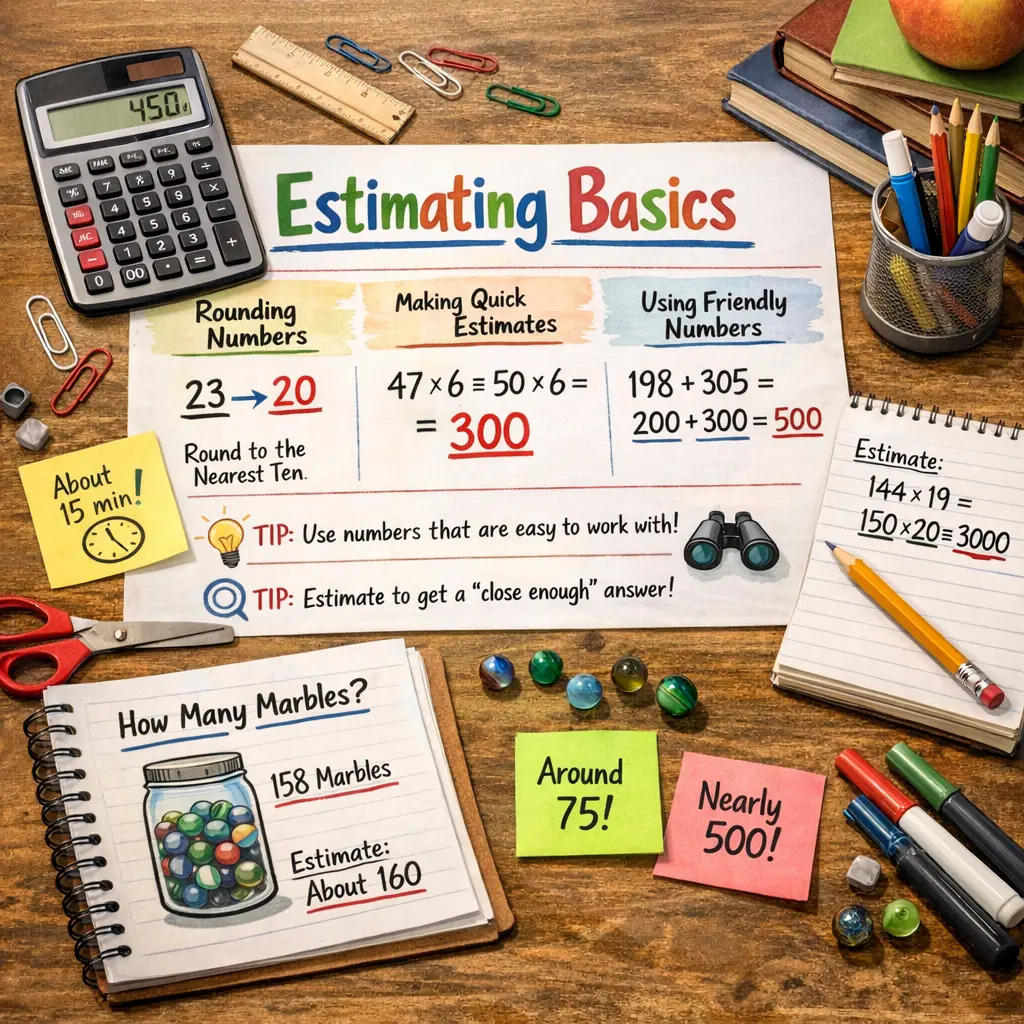
Estimation is the process of approximating a value when exact data isn’t available, using simple calculations, rounding, or rules of thumb to get a reasonable answer quickly.
What is the difference between accuracy and precision in estimation?
Accuracy measures how close an estimate is to the true value, while precision indicates how consistent repeated estimates are. An estimate can be precise but not accurate if it’s consistently off.
What are common quick estimation techniques?
Rounding to friendly numbers, using compatible numbers for mental math, applying known benchmarks, and checking reasonableness with simple bounds.
What is an order-of-magnitude estimate and when is it useful?
An order-of-magnitude estimate identifies the scale (power of ten) of a value rather than the exact figure. It’s useful for quick planning, rough comparisons, and early-stage decisions.