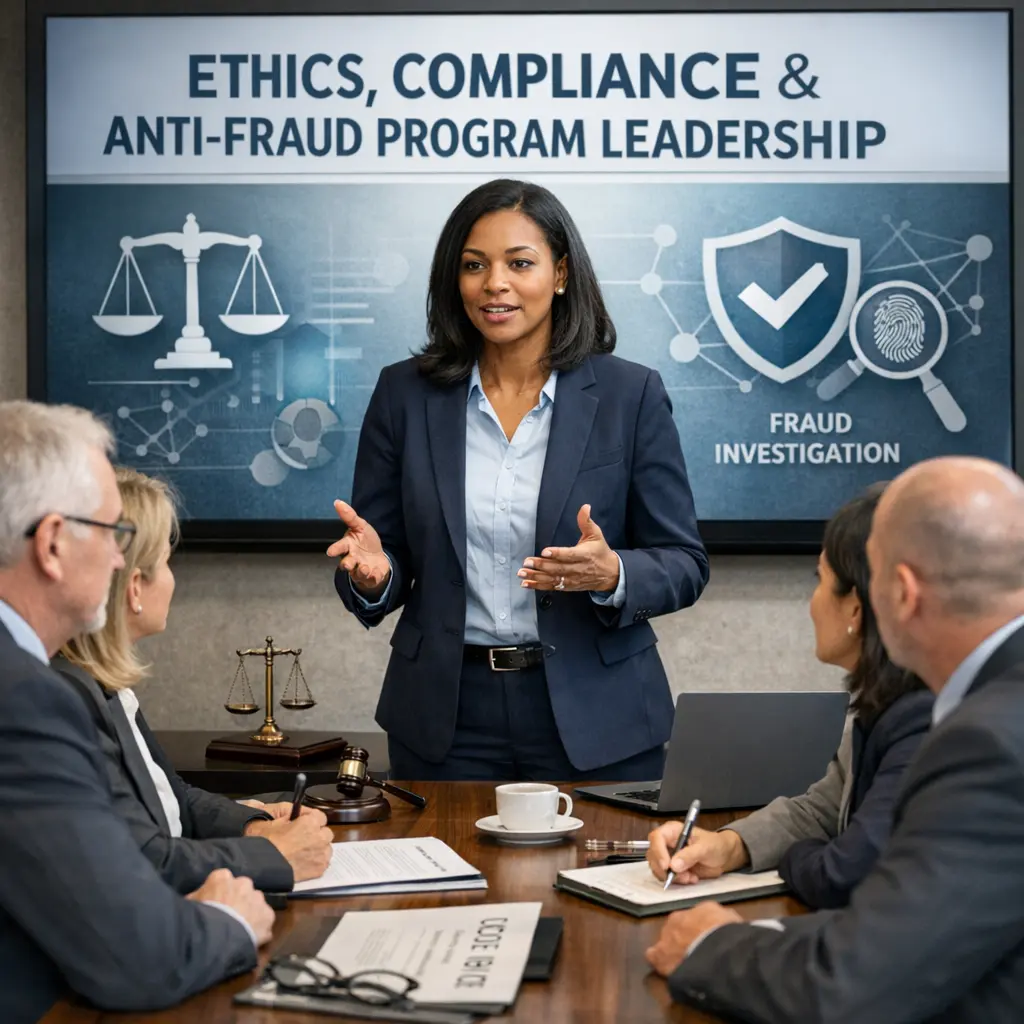
This phrase refers to the strategic direction and oversight of initiatives that ensure ethical conduct, regulatory compliance, and the prevention of fraud within organizations, particularly in financial management and business operations. Leaders in this area develop, implement, and monitor policies, training, and controls that uphold integrity, foster accountability, and mitigate risks, thereby safeguarding organizational reputation and ensuring adherence to legal and industry standards.
Ethics, Compliance & Anti-Fraud Program Leadership
This phrase refers to the strategic direction and oversight of initiatives that ensure ethical conduct, regulatory compliance, and the prevention of fraud within organizations, particularly in financial management and business operations. Leaders in this area develop, implement, and monitor policies, training, and controls that uphold integrity, foster accountability, and mitigate risks, thereby safeguarding organizational reputation and ensuring adherence to legal and industry standards.
💡 Key Takeaways
- Understand leadership responsibilities for building an ethics, compliance, and anti-fraud culture.
- Identify essential elements of an effective program, including policies, training, risk assessment, and controls.
- Learn how to design and govern anti-fraud controls, investigations, and remediation processes.
- Explore metrics and governance practices to monitor program effectiveness and sustain a culture of integrity.
❓ Frequently Asked Questions
What is the role of leadership in Ethics, Compliance & Anti-Fraud programs?
Leadership sets the tone at the top, defines policies, allocates resources, and ensures the program aligns with laws and organizational values.
What are the core components of an effective anti-fraud program?
Risk assessment, written policies and controls, training, monitoring and analytics, reporting channels, investigations, remediation, and governance.
How can leaders foster a culture of ethics and integrity?
Lead by example, communicate expectations, reward ethical behavior, provide safe reporting avenues, protect whistleblowers, and integrate ethics into performance reviews.
What governance structures support ethics and compliance programs?
An oversight body or committee, policy management, due diligence, incident investigations, remediation actions, metrics, audits, and regular reporting to leadership.