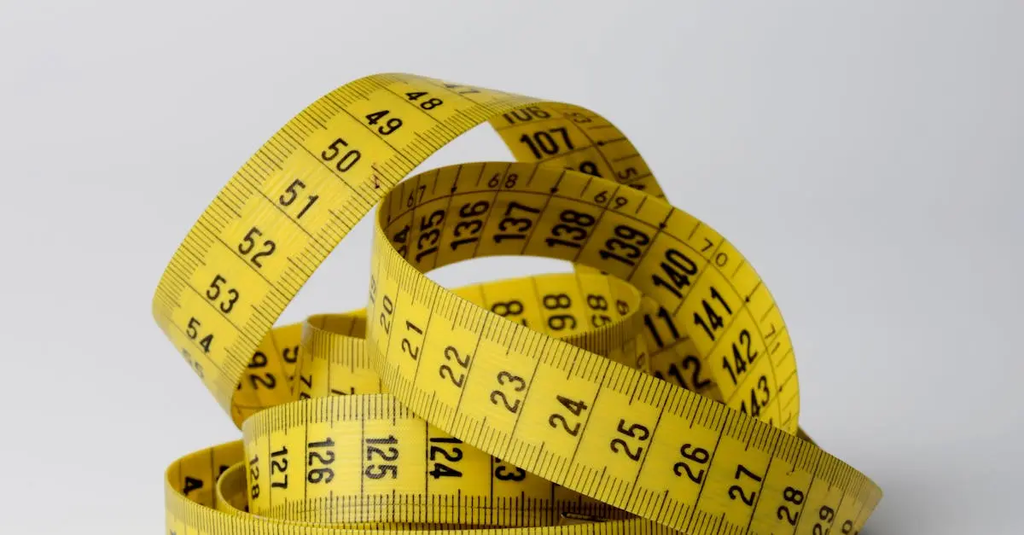
"Everyday Arithmetic Refresher" refers to a review or reinforcement of basic mathematical skills commonly used in daily life. It covers fundamental operations like addition, subtraction, multiplication, and division, as well as practical concepts such as percentages, fractions, and decimals. This refresher helps individuals regain confidence in handling everyday numerical tasks, such as budgeting, shopping, or measuring, ensuring they can apply arithmetic accurately and efficiently in routine situations.
Everyday Arithmetic Refresher+50
"Everyday Arithmetic Refresher" refers to a review or reinforcement of basic mathematical skills commonly used in daily life. It covers fundamental operations like addition, subtraction, multiplication, and division, as well as practical concepts such as percentages, fractions, and decimals. This refresher helps individuals regain confidence in handling everyday numerical tasks, such as budgeting, shopping, or measuring, ensuring they can apply arithmetic accurately and efficiently in routine situations.
💡 Key Takeaways
- Master the four basic operations—addition, subtraction, multiplication, and division—for everyday problems.
- Work confidently with fractions, decimals, and percentages in daily tasks like cooking, budgeting, and shopping.
- Use rounding and estimation to check answers and speed up mental math.
- Compare values using unit prices, ratios, and proportions to make smarter purchasing decisions.
- Develop practical mental math strategies to solve common calculations without a calculator when appropriate.
❓ Frequently Asked Questions
What is Everyday Arithmetic Refresher and why is it useful?
A practical review of basic math you use daily—adding, subtracting, multiplying, dividing, plus fractions, decimals, and percentages—for tasks like budgeting, shopping, cooking, and measuring.
How do you convert a percentage to a decimal and back?
To convert percent to decimal, divide by 100 (e.g., 25% = 0.25). To convert decimal to percent, multiply by 100 (e.g., 0.25 = 25%).
How do you convert between fractions, decimals, and percentages?
Fraction to decimal: divide numerator by denominator (3/4 = 0.75). Decimal to fraction: write as a fraction with a power of 10 denominator and simplify (0.75 = 75/100 = 3/4). Percent form: multiply or divide by 100 (75% = 0.75; 0.75 = 75%).
What is the order of operations and why does it matter?
Follow PEMDAS/BODMAS: Parentheses/Brackets, Exponents/Orders, Multiplication and Division (left to right), Addition and Subtraction (left to right). This ensures consistent results (e.g., 2 + 3 × 4 = 14).