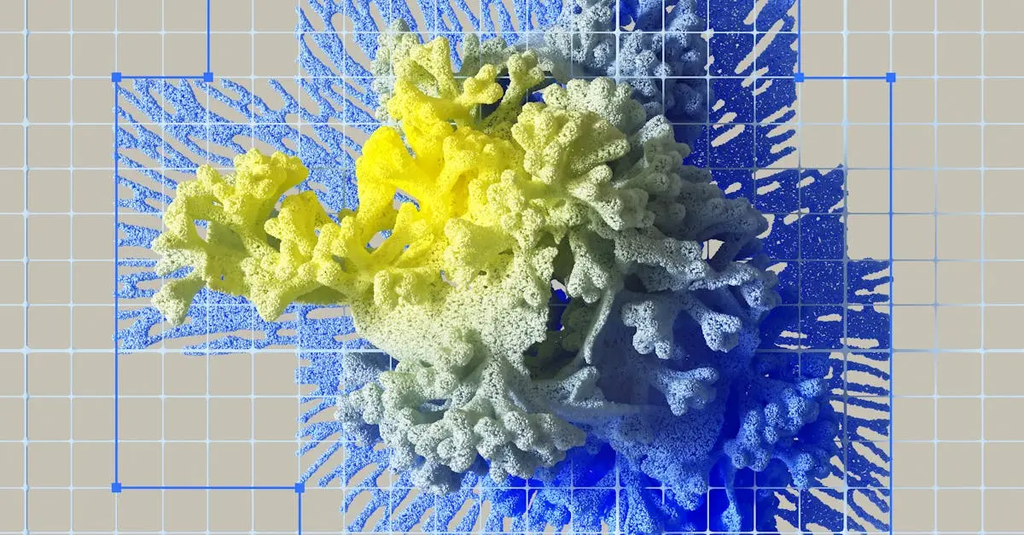
Exploratory Data Visualization is the process of visually representing data to uncover patterns, trends, and relationships within a dataset. It involves using charts, graphs, and plots to help analysts and researchers gain insights, identify anomalies, and generate hypotheses. Unlike explanatory visualization, which communicates specific findings, exploratory visualization focuses on open-ended investigation, allowing users to interact with data and discover meaningful information that may not be immediately apparent through raw data analysis.
Exploratory Data Visualization
Exploratory Data Visualization is the process of visually representing data to uncover patterns, trends, and relationships within a dataset. It involves using charts, graphs, and plots to help analysts and researchers gain insights, identify anomalies, and generate hypotheses. Unlike explanatory visualization, which communicates specific findings, exploratory visualization focuses on open-ended investigation, allowing users to interact with data and discover meaningful information that may not be immediately apparent through raw data analysis.
💡 Key Takeaways
- Understand the purpose of Exploratory Data Visualization and how it differs from explanatory visuals, focusing on uncovering patterns, trends, and relationships.
- Learn to select and apply common plot types (scatter plots, histograms, box plots, heatmaps, time-series) to reveal patterns and outliers.
- Develop the ability to interpret visuals to identify anomalies, correlations, and generate testable hypotheses.
- Adopt best practices for clear visuals—appropriate scales, labels, color palettes, legends, and handling missing data—to support reliable insights.
❓ Frequently Asked Questions
What is Exploratory Data Visualization (EDA)?
EDA uses visual tools to explore data, revealing patterns, trends, relationships, and anomalies to generate hypotheses and guide analysis before formal modeling.
How does exploratory data visualization differ from explanatory visualization?
EDA is open-ended and iterative for discovery, while explanatory visualization communicates a specific result or narrative to support a conclusion.
What charts and plots are commonly used in EDA?
Histograms or density plots for distributions; box or violin plots for summaries; scatter plots for relationships; heatmaps for correlations; and multivariate tools like pair plots, parallel coordinates, or dimensionality-reduction visuals (PCA, t-SNE, UMAP).
What are some best practices to ensure reliable insights in EDA?
Use appropriate scales and transformations; watch for outliers; avoid overplotting; corroborate findings with multiple visualizations and summaries; and validate insights with resampling or cross-validation when possible.