Façade engineering involves designing the exterior envelope of a building to ensure structural integrity, energy efficiency, weather resistance, and aesthetic appeal. Performance mock-ups are full-scale models of façade sections constructed and tested to evaluate their behavior under real-life conditions, such as wind, water, and thermal performance. In construction design projects, this process helps identify and resolve potential issues early, ensuring the final façade meets all technical, safety, and design requirements before full-scale implementation.
Façade Engineering and Performance Mock-ups
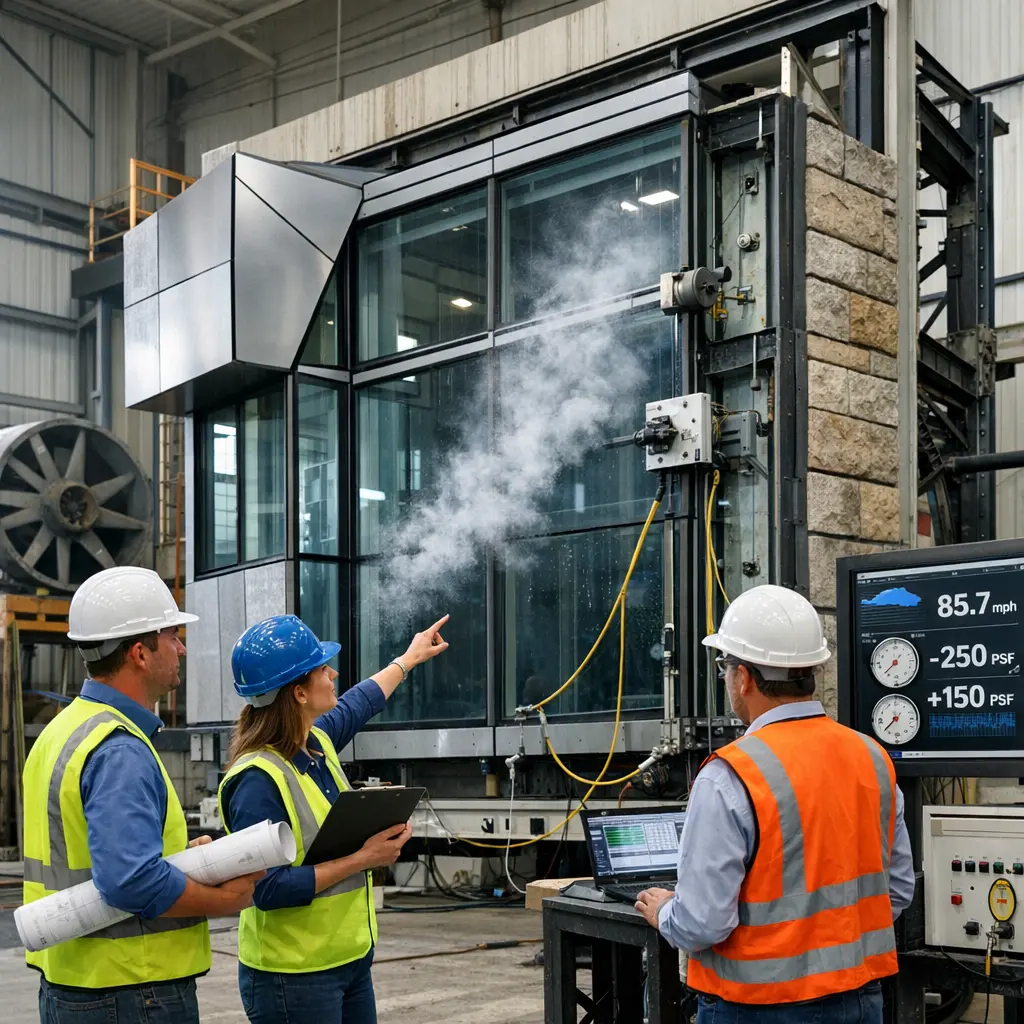
Façade engineering involves designing the exterior envelope of a building to ensure structural integrity, energy efficiency, weather resistance, and aesthetic appeal. Performance mock-ups are full-scale models of façade sections constructed and tested to evaluate their behavior under real-life conditions, such as wind, water, and thermal performance. In construction design projects, this process helps identify and resolve potential issues early, ensuring the final façade meets all technical, safety, and design requirements before full-scale implementation.
💡 Key Takeaways
- Understand the role of façade engineering in ensuring performance, durability, and safety of a building envelope.
- Explain how performance mock-ups are used to test and validate facade details, materials, and connections before full-scale construction.
- Identify key performance criteria evaluated in mock-ups, such as thermal performance, moisture management, air leakage, wind resistance, and rain penetration.
- Describe the process of creating and evaluating a façade mock-up, including testing methods, instrumentation, and acceptance criteria.
- Recognize how mock-ups inform procurement, constructability, quality control, and compliance with codes and standards.
❓ Frequently Asked Questions
What is façade engineering?
Façade engineering designs and analyzes a building’s exterior enclosure (walls, glazing, roofs) to control heat, moisture, air, daylight, acoustics, and loads while ensuring durability and aesthetics.
What are performance mock-ups in façade projects?
Mock-ups are physical or digital samples of a façade assembly used to verify details, materials, connections, and overall performance before full-scale fabrication.
What tests are typically evaluated with façade performance mock-ups?
Tests often include water penetration, air leakage, wind load/pressure, thermal performance, condensation risk, and durability of joints and fasteners.
Why are façade performance mock-ups required?
They validate design intent, ensure constructability, reduce risk, and confirm compliance with codes and client requirements before large-scale production.