Factory Digital Twins & IIoT Transformation refers to the integration of digital twin technology and the Industrial Internet of Things (IIoT) in manufacturing environments. Digital twins create virtual replicas of physical factory assets, enabling real-time monitoring, simulation, and optimization. Coupled with IIoT, which connects machines and systems via smart sensors, this transformation enhances operational efficiency, predictive maintenance, and data-driven decision-making, creating new career opportunities in engineering and technology fields.
Factory Digital Twins & IIoT Transformation
Factory Digital Twins & IIoT Transformation refers to the integration of digital twin technology and the Industrial Internet of Things (IIoT) in manufacturing environments. Digital twins create virtual replicas of physical factory assets, enabling real-time monitoring, simulation, and optimization. Coupled with IIoT, which connects machines and systems via smart sensors, this transformation enhances operational efficiency, predictive maintenance, and data-driven decision-making, creating new career opportunities in engineering and technology fields.
💡 Key Takeaways
- Understand what a factory digital twin is and how it mirrors the physical factory.
- Learn how IIoT data from sensors and equipment feeds the digital twin in real time.
- Discover benefits like predictive maintenance, reduced downtime, and improved production quality.
- Identify essential steps to start an IIoT transformation and digital twin project (data sources, device integration, analytics, governance).
❓ Frequently Asked Questions
What is a digital twin in manufacturing?
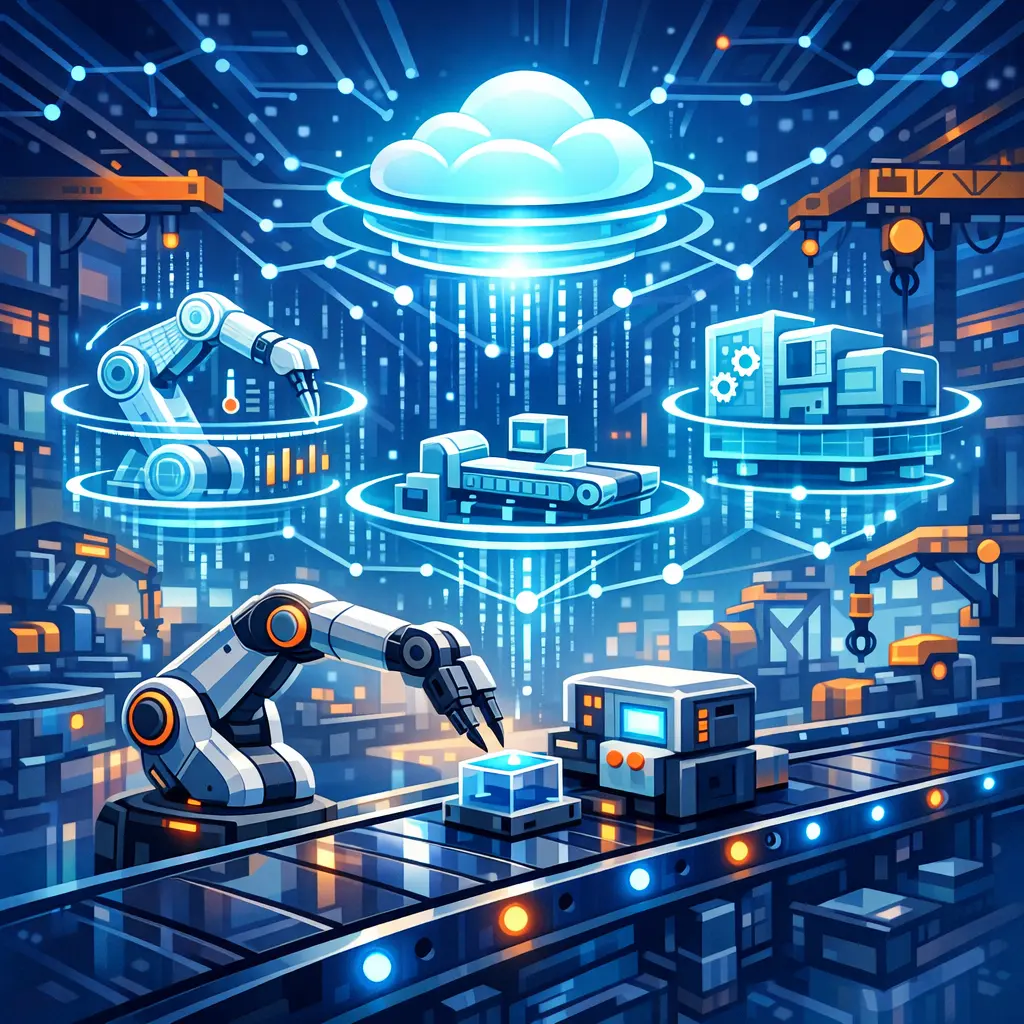
A live, virtual replica of a factory, line, or asset that mirrors its real-time state using data from sensors and systems to simulate, analyze, and optimize performance.
How does the Industrial Internet of Things (IIoT) support factory digital twins?
IIoT connects sensors, machines, and systems to collect real-time data that feeds the digital twin, enabling monitoring, analytics, and simulations.
What are typical benefits of using factory digital twins?
Predictive maintenance, reduced downtime, improved throughput, energy optimization, and faster scenario testing for changes.
What data sources are commonly used to build and feed a factory digital twin?
Sensor data (temperature, vibration, pressure), equipment specifications, maintenance history, production schedules, SCADA/PLC data, and ERP information.