Family structures and kinship refer to the ways in which societies organize relationships among relatives and household members. These structures, influenced by culture, religion, and societal norms, determine roles, responsibilities, and inheritance within families. Kinship systems shape social identity, support networks, and expectations for behavior. Religious beliefs often prescribe marriage, lineage, and gender roles, while cultural traditions define family forms, such as nuclear, extended, or joint families, impacting social cohesion and community life.
Family Structures & Kinship
Family structures and kinship refer to the ways in which societies organize relationships among relatives and household members. These structures, influenced by culture, religion, and societal norms, determine roles, responsibilities, and inheritance within families. Kinship systems shape social identity, support networks, and expectations for behavior. Religious beliefs often prescribe marriage, lineage, and gender roles, while cultural traditions define family forms, such as nuclear, extended, or joint families, impacting social cohesion and community life.
💡 Key Takeaways
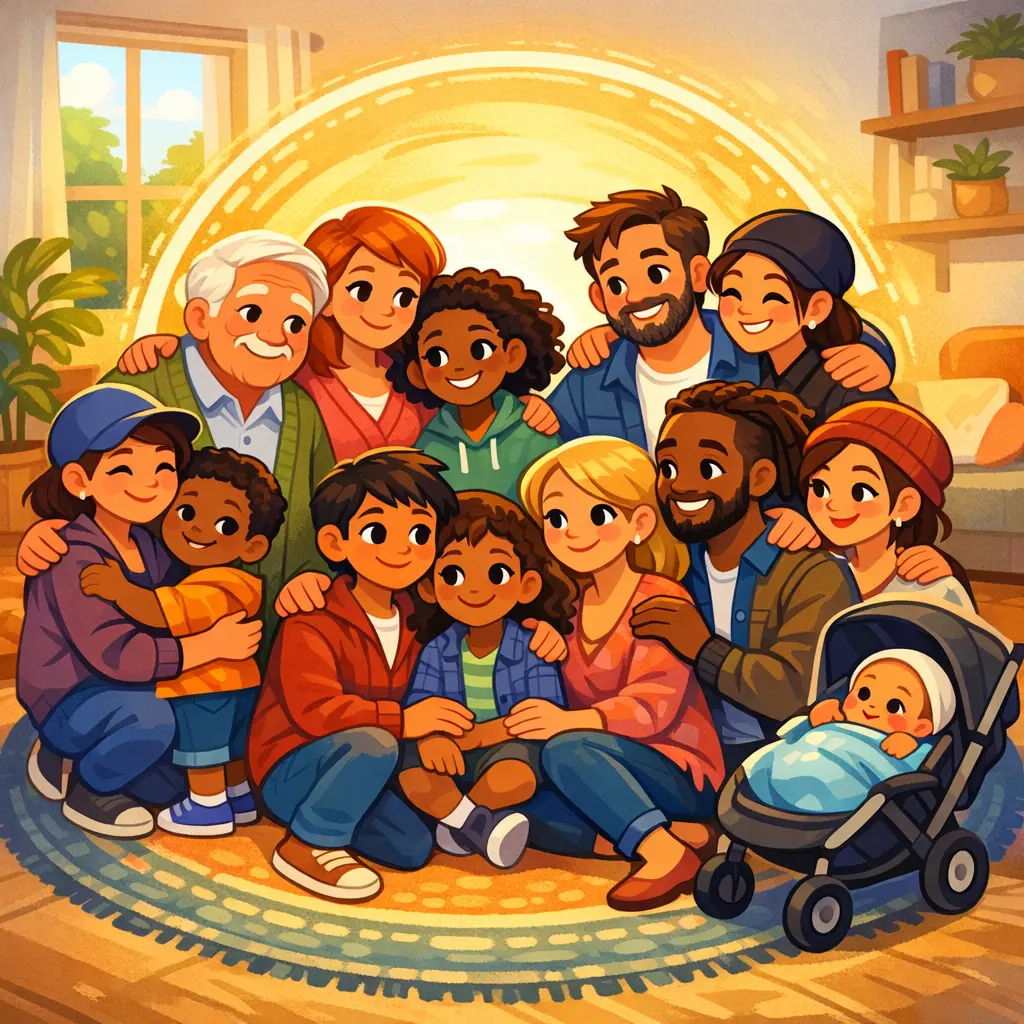
- Identify common family structures (nuclear, extended, single-parent, blended) and how they function in daily life.
- Explain kinship and how kinship terms and descent systems (patrilineal, matrilineal, bilateral) shape relationships.
- Describe how cultural, economic, and legal contexts influence family roles, responsibilities, and caregiving across societies.
- Explore how kin networks provide social support, resources, and influence patterns of inheritance and succession.
❓ Frequently Asked Questions
What is kinship?
A system of social relationships that connects people through blood, marriage, or adoption and outlines family roles, obligations, and networks.
How do nuclear and extended families differ?
Nuclear families include two generations (parents and children) living together; extended families add other relatives like grandparents, aunts, uncles, or cousins across three or more generations.
What is matrilineal and patrilineal descent?
Matrilineal descent traces ancestry through the mother’s line; patrilineal descent traces through the father’s line.
What is bilateral kinship?
A system that traces descent and kinship through both the mother’s and the father’s sides, sharing familial ties and obligations on both sides.
What is a blended (reconstituted) family?
A family formed when two people with children from previous relationships marry or form a household, creating step-parents and step-siblings.