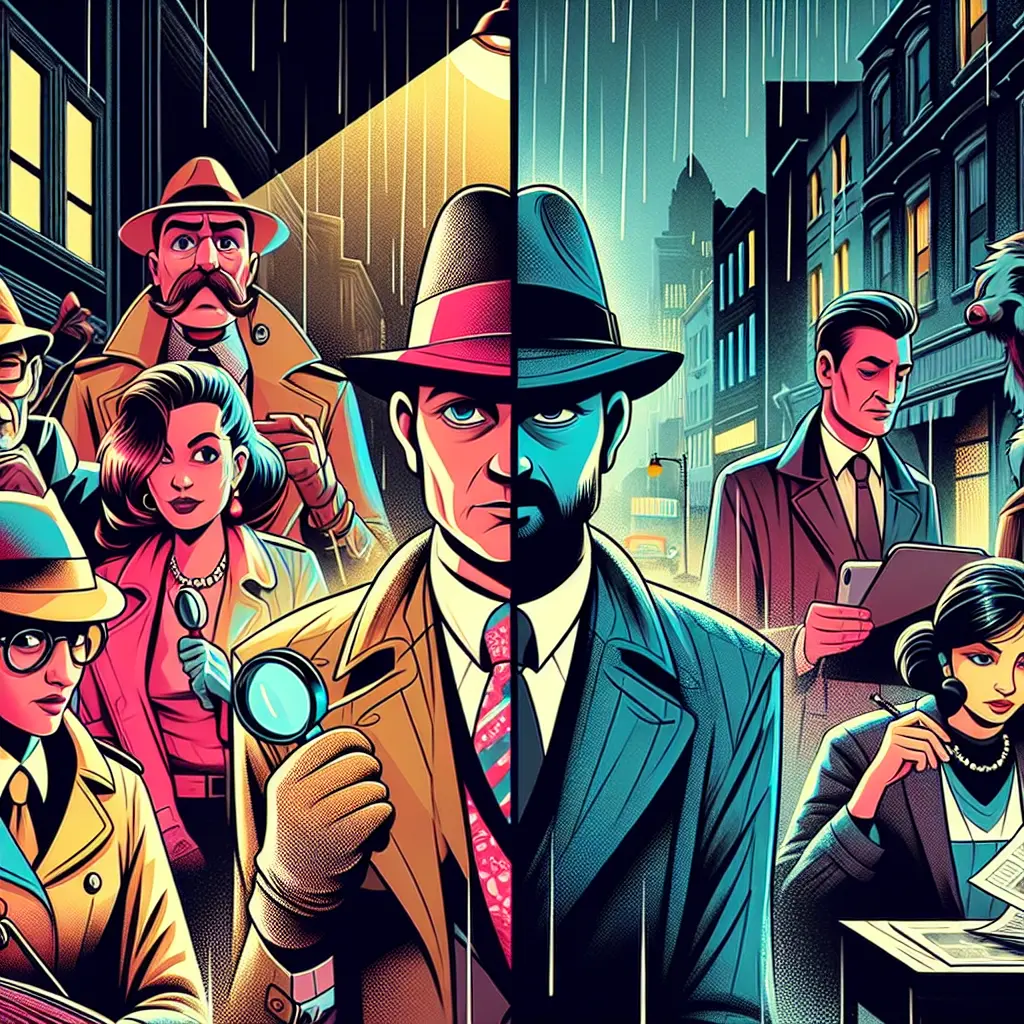
Famous detectives in pop culture, like Sherlock Holmes or Hercule Poirot, are often portrayed as brilliant, eccentric individuals who solve complex cases through sharp observation and deduction. In reality, detectives rely heavily on teamwork, standard investigative procedures, and modern technology. While pop culture emphasizes dramatic reveals and intellectual prowess, real-life investigations are more methodical, time-consuming, and collaborative, with less focus on individual genius and more on practical, evidence-based work.
Famous Detectives in Pop Culture vs Reality+50
Famous detectives in pop culture, like Sherlock Holmes or Hercule Poirot, are often portrayed as brilliant, eccentric individuals who solve complex cases through sharp observation and deduction. In reality, detectives rely heavily on teamwork, standard investigative procedures, and modern technology. While pop culture emphasizes dramatic reveals and intellectual prowess, real-life investigations are more methodical, time-consuming, and collaborative, with less focus on individual genius and more on practical, evidence-based work.
💡 Key Takeaways
- Understand how real detectives rely on teamwork, standard investigative procedures, and legal protocols rather than a lone genius.
- Learn how evidence collection, documentation, witness interviews, and chain of custody drive real investigations.
- Explore how modern technology, including digital forensics, databases, and surveillance, shapes solving crimes today.
- Distinguish pop culture myths from reality, including training, resource limits, and the importance of procedure and legality.
❓ Frequently Asked Questions
What is the main difference between pop culture detectives and real detectives?
Pop culture portrayals often show heroes solving cases solo by instinct and brilliant observation; real detectives work in teams, follow standardized procedures, and rely on evidence, forensics, and collaboration.
Do real detectives solve cases the way Sherlock Holmes does?
Not exactly. Real investigations rely on evidence, interviews, forensics, and methodical reasoning supported by colleagues and labs, rather than instantaneous deductions.
What role does technology play in modern detective work?
Technology aids investigations with DNA, fingerprint analysis, digital forensics, surveillance, databases, and case-management tools.
Why are fictional detectives often portrayed as eccentric or flamboyant?
Authors use distinctive personalities to create memorable characters and dramatic tension; real investigators prioritize professionalism, ethics, and teamwork.
What is a typical workflow for a real detective?
Reconstruct the facts, plan the investigation, collect physical and digital evidence, interview witnesses, analyze findings with forensics, coordinate with prosecutors, and present conclusions.