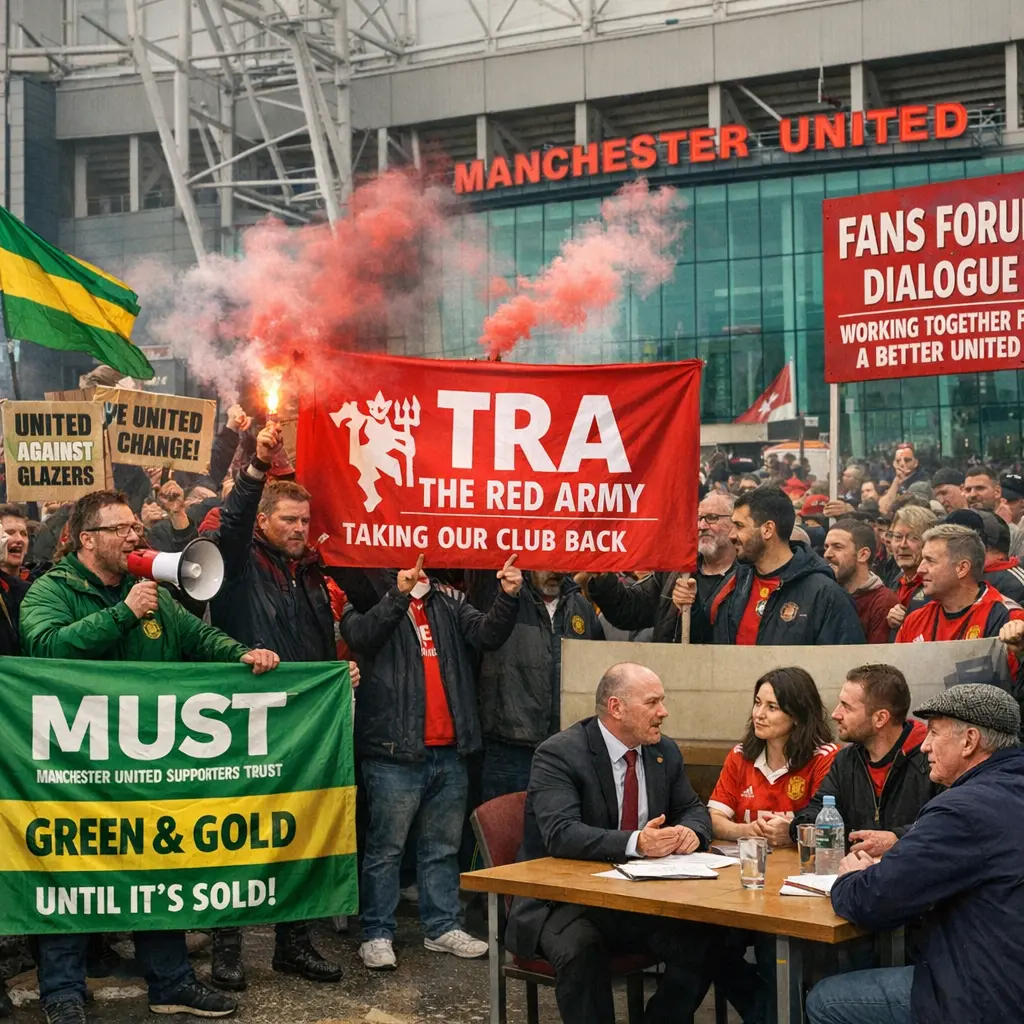
Fan protests and engagement at Manchester United F.C. involve organized supporter groups like the Manchester United Supporters Trust (MUST) and The Red Army (TRA), who advocate for fans’ interests, ownership concerns, and club governance. These groups frequently engage in dialogue with club management, organize protests, and promote campaigns to influence decisions, especially regarding ownership, ticket pricing, and matchday experience, highlighting the importance of fan voices in the club’s operations and future direction.
Fan Protests and Engagement: MUST, TRA, and Dialogue
Fan protests and engagement at Manchester United F.C. involve organized supporter groups like the Manchester United Supporters Trust (MUST) and The Red Army (TRA), who advocate for fans’ interests, ownership concerns, and club governance. These groups frequently engage in dialogue with club management, organize protests, and promote campaigns to influence decisions, especially regarding ownership, ticket pricing, and matchday experience, highlighting the importance of fan voices in the club’s operations and future direction.
💡 Key Takeaways
- Understand how fan protests reflect engagement dynamics and can influence decisions in media projects.
- Identify the roles of MUST, TRA, and Dialogue frameworks in guiding fan interactions with creators and brands.
- Compare protest-oriented actions with dialogue-driven engagement to evaluate effectiveness, risks, and outcomes.
- Learn practical, respectful strategies for fans and creators to communicate, negotiate expectations, and respond to feedback.
❓ Frequently Asked Questions
What is the focus of 'Fan Protests and Engagement: MUST, TRA, and Dialogue'?
It explores how fans express concerns and engage with creators or brands through protests, campaigns, and dialogue, balancing passion with respect.
What does constructive dialogue look like in fan engagement?
Two-way, respectful conversations that listen, ask questions, share evidence, and seek understanding or compromise rather than personal attacks.
How can fans protest ethically and effectively?
Clarify goals, use evidence-based messages, organize transparently, follow platform rules, and avoid harassment or doxxing.
What do MUST, TRA, and Dialogue refer to in this article?
They are engagement frameworks used to categorize fan actions; MUST and TRA label different approaches, while Dialogue highlights two-way communication. Check the article for exact definitions.
How can you tell if fan engagement is making a difference?
Look for responses from creators or organizations, policy or image changes, media coverage, and shifts in community sentiment—impact often takes time.