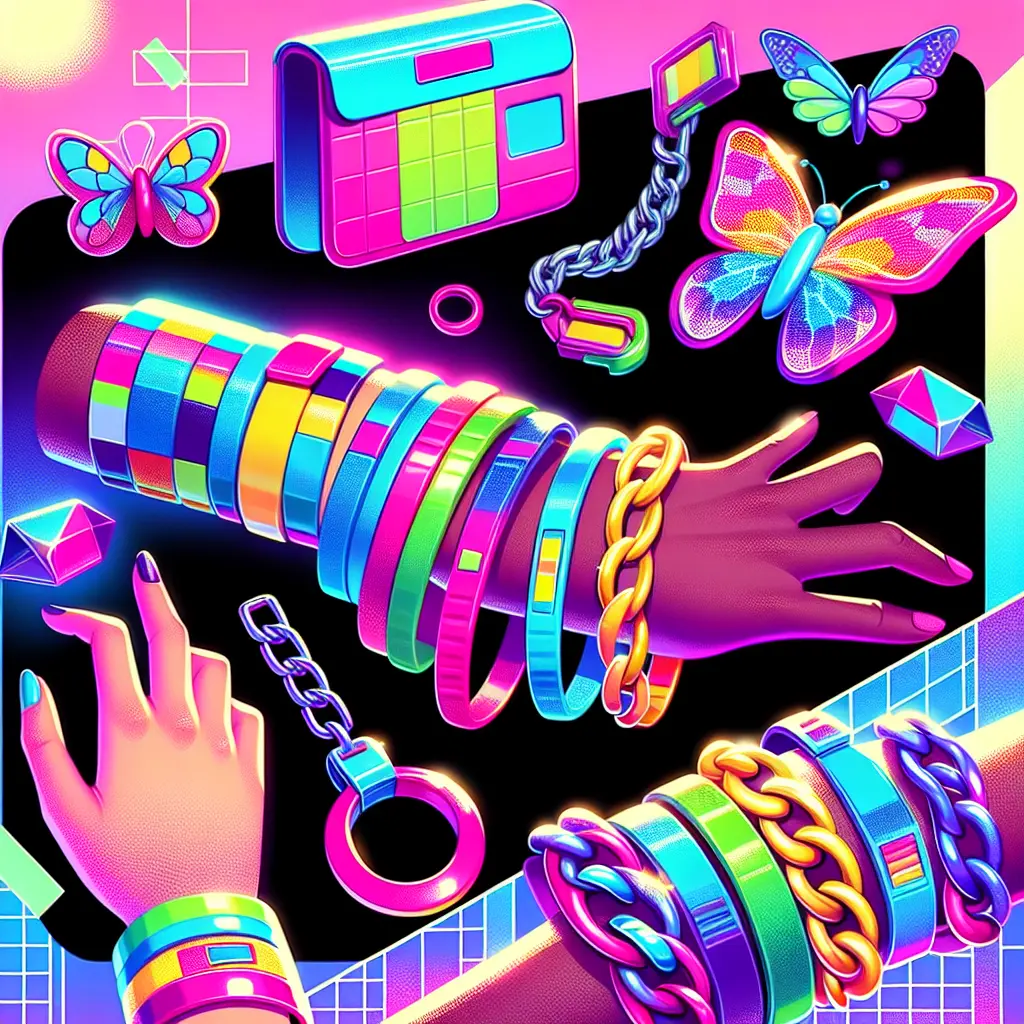
Fashion accessories like slap bracelets, chain wallets, and butterfly clips were iconic trends, especially popular in the 1990s and early 2000s. Slap bracelets added fun and color to any outfit, while chain wallets combined style with practicality, often linked to alternative fashion. Butterfly clips were playful hair accessories, used to create whimsical hairstyles. Together, these items reflect a youthful, expressive approach to personal style during their peak popularity.
Fashion Accessories: Slap Bracelets, Chain Wallets, Butterfly Clips
Fashion accessories like slap bracelets, chain wallets, and butterfly clips were iconic trends, especially popular in the 1990s and early 2000s. Slap bracelets added fun and color to any outfit, while chain wallets combined style with practicality, often linked to alternative fashion. Butterfly clips were playful hair accessories, used to create whimsical hairstyles. Together, these items reflect a youthful, expressive approach to personal style during their peak popularity.
💡 Key Takeaways
- Identify slap bracelets, chain wallets, and butterfly clips as iconic 1990s–2000s fashion accessories.
- Explain how slap bracelets work, why they became popular, and what safety and design factors influenced their trend.
- Explore chain wallets as a blend of style and practicality and their associations with alternative fashion subcultures.
- Describe how butterfly clips reflected era-wide color palettes and DIY styling trends.
- Understand how nostalgia and pop culture influence fashion trends and why these accessories reappear in revivals.
❓ Frequently Asked Questions
What is a slap bracelet and when were they popular?
A slap bracelet is a flexible band with a metal core wrapped in fabric or plastic that snaps around the wrist when tapped. They surged in popularity in the early 1990s, adding colorful fun to outfits, though safety concerns led to restrictions in some places.
What are chain wallets and why did they become iconic?
A wallet attached to a metal chain that you clip to a belt or pocket. They were popular in grunge, punk, and skate cultures for both style and security, offering a rugged, edgy look while keeping the wallet handy.
What are butterfly clips and what made them a staple of 90s/2000s fashion?
Butterfly clips are small hair clips shaped like butterflies, available in bright colors. They were a quick way to add playful flair to hairstyles and became a defining accessory of late 1990s and early 2000s fashion.
How do these accessories reflect 90s–2000s fashion and culture?
They epitomize the era’s playful, bold, and DIY-friendly style. These pieces let people express individuality, align with subcultures and pop culture trends, and demonstrate the era’s mix of color, texture, and experimentation.