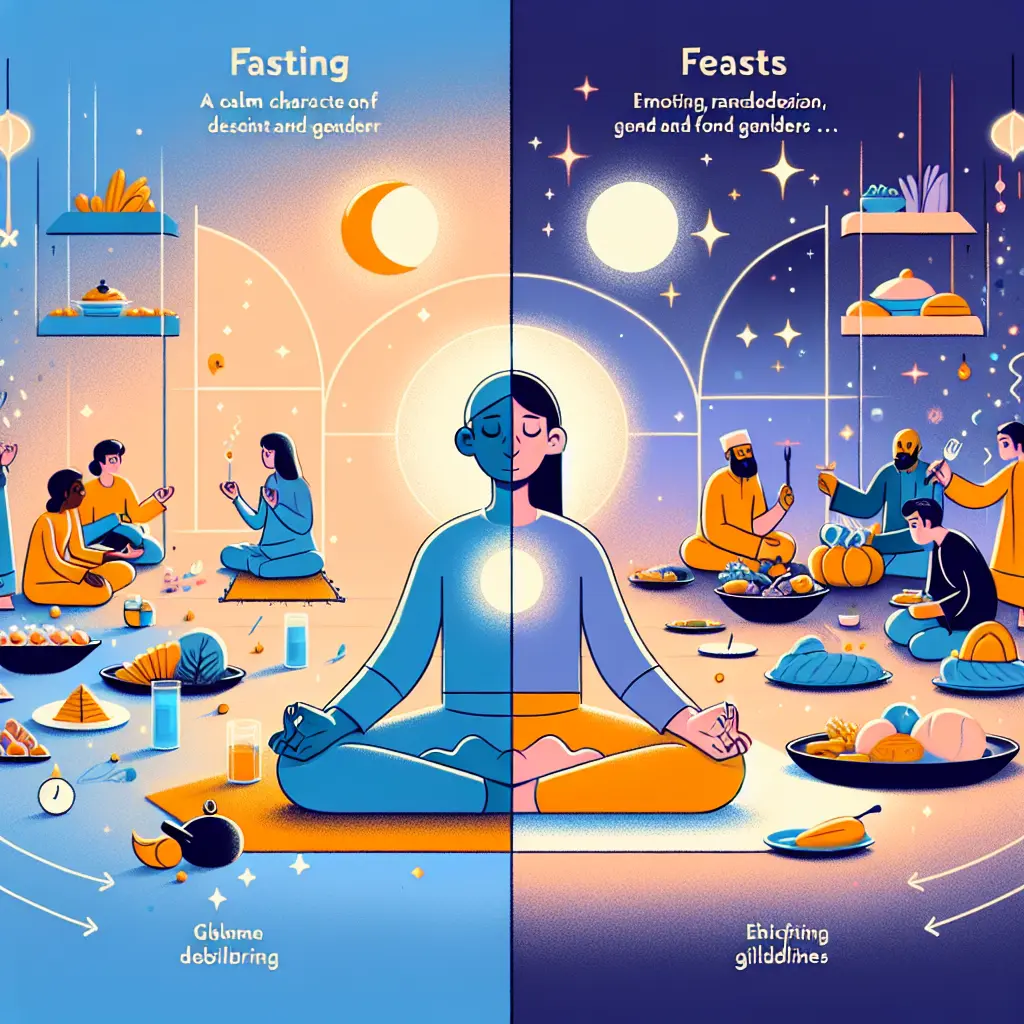
Fasting and feasts represent two contrasting yet interconnected practices found in many cultures and religions. Fasting involves voluntarily abstaining from food or certain pleasures for spiritual, health, or ritual reasons, often symbolizing discipline and purification. Feasts, on the other hand, are celebratory gatherings marked by abundant food, joy, and communal bonding, typically following periods of fasting. Together, they create a rhythm of restraint and celebration, reflecting cycles of renewal and gratitude.
Fasting & Feasts
Fasting and feasts represent two contrasting yet interconnected practices found in many cultures and religions. Fasting involves voluntarily abstaining from food or certain pleasures for spiritual, health, or ritual reasons, often symbolizing discipline and purification. Feasts, on the other hand, are celebratory gatherings marked by abundant food, joy, and communal bonding, typically following periods of fasting. Together, they create a rhythm of restraint and celebration, reflecting cycles of renewal and gratitude.
💡 Key Takeaways
- Understand how fasting and feasts function together in cultural and religious calendars.
- Explain why people fast (spiritual, health, ritual) and how abstaining conveys discipline and purification.
- Learn how seasons and special events shape when fasting and feasting occur.
- Explore how feasts build community, gratitude, and shared celebration alongside periods of reflection.
❓ Frequently Asked Questions
What is fasting?
Fasting is voluntarily abstaining from food or certain pleasures for spiritual, health, or ritual reasons, often symbolizing discipline and purification.
What is a feast?
A feast is a celebratory meal or series of meals with abundant food, usually shared with family or community during special occasions or seasons.
How are fasting and feasts connected?
They are often linked: fasting can precede or accompany a feast, heightening focus, gratitude, and self-control, with the break of the fast part of the celebration.
How do events or seasons influence fasting and feasts?
Many cultures tie fasting and feasts to religious calendars or seasonal cycles, marking times of renewal, reflection, harvest, or remembrance.