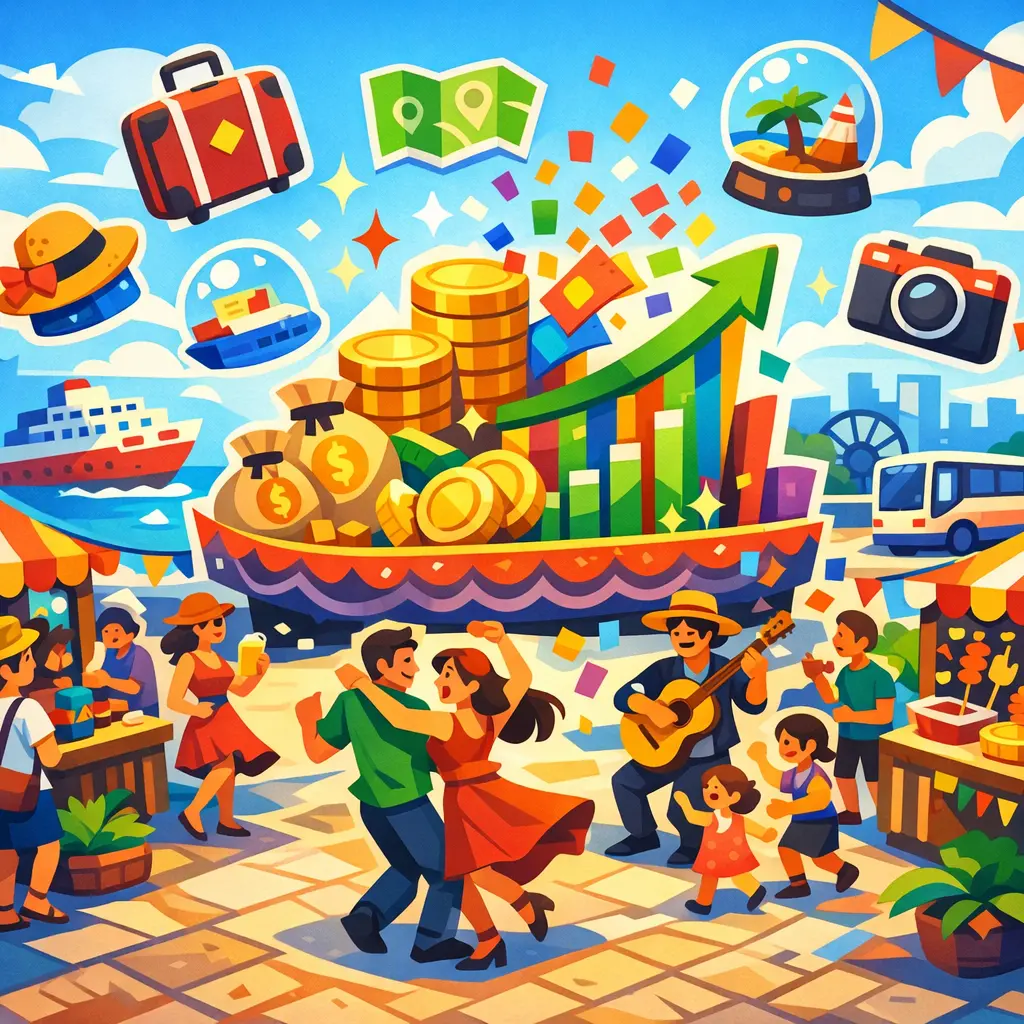
Festival economies and tourism refer to the economic activities generated by cultural, religious, and societal festivals, attracting both local and international visitors. These events stimulate local businesses, create jobs, and promote regional identity. Festivals showcase traditions, art, and heritage, fostering cultural exchange and community pride. Religious and societal celebrations often boost tourism, encouraging spending on accommodation, food, transport, and souvenirs, thus significantly contributing to the local and national economy.
Festival Economies & Tourism
Festival economies and tourism refer to the economic activities generated by cultural, religious, and societal festivals, attracting both local and international visitors. These events stimulate local businesses, create jobs, and promote regional identity. Festivals showcase traditions, art, and heritage, fostering cultural exchange and community pride. Religious and societal celebrations often boost tourism, encouraging spending on accommodation, food, transport, and souvenirs, thus significantly contributing to the local and national economy.
💡 Key Takeaways
- Understand how festival events stimulate local economies through visitor spending on accommodation, food, transport, and services.
- Learn how festivals influence tourism demand, create seasonal peaks, and support small businesses and entrepreneurs.
- Explore economic impact concepts such as direct, indirect, and induced spending and how multipliers measure festival benefits.
- Recognize sustainability and planning considerations to balance revenue with community wellbeing, cultural integrity, and infrastructure capacity.
❓ Frequently Asked Questions
What is the festival economy?
The festival economy describes how events generate income and jobs through tickets, vendors, accommodation, food, and services, boosting local spending.
How do festivals impact local tourism and the economy?
Festivals attract visitors, raise hotel occupancy, increase spending on food, transport, and attractions, and can raise the area's profile for future tourism.
What factors influence festival tourism demand?
Location, accessibility, programming, price, marketing, safety, seasonality, and the quality of local tourism infrastructure shape attendance.
How can communities maximize positive impacts of festivals?
Plan strategically with stakeholders, invest in infrastructure, promote inclusive, sustainable practices, manage capacity, and measure economic effects to guide decisions.