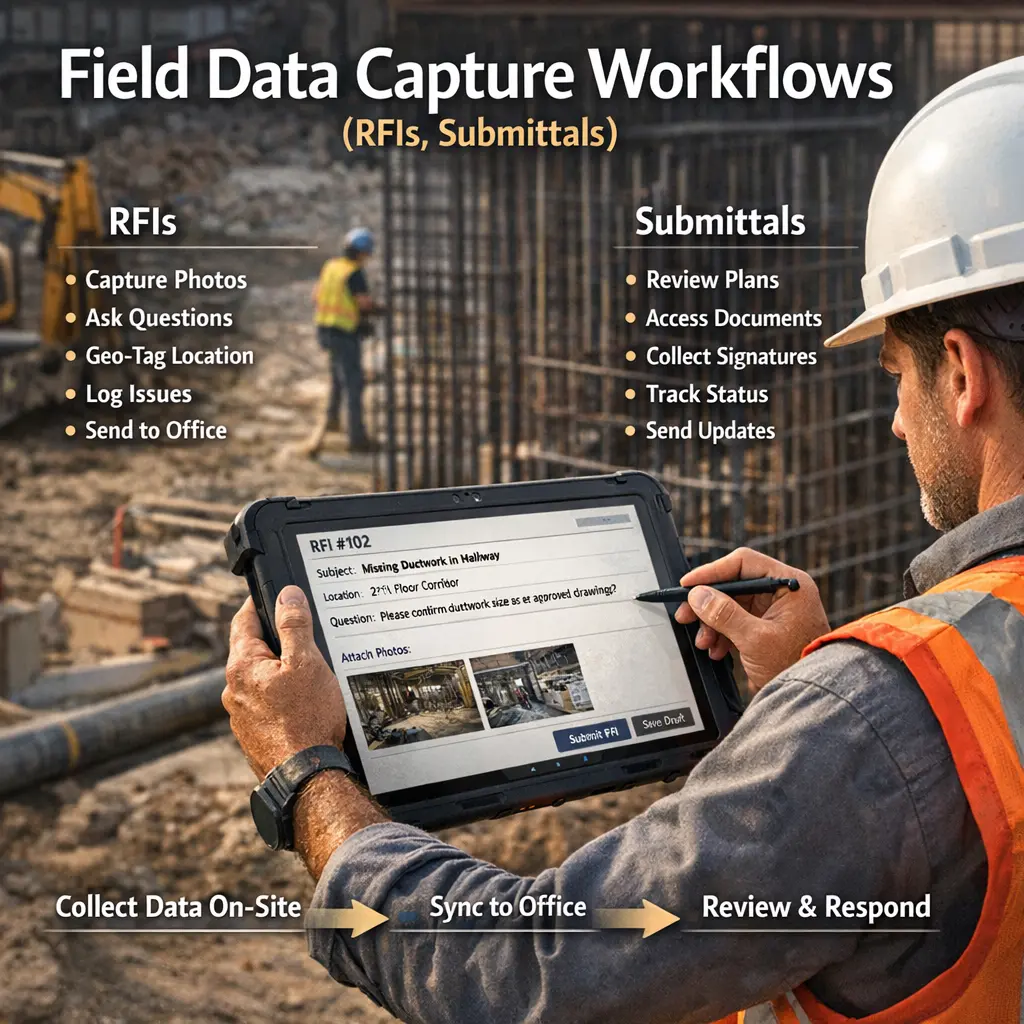
Field Data Capture Workflows refer to the digital processes used on construction sites to collect, manage, and share information such as Requests for Information (RFIs) and Submittals. Utilizing digital applications, these workflows streamline communication between field teams and project stakeholders, ensuring real-time data entry, document tracking, and faster decision-making. This enhances accuracy, reduces paperwork, and improves overall project efficiency by centralizing critical construction information in accessible digital platforms.
Field Data Capture Workflows (RFIs, Submittals)
Field Data Capture Workflows refer to the digital processes used on construction sites to collect, manage, and share information such as Requests for Information (RFIs) and Submittals. Utilizing digital applications, these workflows streamline communication between field teams and project stakeholders, ensuring real-time data entry, document tracking, and faster decision-making. This enhances accuracy, reduces paperwork, and improves overall project efficiency by centralizing critical construction information in accessible digital platforms.
💡 Key Takeaways
- Define RFIs and submittals and their role in field data capture workflows.
- Capture, organize, and track RFIs and submittals from field to approval with version control.
- Understand common approval workflows, deadlines, and documentation requirements.
- Apply best practices for digital capture, data integrity, and system integration.
❓ Frequently Asked Questions
What is an RFI in field data capture workflows?
RFI stands for Request For Information. It is used by field teams to ask for clarification on drawings, specs, or scope that are incomplete or ambiguous, so a designer or engineer can provide a formal answer.
What is a Submittal?
A Submittal is a document or product data package (shop drawings, product data, samples) prepared by a contractor or supplier that must be reviewed and approved before fabrication or installation.
How do RFIs and Submittals typically flow in a project workflow?
RFIs are raised to resolve issues and answered by the design team; Submittals follow an approval cycle where the contractor submits and the design team reviews before procurement or installation.
What field data should you capture for RFIs and Submittals?
For RFIs: RFI number, date, project, sender/receiver, question, location, and potential impact on scope or schedule. For Submittals: submittal number, due date, item description, reference drawings/specs, supplier, status, and approval notes.