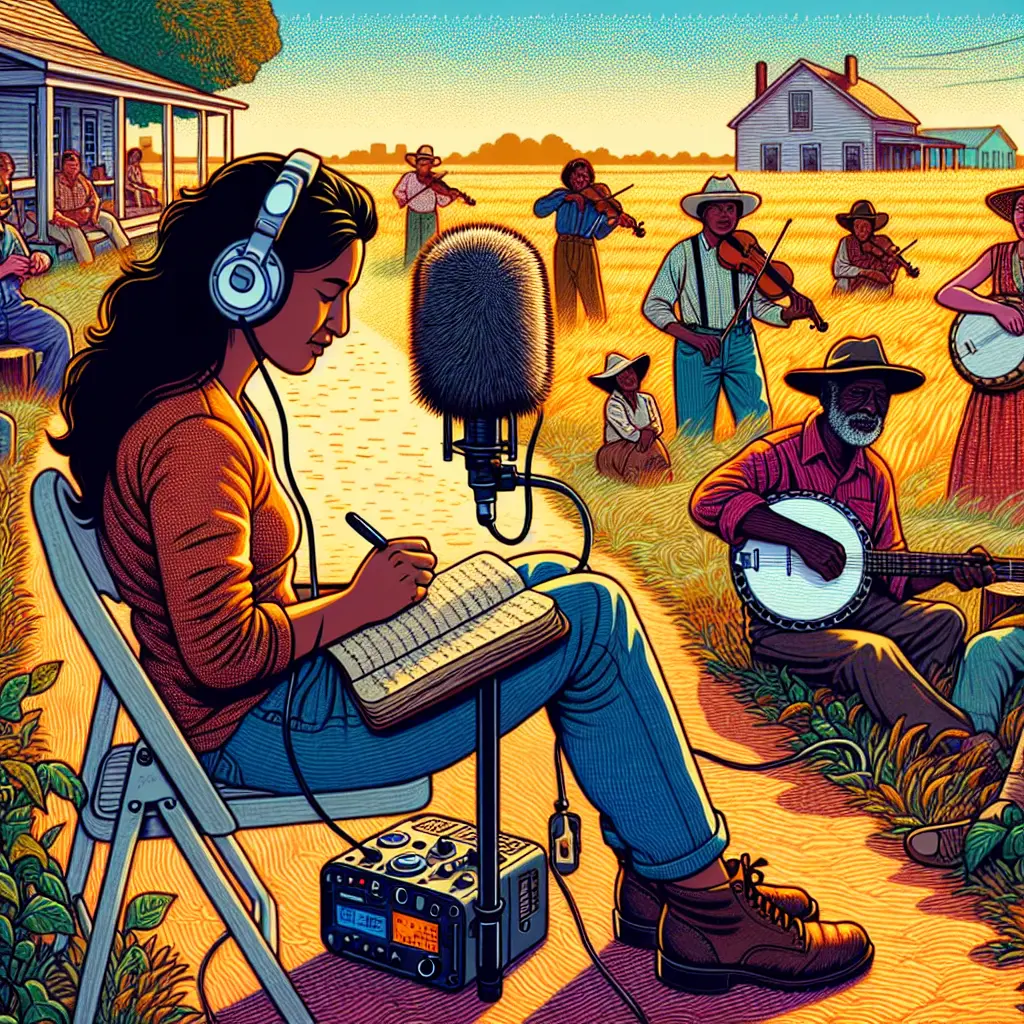
Field recording and American ethnomusicology refer to the practice of capturing music, sounds, and oral traditions in their natural environments across the United States. Ethnomusicologists use field recordings to document and study diverse musical traditions, from folk and Indigenous music to blues and jazz. These recordings preserve cultural heritage, provide insight into community identities, and contribute valuable resources for research, analysis, and education in the study of American music and culture.
Field Recording and American Ethnomusicology
Field recording and American ethnomusicology refer to the practice of capturing music, sounds, and oral traditions in their natural environments across the United States. Ethnomusicologists use field recordings to document and study diverse musical traditions, from folk and Indigenous music to blues and jazz. These recordings preserve cultural heritage, provide insight into community identities, and contribute valuable resources for research, analysis, and education in the study of American music and culture.
💡 Key Takeaways
- Understand what field recording is and how ethnomusicologists collect music and oral traditions in real-world U.S. settings.
- Explore the range of musical traditions documented in American ethnomusicology, from folk and Indigenous music to blues and beyond.
- Describe how field recordings are collected, archived, and analyzed to reveal the cultural and social contexts of performances.
- Consider ethical practices in fieldwork, including informed consent, ownership, reciprocity, and respectful engagement with communities.
- Explain how field recordings contribute to studying the evolution of American music and its diverse histories.
❓ Frequently Asked Questions
What is field recording in ethnomusicology?
Field recording is the practice of capturing music, sounds, and oral traditions in their natural settings using portable equipment to document practices as they occur.
What does ethnomusicology study in the American context?
It explores how music functions in American cultures—covering folk, Indigenous, blues, and immigrant traditions—and how sound shapes identity, history, and community.
Why are field recordings valuable for American music history?
They preserve performances and oral traditions that might disappear, providing primary data on style, repertoire, language, and social context across regions.
What challenges do researchers face when field recording in the United States?
Ethical considerations, consent and ownership, language and cultural sensitivity, logistical hurdles, and technical issues like sound quality and equipment safety.