Financial Fair Play (FFP) refers to UEFA regulations ensuring football clubs like Manchester United operate within their financial means, preventing excessive spending and debt accumulation. Compliance requires clubs to balance their books, limiting losses and promoting sustainability. For Manchester United, FFP imposes constraints on transfer spending, wage bills, and investment strategies, compelling the club to prioritize commercial revenue, player development, and efficient financial management to remain competitive while adhering to regulatory limits.
Financial Fair Play: Compliance and Constraints
Financial Fair Play (FFP) refers to UEFA regulations ensuring football clubs like Manchester United operate within their financial means, preventing excessive spending and debt accumulation. Compliance requires clubs to balance their books, limiting losses and promoting sustainability. For Manchester United, FFP imposes constraints on transfer spending, wage bills, and investment strategies, compelling the club to prioritize commercial revenue, player development, and efficient financial management to remain competitive while adhering to regulatory limits.
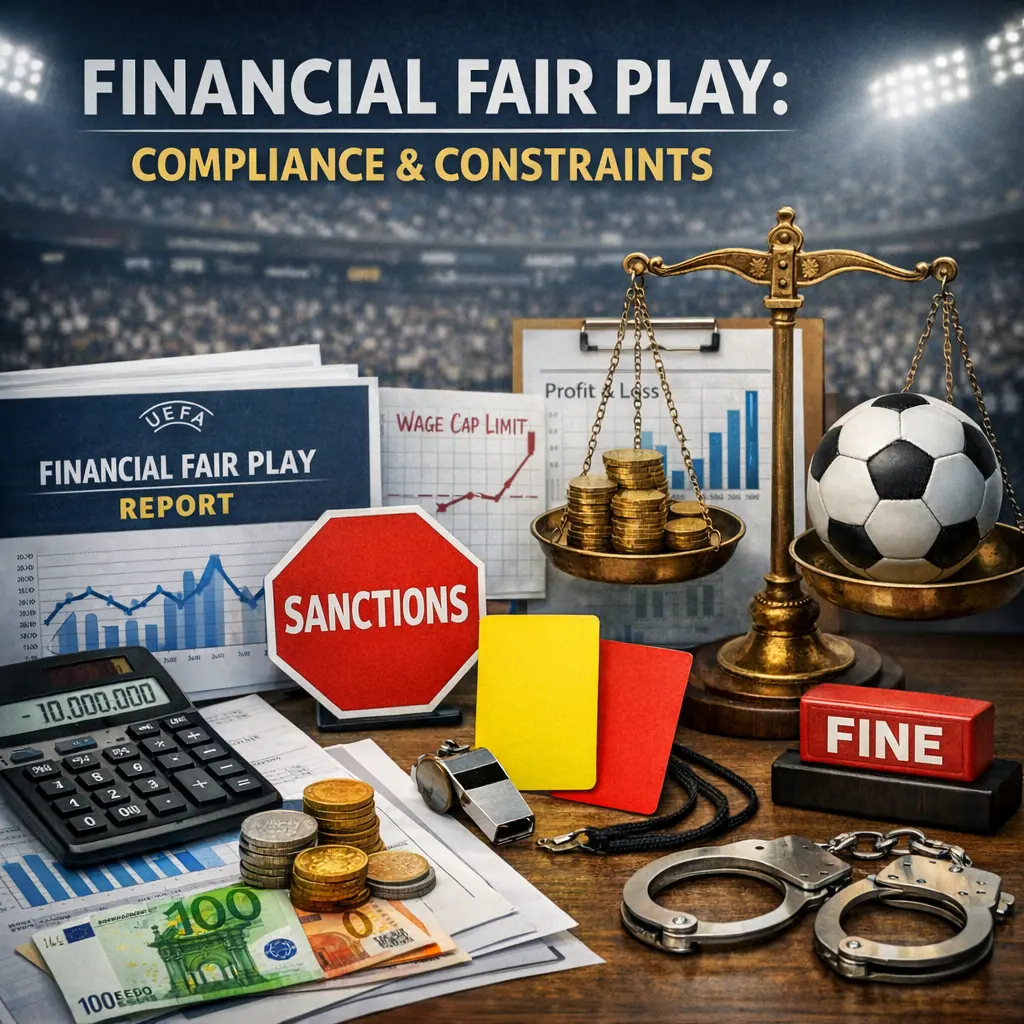
💡 Key Takeaways
- Understand the purpose of Financial Fair Play and how it aims to promote financial sustainability and competitive balance.
- Identify key constraints, including the break-even requirement, allowable losses, and revenue rules.
- Explain how clubs report, monitor, and audit financial data to prove compliance to authorities.
- Recognize possible sanctions for breaches and how FFP affects club strategy, transfers, and sponsorship deals.
❓ Frequently Asked Questions
What is Financial Fair Play (FFP) and why does it exist?
FFP is UEFA’s set of rules designed to keep football clubs financially sustainable by ensuring spending aligns with revenues, reducing excessive debt and promoting fair competition.
What counts as revenue and expenses under FFP?
Revenue includes football-related income such as broadcasting, sponsorship, prize money, and matchday receipts. Expenses cover wages, amortization of transfer fees, and other operating costs. Related-party deals must be at arm’s length and disclosed.
How does the break-even constraint work?
Clubs must keep losses within an acceptable threshold over a rolling monitoring period (typically three years). If losses exceed the limit, the club may be deemed non-compliant and face sanctions.
What sanctions can occur for FFP non-compliance?
Sanctions can include fines, restrictions on player and staff registrations, withholding prize money, or, in severe cases, exclusion from UEFA competitions.