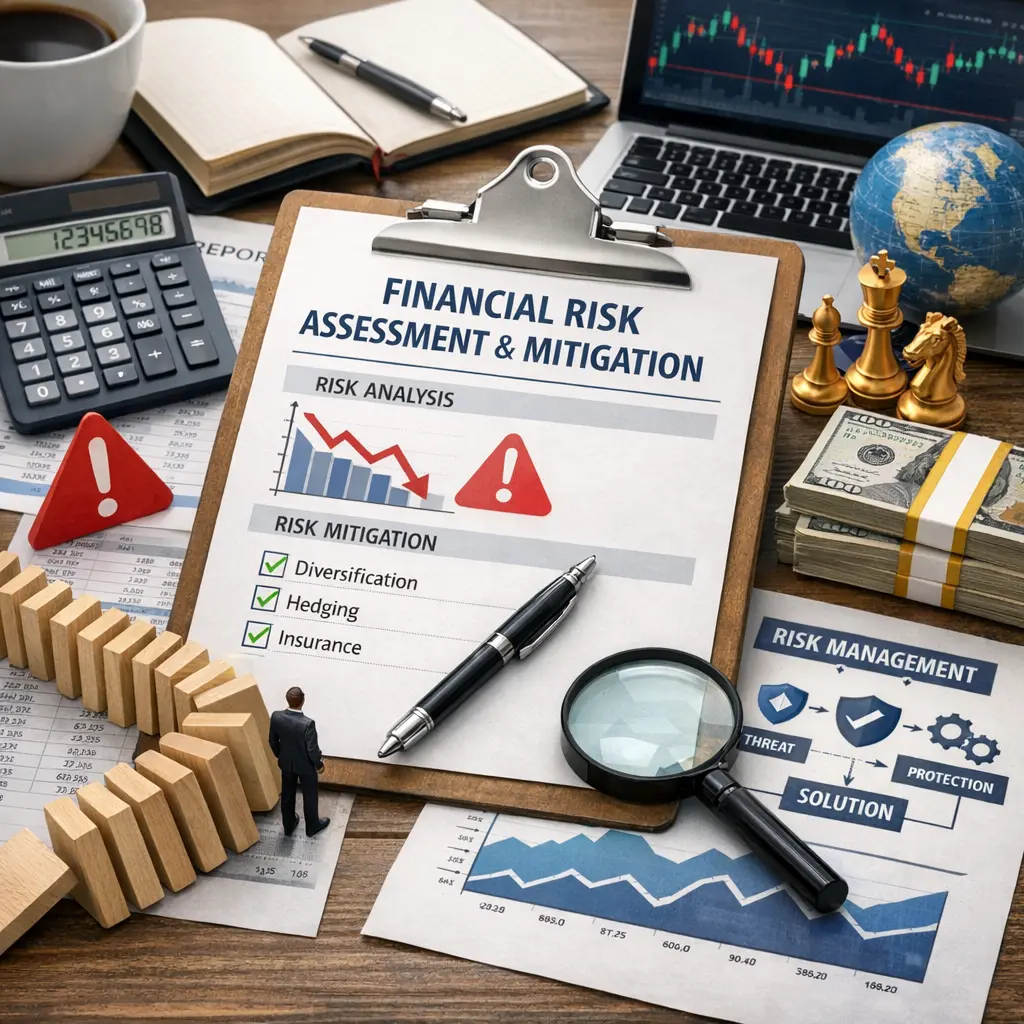
Financial risk assessment and mitigation involve identifying, analyzing, and evaluating potential financial threats that could negatively impact an organization’s assets, earnings, or operations. Through systematic analysis, businesses can anticipate risks such as market volatility, credit defaults, or liquidity issues. Mitigation strategies include diversifying investments, implementing robust internal controls, purchasing insurance, and developing contingency plans, ensuring financial stability and supporting informed decision-making within financial management and business practices.
Financial Risk Assessment & Mitigation
Financial risk assessment and mitigation involve identifying, analyzing, and evaluating potential financial threats that could negatively impact an organization’s assets, earnings, or operations. Through systematic analysis, businesses can anticipate risks such as market volatility, credit defaults, or liquidity issues. Mitigation strategies include diversifying investments, implementing robust internal controls, purchasing insurance, and developing contingency plans, ensuring financial stability and supporting informed decision-making within financial management and business practices.
💡 Key Takeaways
- Identify the main financial risks (credit, market, liquidity, operational).
- Learn to assess risk using qualitative and quantitative indicators.
- Explore mitigation options like hedging, diversification, and contingency planning.
- Build a simple risk management framework with monitoring and review.
❓ Frequently Asked Questions
What is financial risk assessment?
A structured process to identify, quantify, and prioritize financial risks that could impact outcomes, enabling informed decisions and controls.
What are common financial risk types?
Market risk: price or rate changes; Credit risk: counterparty default; Liquidity risk: insufficient cash to meet obligations; Operational risk: failures in processes, people, or systems; Interest rate risk: changes in rates affecting borrowing costs or asset values.
What is risk mitigation?
Actions taken to reduce the probability or impact of risks, such as hedging, diversification, stronger controls, and contingency planning.
What is residual risk and how is it handled?
Residual risk is the remaining risk after mitigation; it is monitored and either accepted, reduced further, or insured.