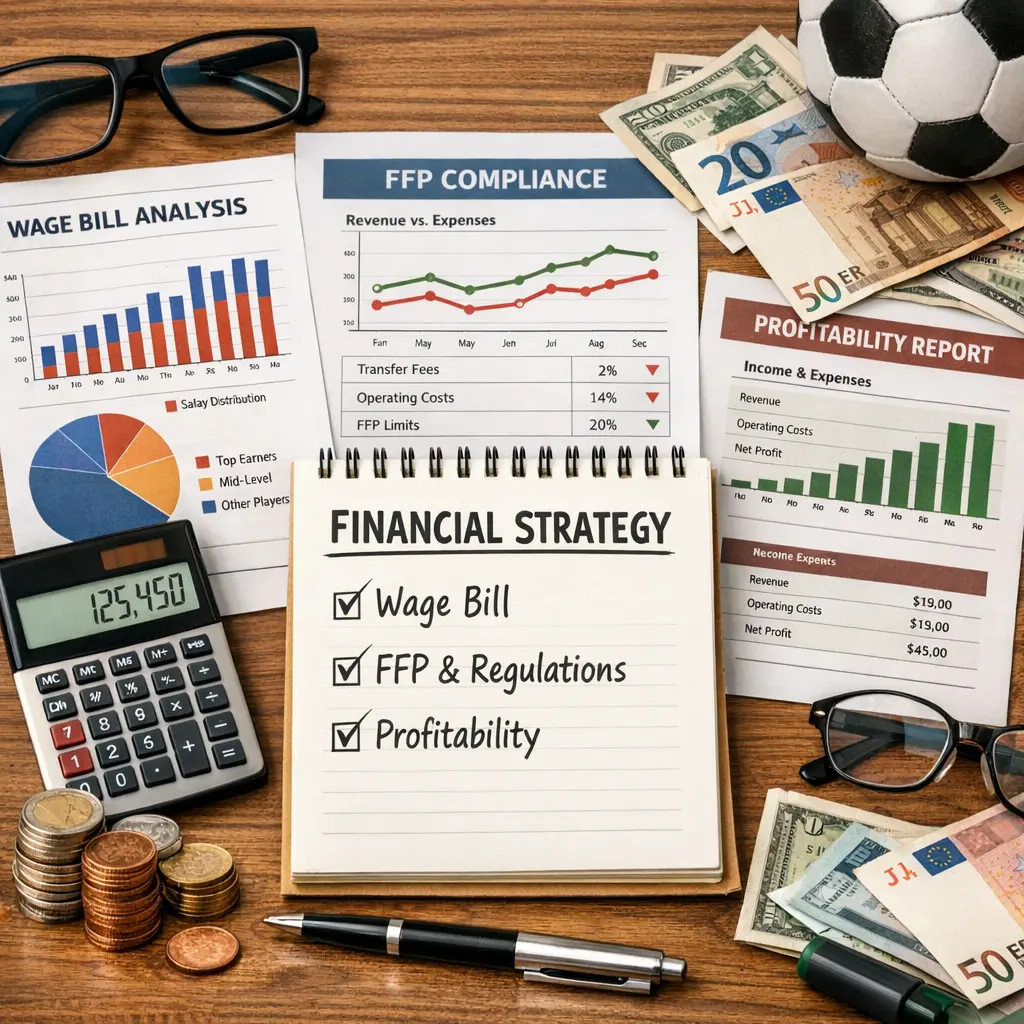
This phrase refers to Tottenham Hotspur F.C.’s approach to managing player salaries (wage bill), adhering to Financial Fair Play (FFP) regulations, and ensuring overall profitability. It highlights the club’s efforts to balance competitive squad investment with sustainable spending, avoiding excessive debt or losses. Tottenham’s financial strategy aims to optimize resources, comply with governing bodies’ rules, and secure long-term financial health while remaining competitive in domestic and European football.
Financial Strategy: Wage Bill, FFP & Profitability
This phrase refers to Tottenham Hotspur F.C.’s approach to managing player salaries (wage bill), adhering to Financial Fair Play (FFP) regulations, and ensuring overall profitability. It highlights the club’s efforts to balance competitive squad investment with sustainable spending, avoiding excessive debt or losses. Tottenham’s financial strategy aims to optimize resources, comply with governing bodies’ rules, and secure long-term financial health while remaining competitive in domestic and European football.
💡 Key Takeaways
- Understand how wage bill components (salaries, benefits, payroll taxes) affect profitability.
- Learn to model wage bill as a share of revenue and its impact on margins and cash flow.
- Explore staffing, scheduling, productivity, and automation strategies to optimize wage costs without sacrificing output.
- Grasp how FFP decisions influence profitability and cash flow within the broader financial strategy.
- Use scenario analysis to see how wage costs and FFP choices change profitability under different demand conditions.
❓ Frequently Asked Questions
What is the wage bill?
The total annual cost of all employees, including salaries, bonuses, payroll taxes, and benefits.
What is Financial Fair Play (FFP) and why does it matter for profitability?
FFP is a framework that limits how much a club or organization can spend relative to its revenue to promote sustainable profitability; it focuses on balancing wage costs and other spending with income to avoid sustained losses.
How does the wage bill affect profitability?
Wages are a major operating expense; if the wage bill grows faster than revenue, profitability declines. Controlling wages helps protect margins.
How can you manage the wage bill to improve profitability and stay compliant with FFP?
Align wage growth with revenue, use performance-based pay, renegotiate terms, optimize headcount and benefits, and monitor wage-to-revenue ratios to ensure costs stay sustainable and within FFP guidelines.