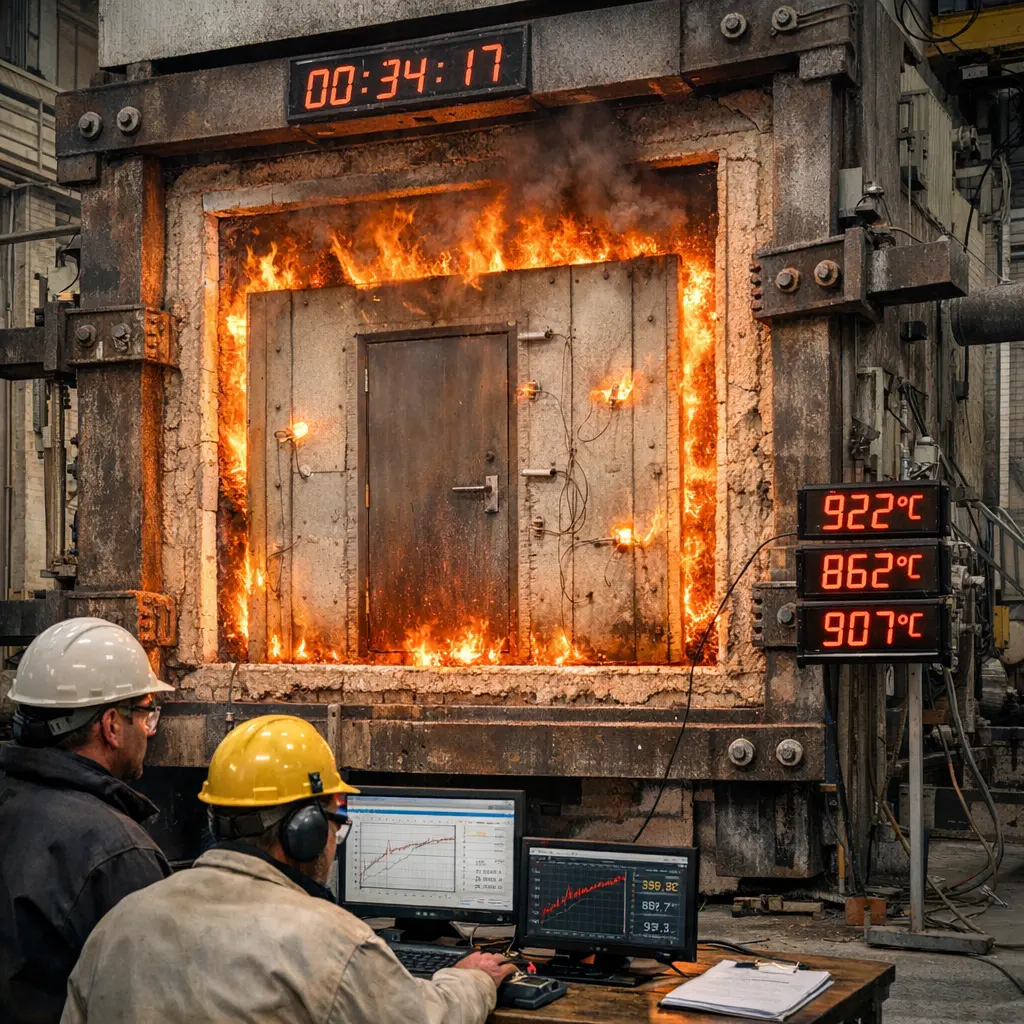
Finite Element Analysis of Material Nonlinearity refers to the computational simulation of how materials with nonlinear properties respond to external forces or loads. Unlike linear materials, nonlinear materials exhibit complex behaviors such as plastic deformation, cracking, or large deformations. This analysis uses mathematical models and numerical methods to predict these responses, helping engineers and scientists design safer and more efficient structures by accurately capturing real-world material performance under various conditions.
Finite Element Analysis of Material Nonlinearity
Finite Element Analysis of Material Nonlinearity refers to the computational simulation of how materials with nonlinear properties respond to external forces or loads. Unlike linear materials, nonlinear materials exhibit complex behaviors such as plastic deformation, cracking, or large deformations. This analysis uses mathematical models and numerical methods to predict these responses, helping engineers and scientists design safer and more efficient structures by accurately capturing real-world material performance under various conditions.
💡 Key Takeaways
- Understand what material nonlinearity means in FEA and how it differs from linear elasticity
- Identify common nonlinear material models (plasticity, viscoelasticity, hyperelasticity) and their typical applications
- Explain how nonlinear solvers (incremental-iterative methods like Newton-Raphson) handle convergence and stability
- Describe how material nonlinearity affects stress, strain, and stiffness predictions and how to validate nonlinear analyses
❓ Frequently Asked Questions
What is material nonlinearity in the context of finite element analysis?
Material nonlinearity means the stress–strain response does not follow a linear relation; stiffness can change with deformation, as seen in plasticity, viscoelasticity, and hyperelastic materials. In FEA, nonlinear models require iterative solution methods.
How is nonlinear material behavior solved in FEA?
Using incremental-iterative methods (e.g., Newton–Raphson): apply the load in small steps, linearize the equilibrium equations around the current state, solve for displacement increments, and update until convergence.
What is the tangent stiffness matrix and why is it important?
The tangent stiffness is the derivative of stress with respect to strain at the current material state. It linearizes the nonlinear problem in each iteration and governs the displacement update toward equilibrium.
What are common nonlinear material models used in FEA?
Plasticity (yielding), viscoelasticity/viscoplasticity, and hyperelasticity are common; more advanced models may include damage, softening, and rate effects, chosen to match the material behavior.