First Aid and Emergency Preparedness for Pets involves being equipped to handle sudden illnesses or injuries affecting animals. It includes knowing basic first aid techniques, recognizing signs of distress, assembling a pet emergency kit, and having a plan for evacuations or disasters. This preparedness ensures prompt and appropriate care, potentially saving a pet’s life during emergencies before professional veterinary help is available. It emphasizes responsible pet ownership and safety.
First Aid and Emergency Preparedness for Pets
First Aid and Emergency Preparedness for Pets involves being equipped to handle sudden illnesses or injuries affecting animals. It includes knowing basic first aid techniques, recognizing signs of distress, assembling a pet emergency kit, and having a plan for evacuations or disasters. This preparedness ensures prompt and appropriate care, potentially saving a pet’s life during emergencies before professional veterinary help is available. It emphasizes responsible pet ownership and safety.
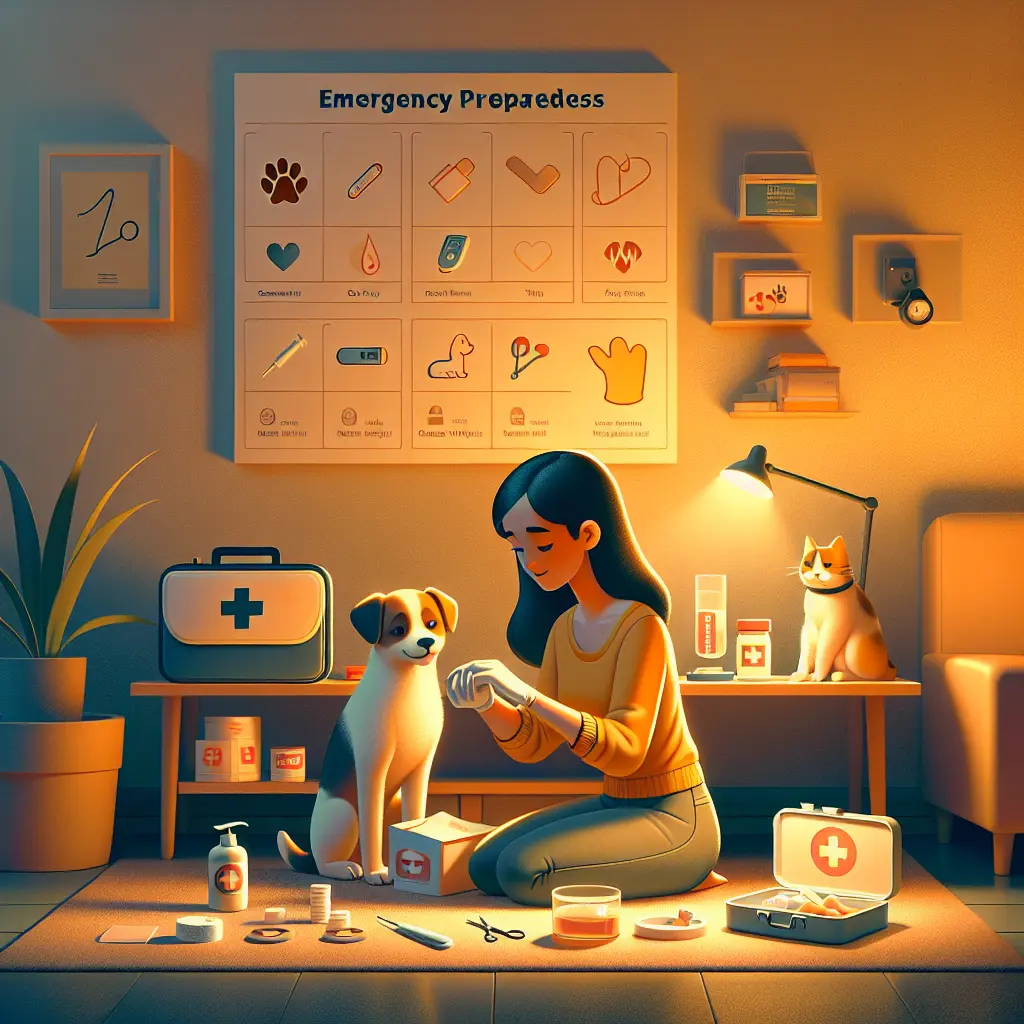
💡 Key Takeaways
- Recognize common signs of distress or illness in pets and know when to seek urgent veterinary care.
- Master basic pet first aid techniques (bleeding control, CPR basics) to stabilize a pet before help arrives.
- Build a pet emergency kit with essential items, medications, and important records.
- Create and practice a disaster or evacuation plan for pets, including safe transport and shelter options.
❓ Frequently Asked Questions
What is the purpose of First Aid and Emergency Preparedness for Pets?
To help you stabilize a pet during sudden illness or injury, prevent further harm, and plan for quick care during emergencies—covering basic first aid, recognizing signs of distress, having an emergency kit, and a disaster evacuation plan.
What should be in a pet emergency kit?
Key items include current vet records and IDs, a collar/leash or carrier, recent photos, a list of medications, a few days of food and water, basic first-aid supplies (gauze, non-adherent pads, bandages, antiseptic wipes), towels, a flashlight, extra batteries, trash bags, and emergency contact numbers.
How can you recognize signs that a pet is in distress?
Look for rapid or labored breathing, pale or blue gums, collapse or extreme weakness, vomiting or diarrhea, seizures, sudden confusion, or reluctance to move.
What should you do if your pet is bleeding or choking?
Bleeding: apply gentle pressure with a clean cloth or gauze and keep the pet calm; seek veterinary care if bleeding is heavy or won’t stop. Choking: do not poke at the airway; call your veterinarian immediately and seek emergency care; only trained individuals should attempt airway clearance.
How can you prepare for evacuation or disasters with pets?
Create a pet evacuation plan with transport arrangements, up-to-date IDs and microchip info, copies of medical records, a go-to carrier or leash, a list of medications, a designated meeting place, and practice drills so everyone knows what to do.