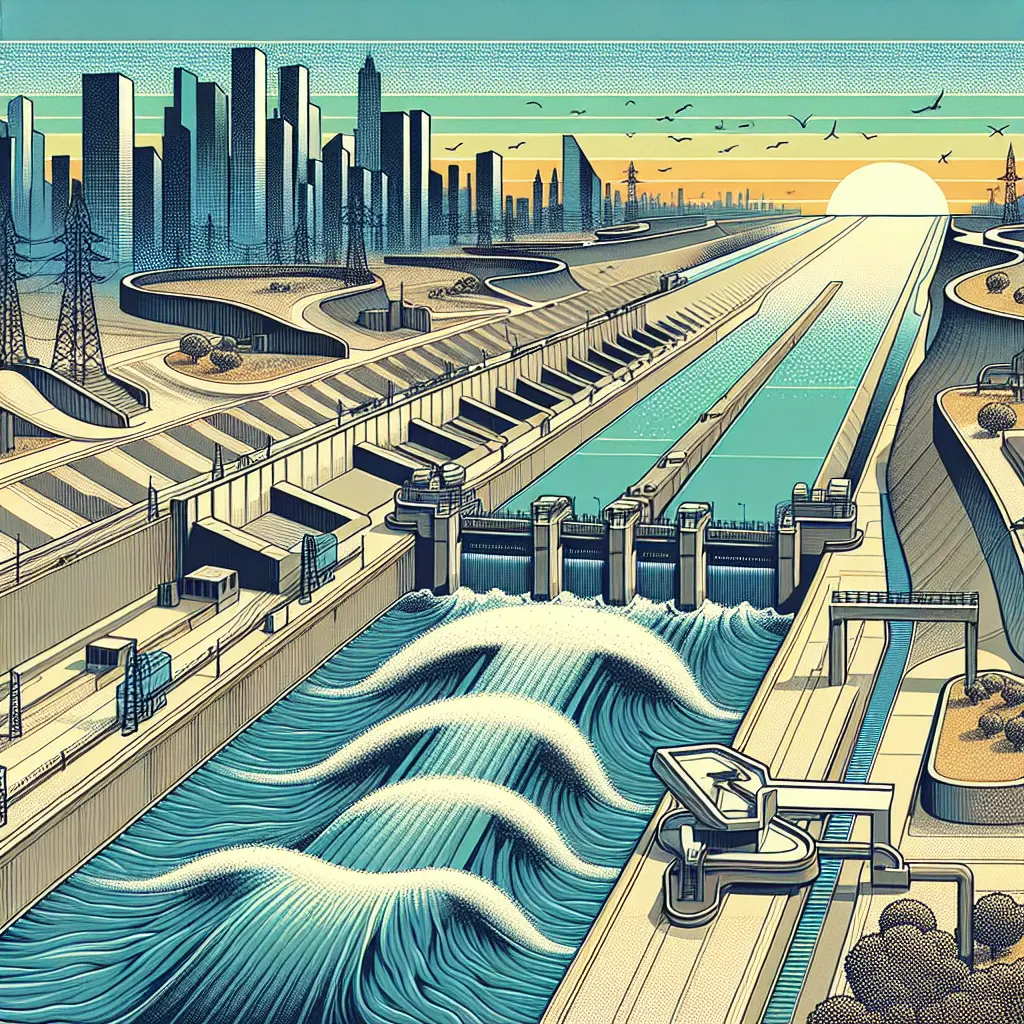
Flood control megastructures like the LA River, spillways, and levees are massive engineering projects designed to manage and redirect excess water during heavy rains or floods. The LA River, encased in concrete, channels stormwater safely through urban areas. Spillways release surplus water from dams to prevent overflow, while levees are raised embankments that keep rivers from flooding surrounding land, collectively protecting communities and infrastructure from water-related disasters.
Flood Control Megastructures: LA River, Spillways, and Levees
Flood control megastructures like the LA River, spillways, and levees are massive engineering projects designed to manage and redirect excess water during heavy rains or floods. The LA River, encased in concrete, channels stormwater safely through urban areas. Spillways release surplus water from dams to prevent overflow, while levees are raised embankments that keep rivers from flooding surrounding land, collectively protecting communities and infrastructure from water-related disasters.
💡 Key Takeaways
- Understand how flood control megastructures like the LA River, spillways, and levees manage and redirect floodwaters to protect urban areas.
- Compare concrete-encased channels, spillways, and levees—how they work and where they are typically used.
- Learn the history and societal impact of the LA River project and its iconic status in American engineering.
- Identify engineering challenges, maintenance needs, and safety considerations for flood control infrastructure.
❓ Frequently Asked Questions
What is the main purpose of flood control megastructures like the LA River, spillways, and levees?
To manage and redirect excess water during heavy rains or floods, protecting people, property, and infrastructure.
How does the Los Angeles River function as a flood-control feature?
It is a concrete-lined channel that directs stormwater through urban areas, helping to route high flows away from neighborhoods and buildings.
What is the difference between a spillway and a levee?
A spillway safely releases surplus water from a dam or reservoir to prevent overflow, while a levee is an embankment built along a river to contain floodwaters and protect adjacent land.
Why are flood control megastructures considered iconic landmarks and hidden gems?
They showcase engineering prowess and shape city landscapes; many features are publicly celebrated as landmarks, while others remain less visible but offer historical and design significance.