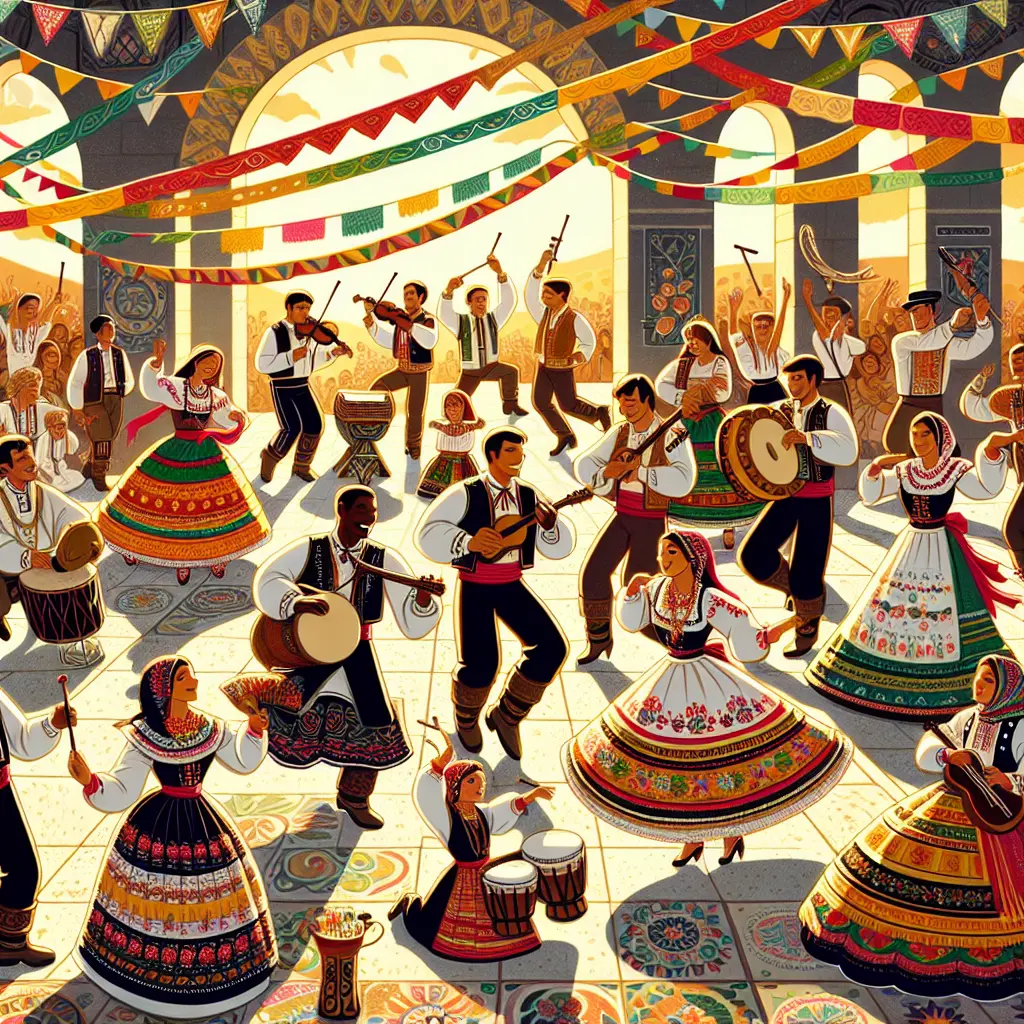
Folk dances and music of festive cultures are vibrant expressions of communal joy, tradition, and identity. Rooted in local customs and history, these art forms bring people together during celebrations, marking important events or seasons. Through rhythmic movements, colorful costumes, and traditional instruments, communities share stories, values, and collective memories, ensuring cultural heritage is preserved and passed down through generations. These performances foster unity and a sense of belonging among participants and spectators alike.
Folk Dances & Music of Festive Cultures
Folk dances and music of festive cultures are vibrant expressions of communal joy, tradition, and identity. Rooted in local customs and history, these art forms bring people together during celebrations, marking important events or seasons. Through rhythmic movements, colorful costumes, and traditional instruments, communities share stories, values, and collective memories, ensuring cultural heritage is preserved and passed down through generations. These performances foster unity and a sense of belonging among participants and spectators alike.
💡 Key Takeaways
- Understand how folk dances and music express community identity during festivals and special days.
- Identify common festive elements such as rhythm, movement, colorful costumes, and traditional instruments.
- Explain how these performances mark seasons, rites, and important community events across cultures.
- Recognize how folk arts bring people together and preserve local history and customs.
❓ Frequently Asked Questions
What are folk dances and music in festive cultures?
Traditional dances and songs rooted in local customs and history, performed to celebrate festivals and special days and to express communal identity and joy.
Why are these art forms important in celebrations?
They bring people together, mark important events or seasons, and help transmit culture and memories from one generation to the next.
What elements commonly characterize these performances?
Rhythmic group movements, colorful costumes, regional instruments, and songs or chants that reflect local styles and community participation.
How do folk dances and music reflect local history and identity?
They preserve stories, myths, and daily life, drawing on local resources and traditions to showcase the community’s unique heritage.