Food safety practices refer to the guidelines and procedures followed to ensure that food and snacks are prepared, handled, and stored in a way that prevents contamination and foodborne illnesses. These practices include washing hands and surfaces, cooking food to safe temperatures, storing food properly, and avoiding cross-contamination. By following food safety practices, individuals and businesses help maintain the quality and safety of the food we eat, reducing health risks and promoting overall well-being.
Food Safety Practices
Food safety practices refer to the guidelines and procedures followed to ensure that food and snacks are prepared, handled, and stored in a way that prevents contamination and foodborne illnesses. These practices include washing hands and surfaces, cooking food to safe temperatures, storing food properly, and avoiding cross-contamination. By following food safety practices, individuals and businesses help maintain the quality and safety of the food we eat, reducing health risks and promoting overall well-being.
💡 Key Takeaways
- Learn the basic principles of safe food handling to prevent foodborne illness
- Practice proper handwashing, personal hygiene, and clean utensil use during food prep
- Prevent cross-contamination with separate utensils, cutting boards, and storage
- Understand safe cooking, reheating, cooling, and refrigeration temperatures
- Recognize signs of spoilage and know when to discard unsafe foods
❓ Frequently Asked Questions
Why is handwashing important in food safety?
Handwashing reduces the spread of illness-causing germs. Wash with soap and warm water for at least 20 seconds, especially after handling raw foods, using the bathroom, or touching animals.
What is the safe minimum internal temperature for poultry?
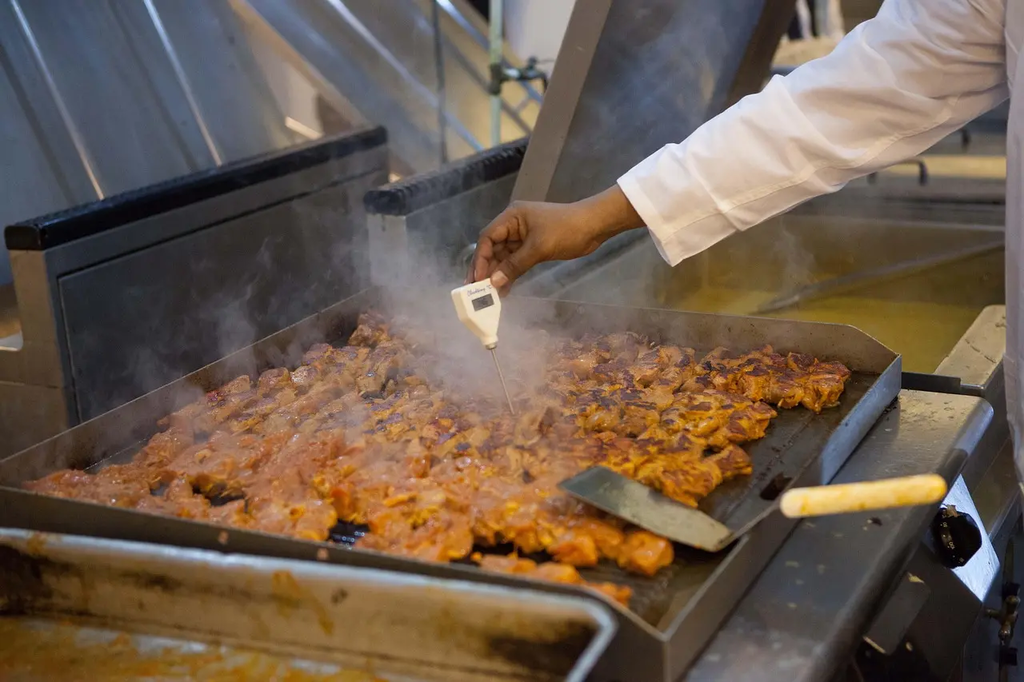
165°F (74°C). Check the thickest part with a calibrated food thermometer.
How should raw meats be stored to prevent cross-contamination?
Store raw meats separately from ready-to-eat foods, in leak-proof containers, on the bottom shelf of the fridge, and keep the fridge at 40°F (4°C) or lower.
What is the 'danger zone' for bacterial growth in foods?
40°F–140°F (4°C–60°C). Bacteria multiply rapidly in this range; keep foods either hot above 140°F or cold below 40°F.
How long can cooked leftovers be kept in the refrigerator?
About 3–4 days; reheat to 165°F (74°C) before eating.