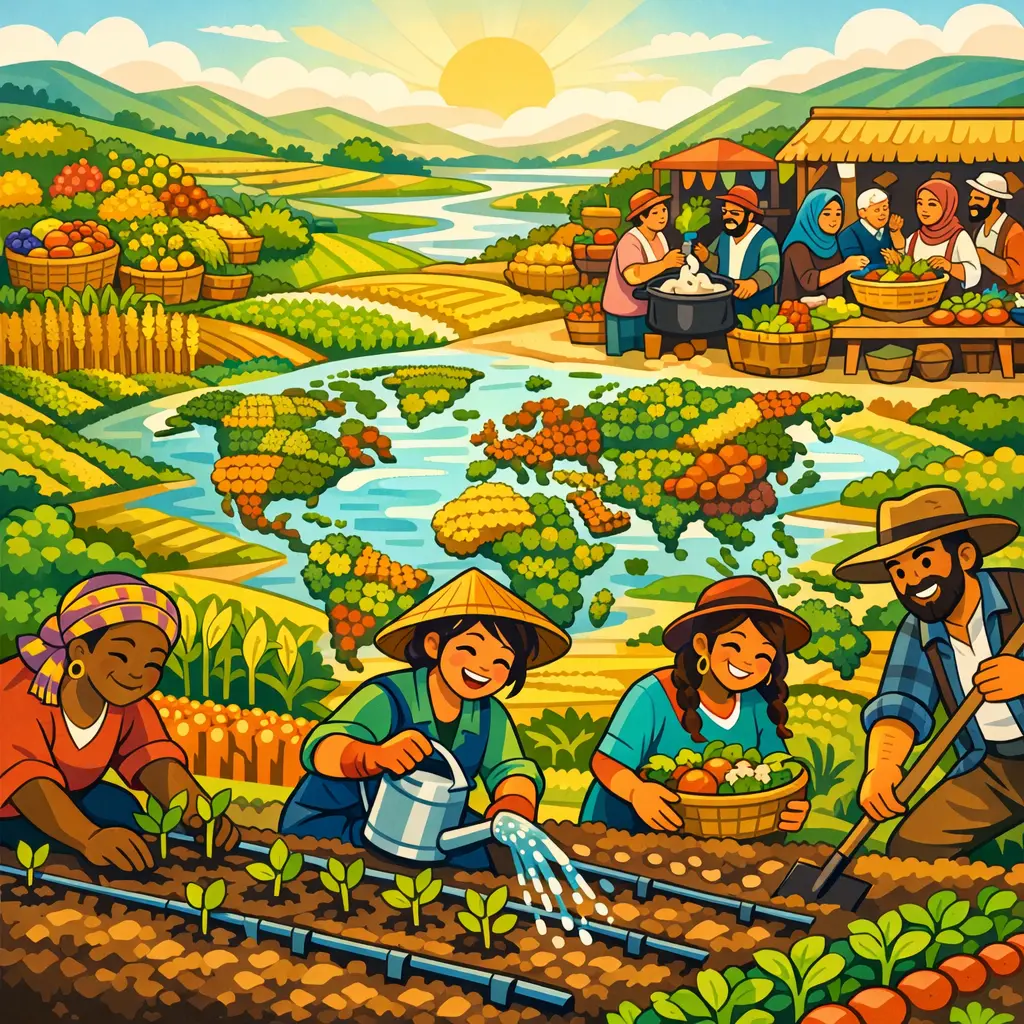
Food security, agriculture, and culture are deeply interconnected. Agriculture provides the foundation for food security by ensuring a stable food supply. Cultural practices, religious beliefs, and societal norms shape what foods are grown, how they are prepared, and who has access to them. These cultural factors influence dietary habits, agricultural methods, and food distribution, ultimately affecting the overall well-being and resilience of communities in addressing hunger and nutritional needs.
Food Security, Agriculture & Culture
Food security, agriculture, and culture are deeply interconnected. Agriculture provides the foundation for food security by ensuring a stable food supply. Cultural practices, religious beliefs, and societal norms shape what foods are grown, how they are prepared, and who has access to them. These cultural factors influence dietary habits, agricultural methods, and food distribution, ultimately affecting the overall well-being and resilience of communities in addressing hunger and nutritional needs.
💡 Key Takeaways
- Understand how agricultural practices, climate, and policy influence food security and nutrition.
- Explore how culture shapes diets, food traditions, and local farming systems.
- Identify major risks to food security (climate variability, conflict, price volatility) and ways to build resilience.
- Learn about sustainable farming approaches and community-driven strategies to improve access to diverse, nutritious foods.
❓ Frequently Asked Questions
What is food security?
Food security means that all people have regular physical and economic access to enough safe, nutritious food for an active life. It has four dimensions: availability, access, utilization, and stability.
How does agriculture influence food security?
Agriculture determines how much food is produced (availability), whether it is affordable (economic access), and its resilience to shocks, as well as how it is distributed and utilized.
What role does culture play in food systems?
Culture shapes which foods are produced and eaten, farming practices, dietary preferences, and knowledge sharing, influencing biodiversity, nutrition, and the resilience of food systems.
What sustainable practices help improve food security?
Practices include crop diversification, maintaining soil health, efficient water use, integrated pest management, agroforestry, and reducing post-harvest losses.
What factors can threaten food security?
Climate variability, conflicts, price shocks, poverty, and unequal access to resources can reduce food availability, access, and utilization.