Food sovereignty emphasizes the right of people, especially Indigenous communities, to control their own food systems, including production, distribution, and consumption. Land rights are crucial, as access to ancestral lands enables traditional agricultural practices. Indigenous foodways encompass cultural, religious, and societal traditions related to food, reflecting deep connections to the land and spiritual beliefs. Together, these concepts support cultural preservation, community health, and resistance to external pressures on traditional diets and ways of life.
Food Sovereignty, Land Rights & Indigenous Foodways
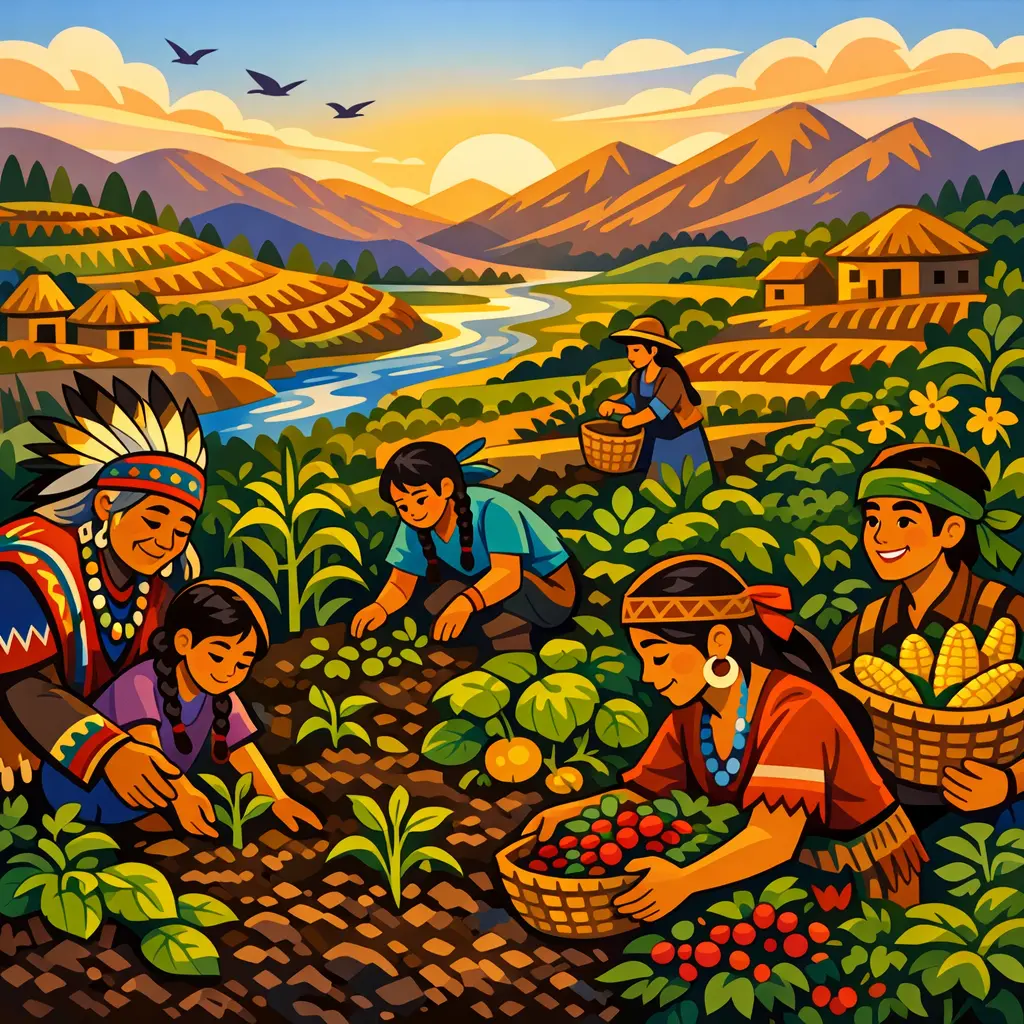
Food sovereignty emphasizes the right of people, especially Indigenous communities, to control their own food systems, including production, distribution, and consumption. Land rights are crucial, as access to ancestral lands enables traditional agricultural practices. Indigenous foodways encompass cultural, religious, and societal traditions related to food, reflecting deep connections to the land and spiritual beliefs. Together, these concepts support cultural preservation, community health, and resistance to external pressures on traditional diets and ways of life.
💡 Key Takeaways
- Define food sovereignty and explain its link to Indigenous land rights and self-determination.
- Explain how land access, governance, and policies shape Indigenous food systems and livelihoods.
- Highlight traditional Indigenous foodways, knowledge, and practices that support biodiversity and resilience.
- Identify major threats to Indigenous food sovereignty and explore advocacy and protection strategies.
❓ Frequently Asked Questions
What is food sovereignty?
Food sovereignty is the right of communities to define their own food and agriculture systems—what is grown, how it is produced, and who controls it—prioritizing local needs, culture, and sustainable practices.
How do land rights affect Indigenous foodways?
Secure land rights allow access to traditional hunting, gathering, farming, and harvesting areas, sustaining cultural dishes and practices; dispossession or restricted access threatens these foodways.
What are Indigenous foodways?
Indigenous foodways are the knowledge, practices, and foods tied to a community’s land and ecosystems, including seasonal harvesting, preparation, recipes, and ceremonies that sustain health and culture.
What is the difference between food security and food sovereignty?
Food security means reliable access to enough food, while food sovereignty emphasizes communities’ control over what is grown, how it’s produced, and the foods that are culturally appropriate.
Why are land and governance rights important for Indigenous food systems?
They protect autonomy, ensure community consent, safeguard sacred sites, support sustainable harvesting, and enable communities to set priorities and maintain resilience in their food systems.