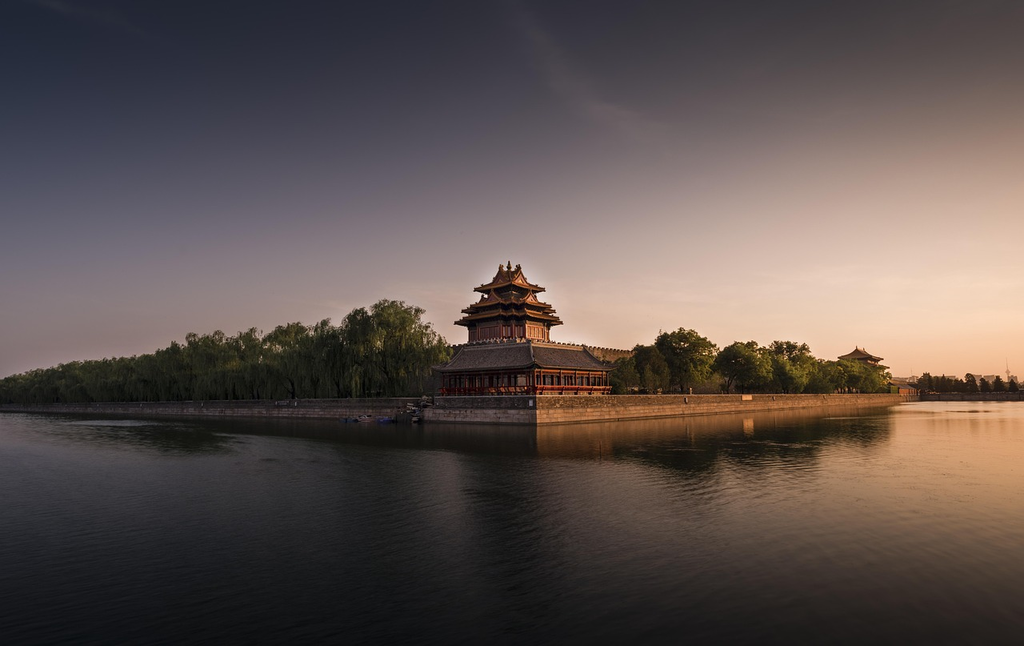
The Forbidden City is a vast imperial palace complex located in the heart of Beijing, China. Built between 1406 and 1420, it served as the home of Chinese emperors and the political center of the Chinese government for nearly 500 years. Surrounded by massive walls and a moat, its exquisite architecture, intricate designs, and historical significance make it one of the world’s most renowned landmarks and a UNESCO World Heritage site.
Forbidden City
The Forbidden City is a vast imperial palace complex located in the heart of Beijing, China. Built between 1406 and 1420, it served as the home of Chinese emperors and the political center of the Chinese government for nearly 500 years. Surrounded by massive walls and a moat, its exquisite architecture, intricate designs, and historical significance make it one of the world’s most renowned landmarks and a UNESCO World Heritage site.
💡 Key Takeaways
- The Forbidden City's role as the Ming and Qing imperial palace and center of ceremonies.
- Architectural layout emphasizes symmetry and hierarchy, with key landmarks like Meridian Gate and Hall of Supreme Harmony.
- Imperial symbolism is embedded in color, numbers, and spatial design to express authority and cosmology.
- Its status as a UNESCO World Heritage Site and current role as the Palace Museum preserving artifacts and court life.
❓ Frequently Asked Questions
What is the Forbidden City?
The imperial palace complex in Beijing, China, that served as the home of emperors of the Ming and Qing dynasties and the ceremonial and political center of the empire.
Where is the Forbidden City located and what is its current use?
It sits on Beijing's central north–south axis near Tiananmen Square; today it houses the Palace Museum, which preserves and displays imperial artifacts.
When was the Forbidden City built and by whom?
Construction began in 1406 and was completed in 1420 under the Yongle Emperor of the Ming dynasty.
Why is it called the Forbidden City?
Access was strictly restricted to the emperor and the court, making it essentially off-limits to ordinary people without permission.
How large is the complex and what is its architectural significance?
It covers about 72 hectares, with around 980 surviving buildings and 8,704 rooms, built in a grand axial layout that embodies traditional Chinese palatial architecture.