Forensics and CSI (Crime Scene Investigation) methods involve scientific techniques used to collect, analyze, and interpret evidence from crime scenes. These methods include fingerprint analysis, DNA profiling, blood spatter analysis, ballistics, and trace evidence examination. Specialists meticulously document scenes, preserve evidence, and use laboratory tools to reconstruct events and identify suspects. Their work is crucial in solving crimes, supporting investigations, and providing reliable evidence for legal proceedings.
Forensics & CSI Methods
Forensics and CSI (Crime Scene Investigation) methods involve scientific techniques used to collect, analyze, and interpret evidence from crime scenes. These methods include fingerprint analysis, DNA profiling, blood spatter analysis, ballistics, and trace evidence examination. Specialists meticulously document scenes, preserve evidence, and use laboratory tools to reconstruct events and identify suspects. Their work is crucial in solving crimes, supporting investigations, and providing reliable evidence for legal proceedings.
💡 Key Takeaways
- Identify the main forensic techniques used at crime scenes (fingerprints, DNA, blood spatter, ballistics, trace evidence) and their practical applications.
- Explain how evidence is collected, preserved, and documented to ensure reliability in analysis.
- Describe how laboratories analyze evidence and how results inform investigative decisions.
- Discuss how forensic methods are portrayed across franchises and universes, highlighting realistic elements vs. cinematic exaggerations.
❓ Frequently Asked Questions
What is fingerprint analysis and what can it reveal?
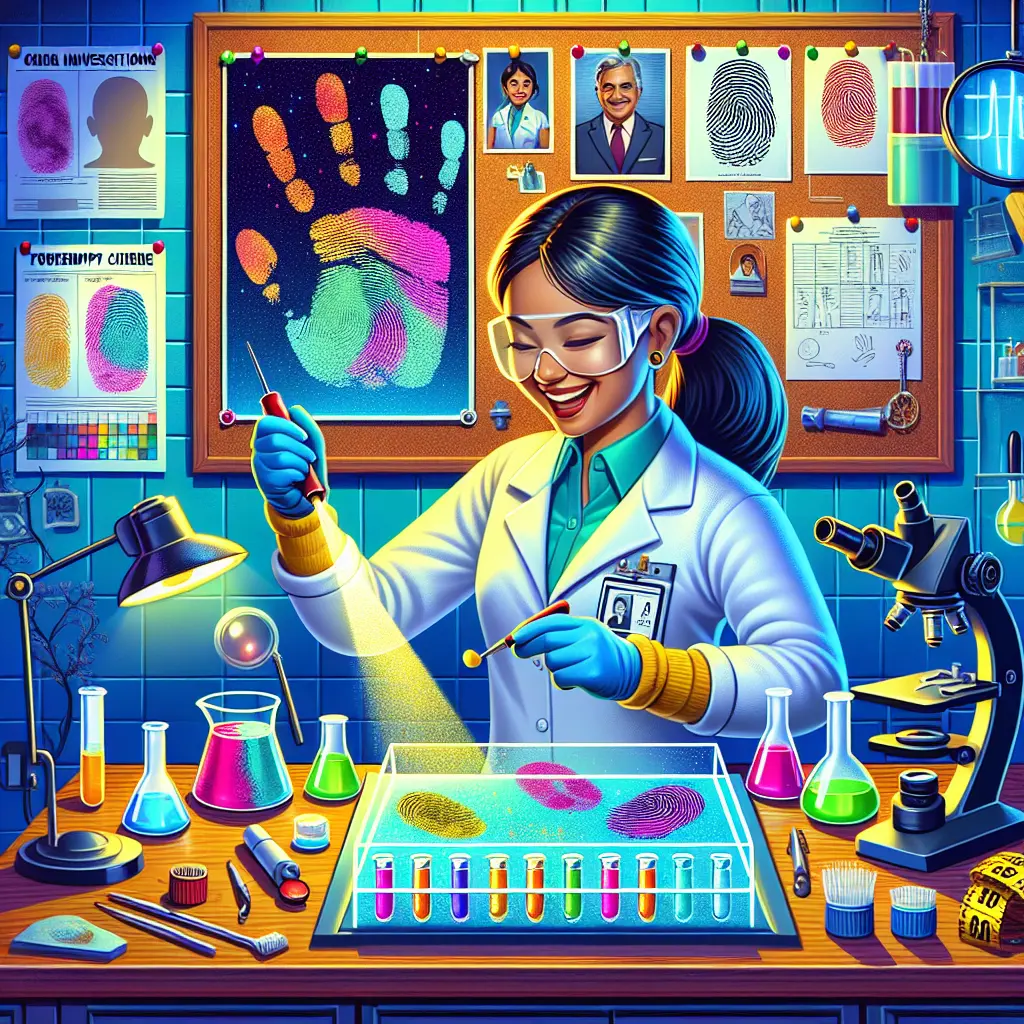
Fingerprint analysis compares latent, visible, or plastic prints found at a scene to known prints to identify or exclude a person and link them to the evidence.
What is DNA profiling and what types of evidence can it identify?
DNA profiling analyzes genetic material (often via STR markers) from samples like blood or hair to match a person to evidence or establish relatedness. It can be challenged by mixed or degraded samples.
What information can bloodstain (blood spatter) analysis provide?
Bloodstain analysis examines patterns to infer events such as direction, angle, distance, and sequence of impacts, helping reconstruct what happened at the scene.
What is ballistics in forensic science?
Ballistics studies firearms, ammunition, and bullet/toolmark impressions to determine if a weapon fired a given bullet and to understand the firing event.
What is trace evidence examination and why is it useful?
Trace evidence involves tiny materials (fibers, glass, soil, paint). Microscopic and chemical analyses can link a person, object, or location to the crime scene.