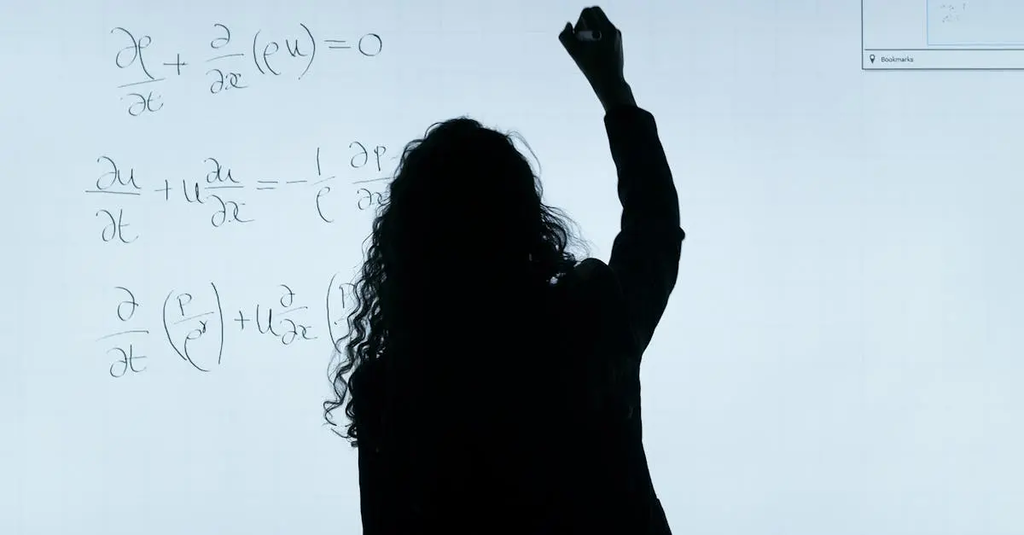
Fourier Analysis for signals and cycles is a mathematical technique used to decompose complex signals into simpler sinusoidal components, such as sines and cosines. This method helps in understanding the frequency content of signals, making it essential in fields like engineering, physics, and signal processing. By representing signals as sums of periodic functions, Fourier Analysis enables efficient analysis, filtering, and reconstruction of data, aiding in the interpretation of repeating patterns or cycles within the signals.
Fourier Analysis for Signals and Cycles
Fourier Analysis for signals and cycles is a mathematical technique used to decompose complex signals into simpler sinusoidal components, such as sines and cosines. This method helps in understanding the frequency content of signals, making it essential in fields like engineering, physics, and signal processing. By representing signals as sums of periodic functions, Fourier Analysis enables efficient analysis, filtering, and reconstruction of data, aiding in the interpretation of repeating patterns or cycles within the signals.
💡 Key Takeaways
- Break complex signals into a sum of sine and cosine waves to reveal cycle content.
- Use Fourier Transform/FFT to obtain and interpret a signal’s frequency spectrum (magnitude and phase).
- Compare time-domain and frequency-domain views to identify dominant frequencies and periodic components.
- Apply Fourier analysis to practical tasks like filtering, denoising, and signal reconstruction in engineering and physics.
- Grasp key concepts such as linearity, orthogonality of the sine/cosine basis, and the effects of sampling and aliasing.
❓ Frequently Asked Questions
What is Fourier analysis?
A mathematical technique that expresses a signal as a sum of sine and cosine waves, revealing its frequency content and how the signal is built from simple oscillations.
What is the difference between a Fourier series and a Fourier transform?
A Fourier series decomposes a periodic signal into sine/cosine terms; a Fourier transform generalizes this to non-periodic signals, giving a continuous spectrum of frequencies.
What is the frequency domain and why is it useful?
The frequency domain represents a signal by its frequency components (amplitudes and phases) rather than time. It helps identify dominant frequencies, filter signals, and analyze behavior.
Why are sine and cosine functions used as basis functions?
Because they are orthogonal and form a complete basis for a wide class of signals, so any well-behaved signal can be reconstructed as a weighted sum of these sinusoids.
What is the difference between the continuous Fourier transform and the discrete Fourier transform (FFT)?
The continuous Fourier transform analyzes continuous-time signals to yield a continuous spectrum; the discrete Fourier transform analyzes finite, sampled data to yield a discrete spectrum, efficiently computed by the FFT.