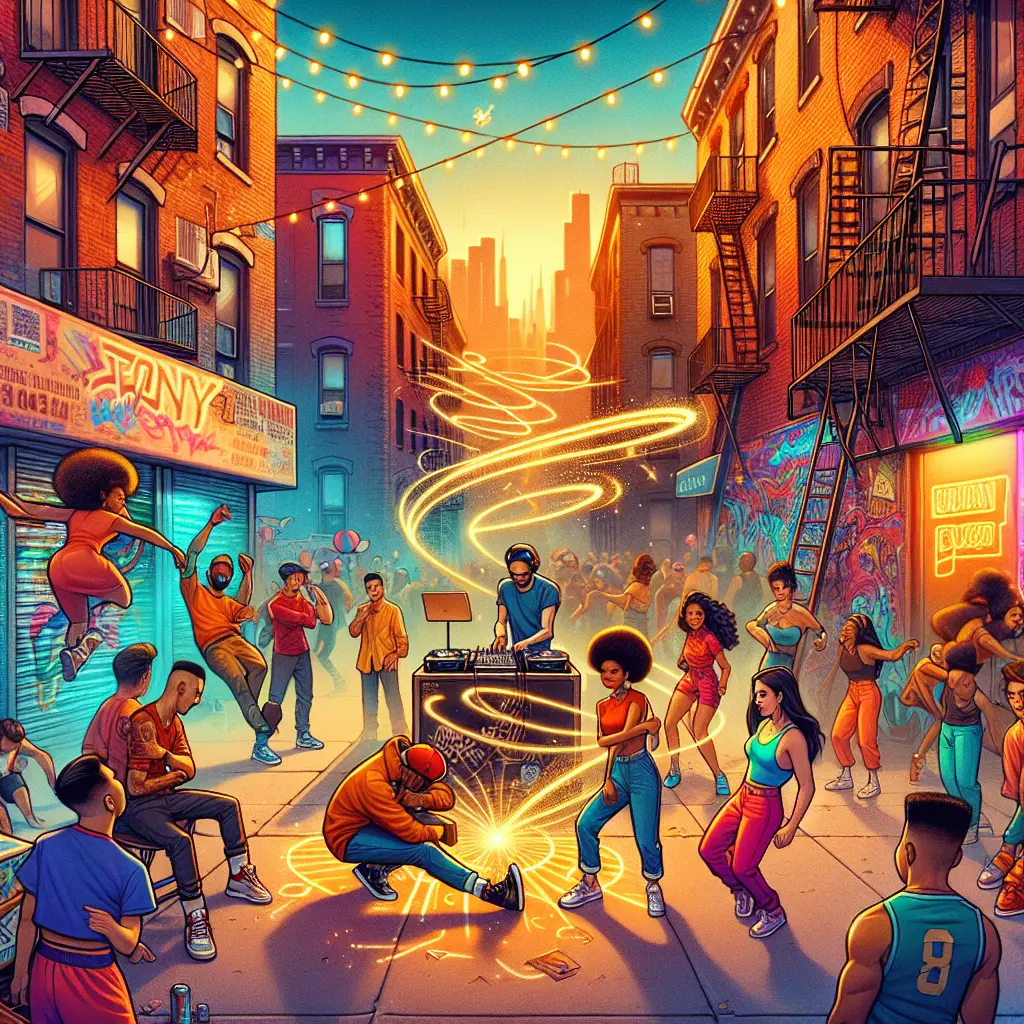
The phrase "From Bronx Block Parties to Golden Age Lyricism" traces the evolution of hip-hop culture from its grassroots origins in lively street gatherings in the Bronx, where DJs and MCs pioneered new sounds, to its maturation in the late 1980s and early 1990s. During this Golden Age, artists elevated rap with complex wordplay, storytelling, and social commentary, cementing hip-hop as a powerful artistic and cultural force.
From Bronx Block Parties to Golden Age Lyricism
The phrase "From Bronx Block Parties to Golden Age Lyricism" traces the evolution of hip-hop culture from its grassroots origins in lively street gatherings in the Bronx, where DJs and MCs pioneered new sounds, to its maturation in the late 1980s and early 1990s. During this Golden Age, artists elevated rap with complex wordplay, storytelling, and social commentary, cementing hip-hop as a powerful artistic and cultural force.
💡 Key Takeaways
- Understand how Bronx block parties shaped the early sound of hip-hop through DJs, MCs, and breakbeats.
- Identify the defining features of the Golden Age (late 1980s–early 1990s) including lyricism, innovative production, and sampling techniques.
- Explain the shift from grassroots street gatherings to more polished, album-focused hip-hop releases.
- Appreciate how artists used storytelling and social commentary to elevate lyricism during this era.
❓ Frequently Asked Questions
What are 'Bronx block parties' in hip-hop history?
Outdoor street gatherings in the Bronx during the 1970s where DJs extended breaks and MCs energized the crowd, laying the groundwork for hip-hop's sound and performance.
What roles did DJs and MCs play at Bronx block parties?
DJs mixed and extended breaks to keep the party going; MCs rapped to hype the crowd, sparking call-and-response and shaping early hip-hop style.
What defines the Golden Age of hip-hop?
Late 1980s to early 1990s marked by innovative production (sampling and diverse beats), complex lyricism, social commentary, and influential groups and artists.
How did hip-hop lyricism evolve during the Golden Age?
Rappers adopted more intricate rhyme schemes, storytelling, and topical content, elevating lyrical craft alongside advanced production.