Futures Thinking: Scenarios and Black Swans involves exploring potential futures by creating detailed scenarios based on current trends, uncertainties, and driving forces. This approach helps organizations anticipate a range of possible outcomes, including unexpected, high-impact events known as "Black Swans." By considering both probable and improbable developments, Futures Thinking enables better preparedness, strategic planning, and resilience in the face of rapid change and unforeseen disruptions.
Futures Thinking: Scenarios and Black Swans
Futures Thinking: Scenarios and Black Swans involves exploring potential futures by creating detailed scenarios based on current trends, uncertainties, and driving forces. This approach helps organizations anticipate a range of possible outcomes, including unexpected, high-impact events known as "Black Swans." By considering both probable and improbable developments, Futures Thinking enables better preparedness, strategic planning, and resilience in the face of rapid change and unforeseen disruptions.
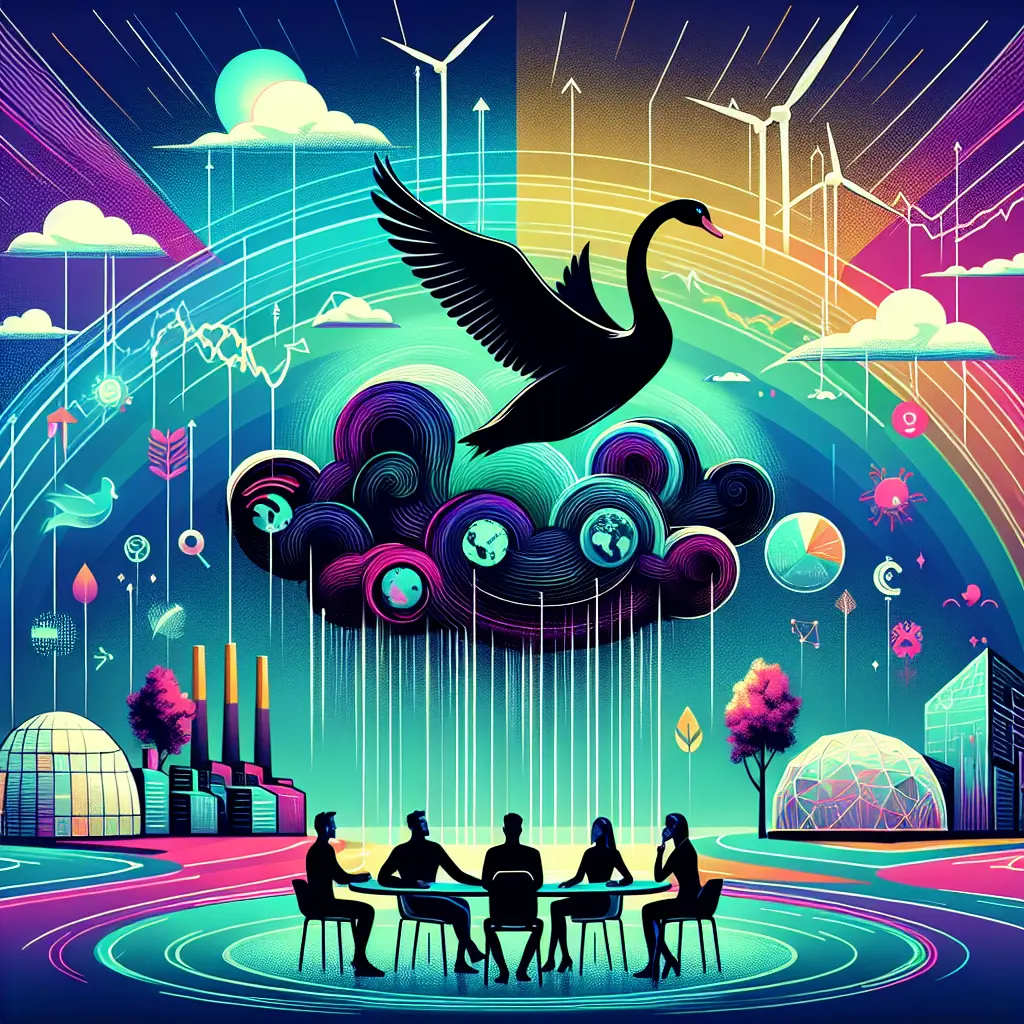
💡 Key Takeaways
- Understand how futures thinking uses scenarios to explore possible weather, climate, and disaster outcomes.
- Identify driving forces, trends, uncertainties, and weak signals that shape multiple plausible futures.
- Grasp the concept of black swans — high-impact, low-probability events — and their implications for preparedness and resilience.
- Practice building and comparing multiple plausible scenarios to inform risk assessment, decision-making, and policy in weather and climate contexts.
❓ Frequently Asked Questions
What is futures thinking in the context of weather, climate & disasters?
Futures thinking is a planning approach that explores multiple plausible futures by analyzing trends, uncertainties, and driving forces to inform resilient decisions.
What are scenarios in futures thinking?
Scenarios are narrative descriptions of possible futures built from drivers like climate trends, technology, and policy; they help organizations test how plans hold up under different conditions.
What are Black Swans?
Black Swans are rare, high‑impact events that are difficult to predict from historical data; in weather and climate, they can be extreme events or tipping points that surprise models.
How can scenarios improve preparedness for weather and climate risks?
By identifying vulnerabilities, stress‑testing strategies across diverse futures, guiding investments, and setting early indicators to signal needed actions.