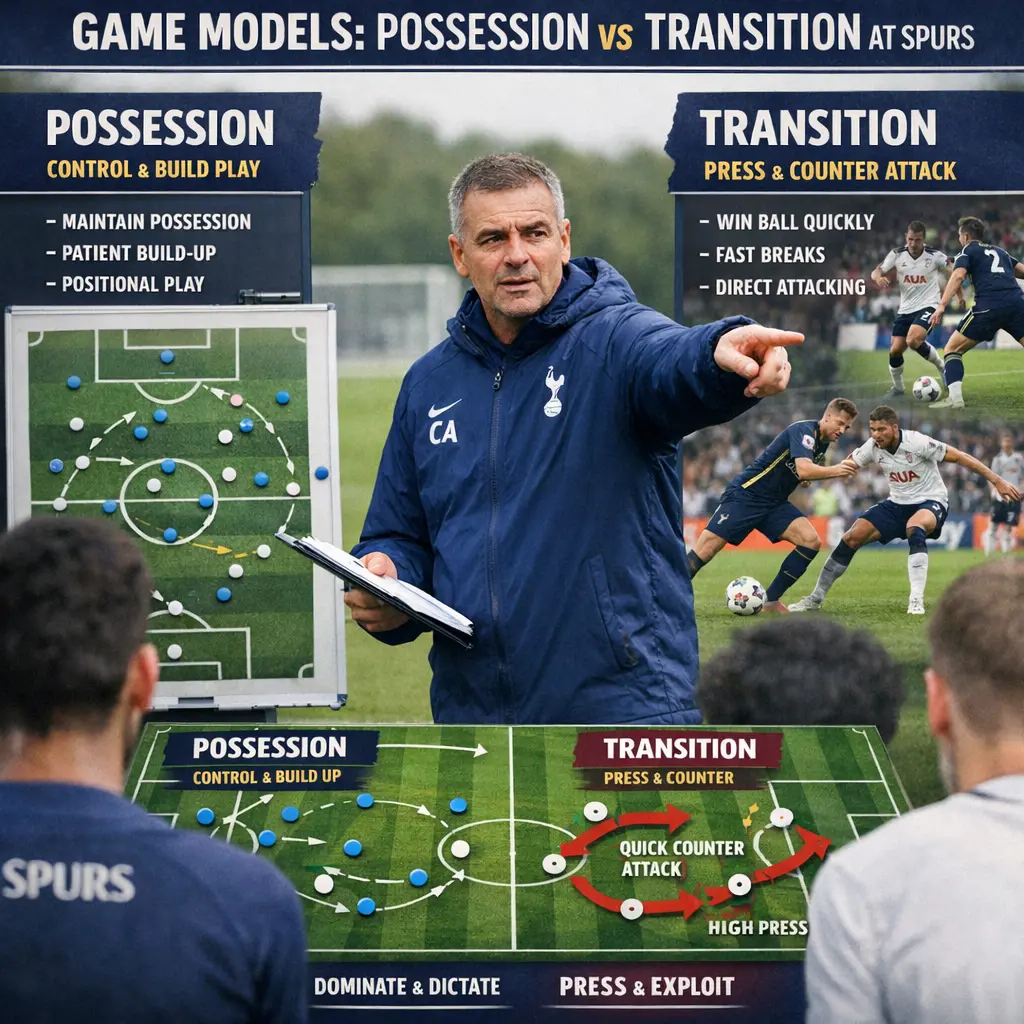
Game models at Tottenham Hotspur F.C. contrast possession-based and transition-based approaches. The possession model emphasizes controlling the ball, patient build-up, and dictating tempo, often under managers like Mauricio Pochettino. In contrast, the transition model, seen under coaches like José Mourinho and Antonio Conte, prioritizes rapid counter-attacks, quick ball recovery, and exploiting opponents’ defensive disorganization. Spurs’ tactical identity often shifts between these styles depending on managerial philosophy and squad strengths.
Game Models: Possession vs Transition at Spurs
Game models at Tottenham Hotspur F.C. contrast possession-based and transition-based approaches. The possession model emphasizes controlling the ball, patient build-up, and dictating tempo, often under managers like Mauricio Pochettino. In contrast, the transition model, seen under coaches like José Mourinho and Antonio Conte, prioritizes rapid counter-attacks, quick ball recovery, and exploiting opponents’ defensive disorganization. Spurs’ tactical identity often shifts between these styles depending on managerial philosophy and squad strengths.
💡 Key Takeaways
- Understand the difference between a possession-based game model and a transition-focused model in football.
- Learn how Spurs might balance building from the back with quick transitions to exploit space.
- Recognize signals that indicate when the team is in possession versus in transition (tempo, pressing, spacing, running lanes).
- Identify metrics to evaluate these models, such as possession percentage, pass sequences, transition speed, and counter-attack effectiveness.
❓ Frequently Asked Questions
What is the difference between possession-based and transition-based basketball play?
Possession-based play emphasizes deliberate half-court offense and shot selection; transition-based play emphasizes pushing the ball up the floor for fast-break scores before defenses set.
How can you tell if a team, such as Spurs, is leaning toward a transition-heavy approach?
Look for a higher pace, more points coming on fast breaks after rebounds or steals, and frequent early-shot attempts before half-court sets are established.
What are the main advantages of a possession model?
Better shot quality through structured plays, efficient spacing, and measured decisions that maximize half-court efficiency.
Which stats help evaluate a team's reliance on transition vs possession?
Pace (tempo), transition/fast-break points, and efficiency in half-court possessions (points per possession when not in transition).