Gastroenterology and hepatology careers focus on diagnosing, treating, and managing diseases of the digestive system and liver. Professionals in these specialties, such as gastroenterologists and hepatologists, address conditions like ulcers, hepatitis, liver cirrhosis, and inflammatory bowel disease. These careers require advanced medical training, clinical skills, and a commitment to patient care, offering opportunities in hospitals, clinics, research, and academic settings within the broader healthcare and medicine fields.
Gastroenterology & Hepatology Careers
Gastroenterology and hepatology careers focus on diagnosing, treating, and managing diseases of the digestive system and liver. Professionals in these specialties, such as gastroenterologists and hepatologists, address conditions like ulcers, hepatitis, liver cirrhosis, and inflammatory bowel disease. These careers require advanced medical training, clinical skills, and a commitment to patient care, offering opportunities in hospitals, clinics, research, and academic settings within the broader healthcare and medicine fields.
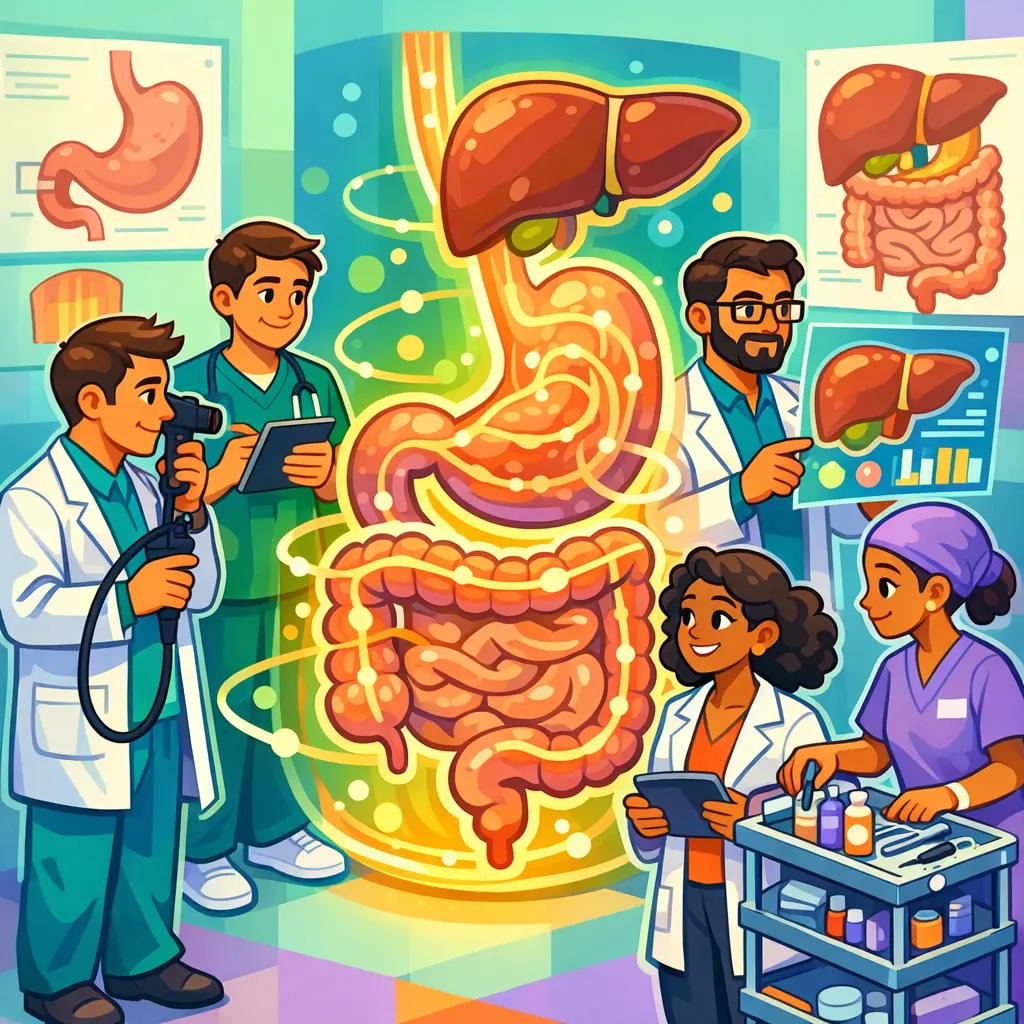
💡 Key Takeaways
- Explore career paths in gastroenterology and hepatology, including clinical practice, research, and academia.
- Understand the typical training path and certification requirements to become a gastroenterologist or hepatologist.
- Recognize daily duties and key procedures like endoscopy and colonoscopy, plus patient management and multidisciplinary care.
- Identify major subspecialties and focus areas (e.g., inflammatory bowel disease, liver disease, transplant hepatology, GI oncology) and the skills they emphasize.
❓ Frequently Asked Questions
What does a gastroenterologist do?
A gastroenterologist diagnoses and treats digestive tract disorders from the esophagus to the colon, plus liver and pancreas conditions; they often perform endoscopic procedures like colonoscopy and upper endoscopy.
What is hepatology and how is it related to gastroenterology?
Hepatology is a subspecialty of gastroenterology focused on liver diseases (e.g., hepatitis, cirrhosis, fatty liver). It is usually pursued during or after a gastroenterology fellowship.
What training is required to become a gastroenterologist or hepatologist?
Complete medical school, an internal medicine residency, then a 3-year gastroenterology fellowship; optionally a 1-year hepatology fellowship or specific focus. Board certification is through ABIM in Gastroenterology.
Where do gastroenterologists work and what do they do day-to-day?
They work in hospitals, clinics, or academic centers, seeing patients with GI and liver issues, performing procedures, and managing chronic conditions while often engaging in teaching and research.