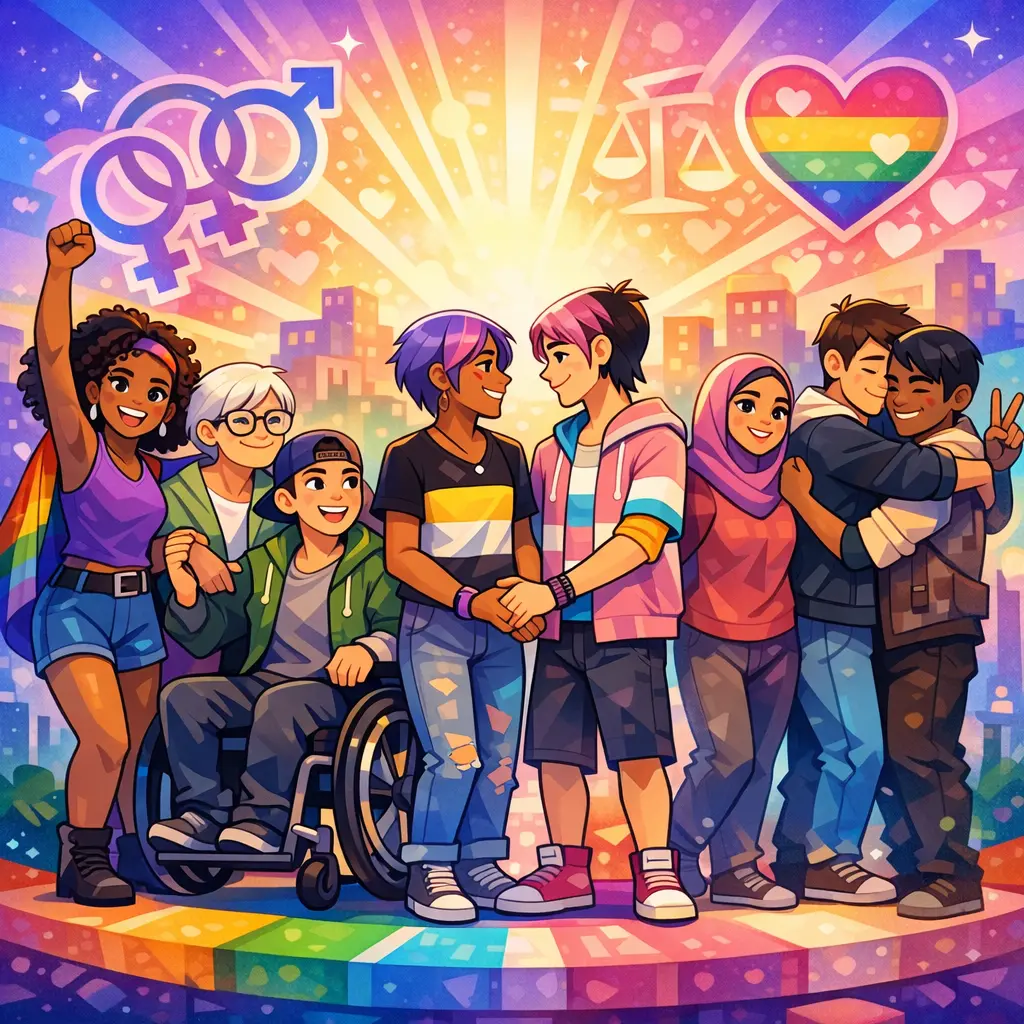
Gender, Sexuality & Rights Movements (Culture, Religion & Society) refers to the collective efforts and social changes advocating for equality and recognition of diverse gender identities and sexual orientations. These movements challenge traditional norms shaped by culture and religion, seeking to transform societal attitudes and legal frameworks. They address issues such as discrimination, legal rights, and representation, highlighting the intersection of personal identity with cultural, religious, and social structures in the pursuit of justice and inclusion.
Gender, Sexuality & Rights Movements
Gender, Sexuality & Rights Movements (Culture, Religion & Society) refers to the collective efforts and social changes advocating for equality and recognition of diverse gender identities and sexual orientations. These movements challenge traditional norms shaped by culture and religion, seeking to transform societal attitudes and legal frameworks. They address issues such as discrimination, legal rights, and representation, highlighting the intersection of personal identity with cultural, religious, and social structures in the pursuit of justice and inclusion.
💡 Key Takeaways
- Identify milestones and key figures in gender, sexuality, and rights movements.
- Compare major strands of feminist and LGBTQ+ advocacy and their strategies.
- Explain how laws, policies, and social norms have shaped gender and sexuality rights over time.
- Define core terms like gender identity, sexual orientation, intersectionality, and autonomy.
❓ Frequently Asked Questions
What are gender, sexuality, and rights movements, and how do they relate?
They are social movements seeking recognition and equality for people based on gender identity, sexual orientation, and basic human rights. They intersect because many people have multiple identities, and progress in one area supports others.
What is the difference between gender identity, gender expression, and biological sex?
Biological sex refers to physical attributes assigned at birth. Gender identity is a person’s internal sense of their gender. Gender expression is how a person presents their gender to others. They may align or differ.
What are common goals of LGBTQ+ rights movements?
To secure legal protections from discrimination, marriage and family recognition, inclusive education and healthcare, and safety from harassment and violence.
What does intersectionality mean in rights movements?
It is the idea that people can face multiple, overlapping forms of discrimination (e.g., race, gender, sexuality). Addressing one aspect without the others can leave barriers in place; inclusive advocacy considers all identities.