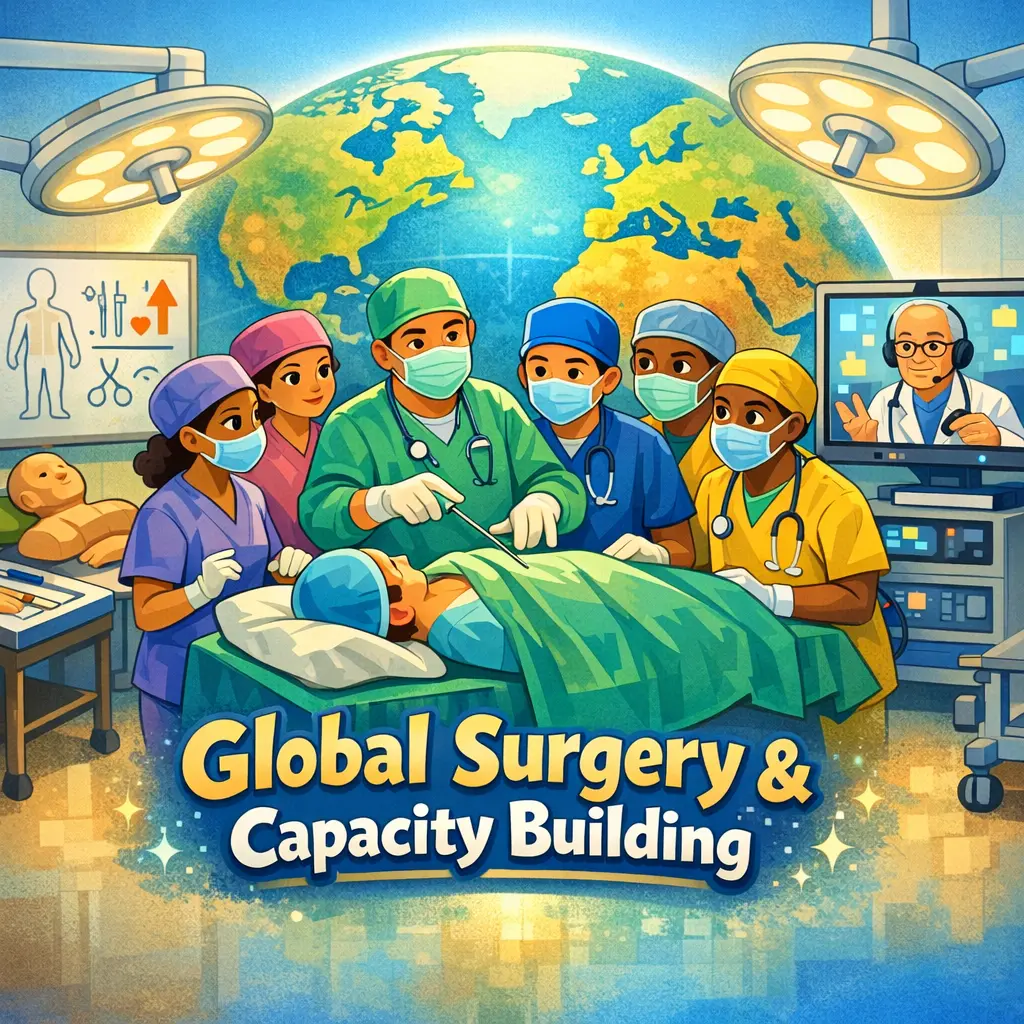
Global Surgery & Capacity Building in healthcare and medicine refers to efforts aimed at improving surgical care worldwide, especially in low-resource settings. It involves training local healthcare professionals, developing infrastructure, and establishing sustainable systems to enhance access to safe, affordable surgical services. Careers in this field focus on addressing disparities, collaborating internationally, and implementing educational and policy initiatives to strengthen surgical capacity and ultimately improve health outcomes on a global scale.
Global Surgery & Capacity Building
Global Surgery & Capacity Building in healthcare and medicine refers to efforts aimed at improving surgical care worldwide, especially in low-resource settings. It involves training local healthcare professionals, developing infrastructure, and establishing sustainable systems to enhance access to safe, affordable surgical services. Careers in this field focus on addressing disparities, collaborating internationally, and implementing educational and policy initiatives to strengthen surgical capacity and ultimately improve health outcomes on a global scale.
💡 Key Takeaways
- Define global surgery and explain why capacity building is critical for improving surgical care worldwide.
- Identify core elements of capacity building in global surgery (human resources, infrastructure, supply chains, and data/quality systems).
- Recognize common barriers to surgical capacity in low-resource settings and practical strategies to address them.
- Describe how success in global surgery is measured, including access, safety, timeliness, and outcomes.
❓ Frequently Asked Questions
What is global surgery?
Global surgery is the field focused on ensuring safe, timely, and affordable surgical, obstetric, and anesthesia care for everyone, with emphasis on underserved populations and strengthening health systems.
What does capacity building mean in global surgery?
It means developing a country’s ability to provide surgical care over time by expanding trained personnel, facilities and equipment, supply chains, governance, financing, and data/quality systems so improvements are sustainable.
What are bellwether procedures and why do they matter?
Bellwether procedures—cesarean delivery, laparotomy, and open fracture repair—are proxies for a health system’s ability to provide urgent surgical care; their availability signals broader surgical capacity.
What are the core pillars of a strong surgical system?
Key pillars include a trained surgical workforce, operating theaters and equipment, safe anesthesia, reliable referral and transport, supply chains, data/quality monitoring, and financial protection for patients.