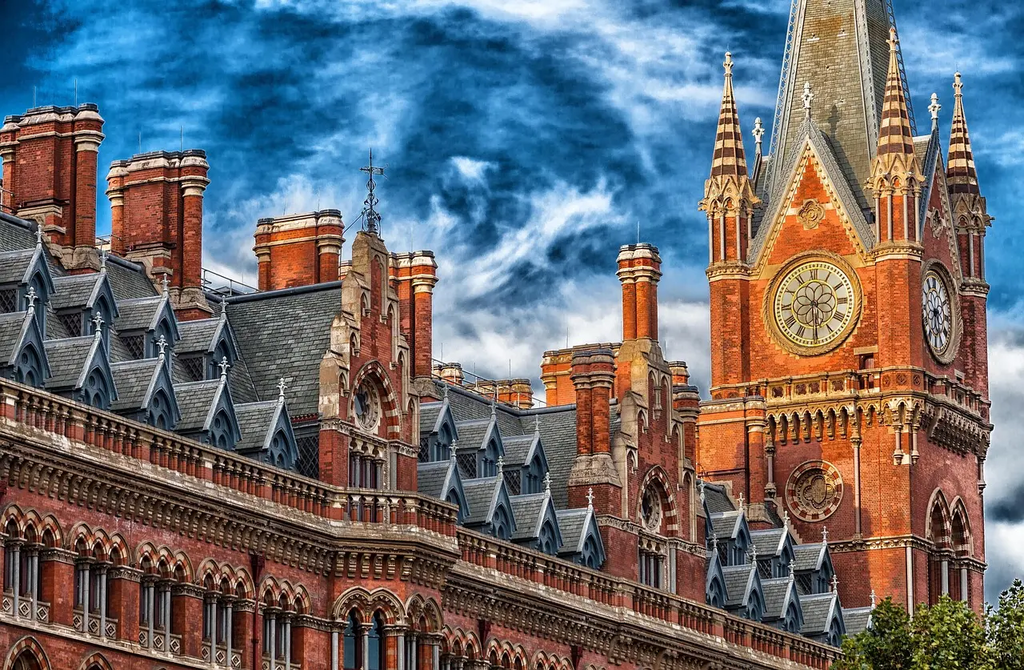
Gothic Revival and Victorian architecture refer to styles popular in the 19th century, characterized by ornate detailing, pointed arches, steep gables, and decorative elements. Gothic Revival draws inspiration from medieval Gothic structures, emphasizing verticality and intricate tracery. Victorian architecture, encompassing various styles from Queen Victoria’s reign, often features asymmetrical facades, elaborate woodwork, and vibrant colors. Both styles convey grandeur, romanticism, and a fascination with historical aesthetics in building design.
Gothic Revival and Victorian Architecture
Gothic Revival and Victorian architecture refer to styles popular in the 19th century, characterized by ornate detailing, pointed arches, steep gables, and decorative elements. Gothic Revival draws inspiration from medieval Gothic structures, emphasizing verticality and intricate tracery. Victorian architecture, encompassing various styles from Queen Victoria’s reign, often features asymmetrical facades, elaborate woodwork, and vibrant colors. Both styles convey grandeur, romanticism, and a fascination with historical aesthetics in building design.
💡 Key Takeaways
- Identify Gothic Revival features (pointed arches, tracery, vertical emphasis) and their Victorian adaptations.
- Explore Victorian sub-styles (Gothic Revival, Italianate, Queen Anne) and their ornate detailing.
- Understand the historical context and why these styles became popular in 19th‑century architecture.
- Learn how new materials and industrial techniques (cast iron, steel, mass-produced ornament) shaped Victorian design.
❓ Frequently Asked Questions
What is Gothic Revival architecture?
An 18th– to 19th-century movement that revived medieval Gothic elements—pointed arches, ribbed vaults, tracery, and tall towers—emphasizing verticality and ornate detailing.
What are common features of Victorian architecture?
Eclectic and ornate styles from roughly 1837–1901, with asymmetry, decorative trim, bay windows, varied materials (brick, stone, timber), and prominent porches or towers.
How does Gothic Revival relate to Victorian architecture?
Gothic Revival is a subset of Victorian-era architecture that focuses on medieval Gothic aesthetics, while Victorian also includes styles like Italianate, Second Empire, and Queen Anne.
When did these styles flourish?
Gothic Revival gained momentum in the late 18th to 19th centuries, peaking in the 19th century; Victorian architecture spans roughly 1837–1901 during Queen Victoria's reign.