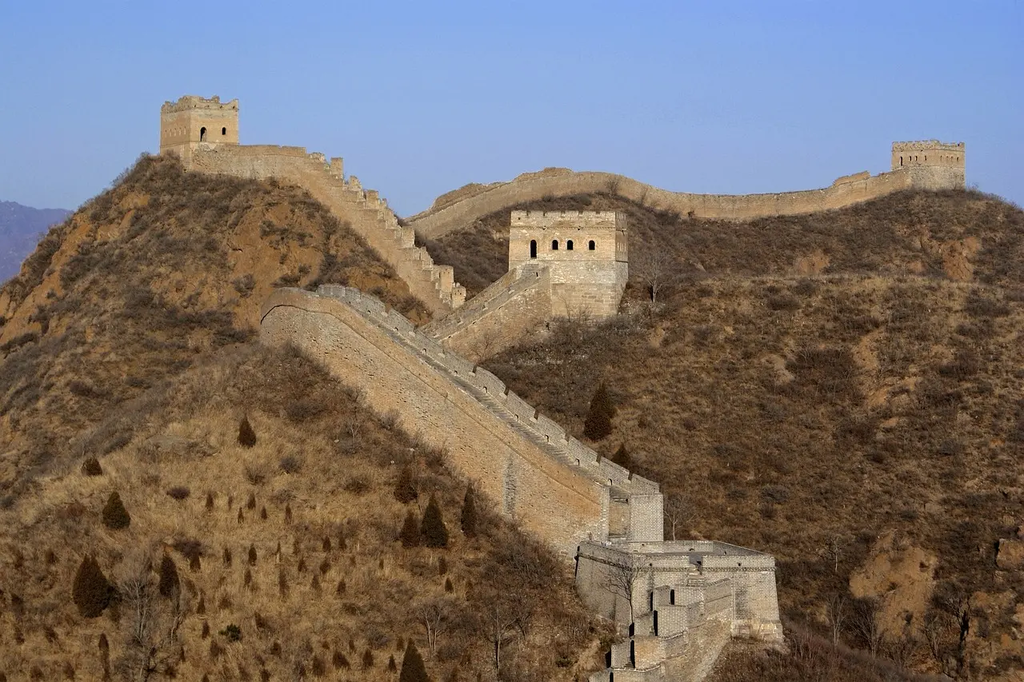
The Great Wall of China is an ancient series of fortifications stretching over 13,000 miles across northern China. Built primarily between the 7th century BC and the 17th century AD, it was constructed to protect Chinese states from invasions. Recognized as one of the world’s most iconic wonders and landmarks, the wall showcases remarkable engineering and historical significance, drawing millions of visitors each year for its breathtaking views and cultural heritage.
Great Wall of China+50
The Great Wall of China is an ancient series of fortifications stretching over 13,000 miles across northern China. Built primarily between the 7th century BC and the 17th century AD, it was constructed to protect Chinese states from invasions. Recognized as one of the world’s most iconic wonders and landmarks, the wall showcases remarkable engineering and historical significance, drawing millions of visitors each year for its breathtaking views and cultural heritage.
💡 Key Takeaways
- Understand why the Great Wall was built and its historical defensive role.
- Identify major sections and features like watchtowers and ramparts, and the typical building materials used.
- Learn about the wall’s geographic extent across northern China and its impact on travel and defense.
- Explore common myths vs. facts and current preservation efforts and challenges.
❓ Frequently Asked Questions
What is the Great Wall of China?
A vast network of fortifications built over centuries in northern China to defend against invasions. It is not a single continuous wall; the best-preserved sections date to the Ming Dynasty.
Why and when was it built?
Fortifications were constructed by several dynasties, with major work during the Ming Dynasty (14th–17th centuries) to guard northern borders and protect trade routes and communications.
How long is it and where does it run?
Total length, including all branches, exceeds 20,000 km; Ming-era walls are about 8,850 km long. It runs across northern China, including areas near Beijing and several provinces.
Is the Great Wall visible from space?
No—the wall is not visible to the naked eye from typical Earth orbits. This is a common myth; visibility depends on conditions and viewpoint.