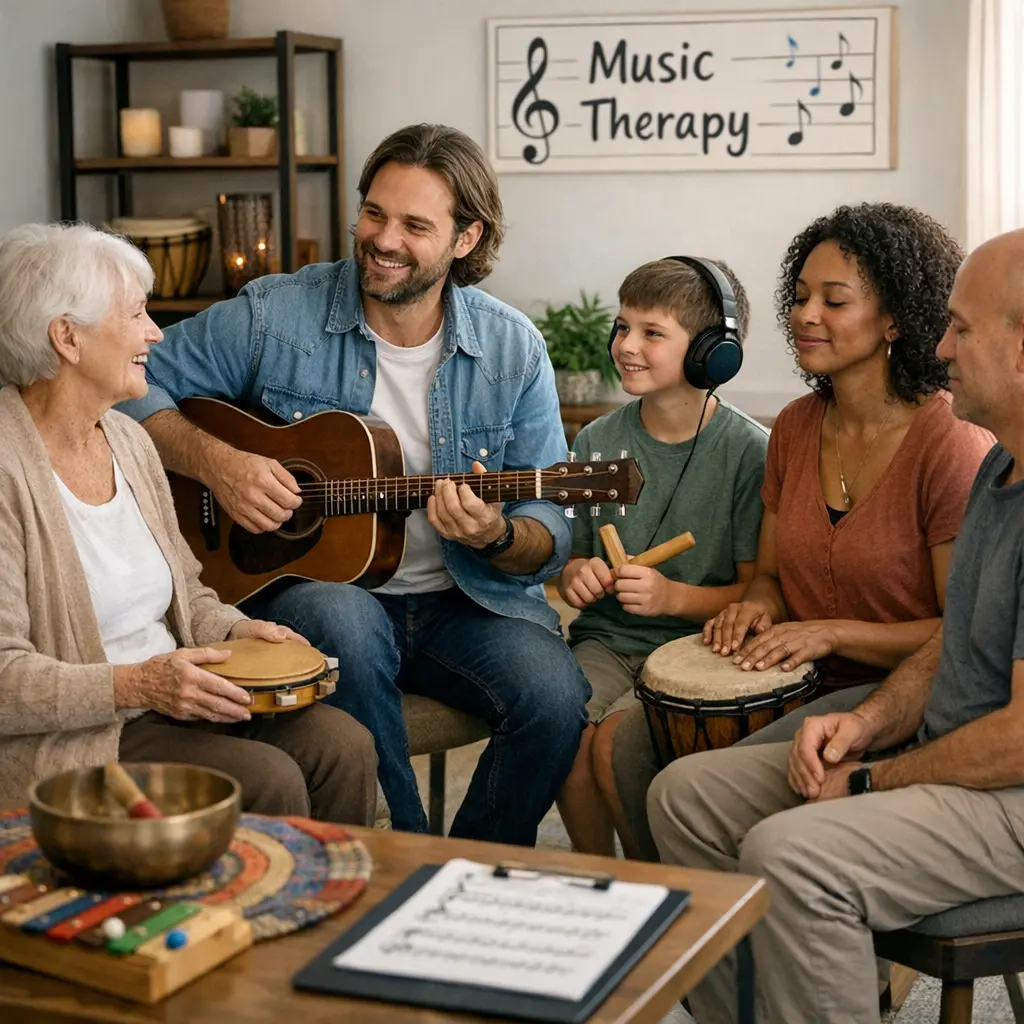
Healing through music therapy involves using music’s rhythms, melodies, and harmonies to promote emotional, psychological, and even physical well-being. Trained therapists guide individuals or groups in listening to, creating, or moving to music, helping them express feelings, reduce stress, and improve mood. This therapeutic approach can support recovery from trauma, mental health challenges, or illness, fostering relaxation, self-awareness, and a sense of connection through the universal language of music.
Healing Through Music Therapy
Healing through music therapy involves using music’s rhythms, melodies, and harmonies to promote emotional, psychological, and even physical well-being. Trained therapists guide individuals or groups in listening to, creating, or moving to music, helping them express feelings, reduce stress, and improve mood. This therapeutic approach can support recovery from trauma, mental health challenges, or illness, fostering relaxation, self-awareness, and a sense of connection through the universal language of music.
💡 Key Takeaways
- Learn how music therapy can reduce stress, anxiety, and pain while supporting emotional well-being.
- Understand how rhythm, tempo, and melody influence mood and physiological responses like heart rate and breathing.
- Explore different music therapy approaches (active making music vs. receptive listening) and common settings for therapy.
- Create a simple, personalized music-based coping plan to use in daily life.
❓ Frequently Asked Questions
What is music therapy?
Music therapy is the use of musical experiences led by trained therapists to help achieve physical, emotional, cognitive, or social goals.
How can music therapy support healing?
It can reduce anxiety and pain, improve mood, and enhance physical or cognitive skills through targeted musical activities.
Who can benefit from music therapy?
People of all ages and abilities, including those with illness, disability, or mental health needs, can benefit.
Do I need a licensed music therapist to participate?
Formal therapy is usually provided by a credentialed music therapist, though some programs use supervised facilitators.
What activities are common in music therapy?
Singing, instrument play, rhythm exercises, songwriting, improvisation, and guided listening tailored to individual goals.