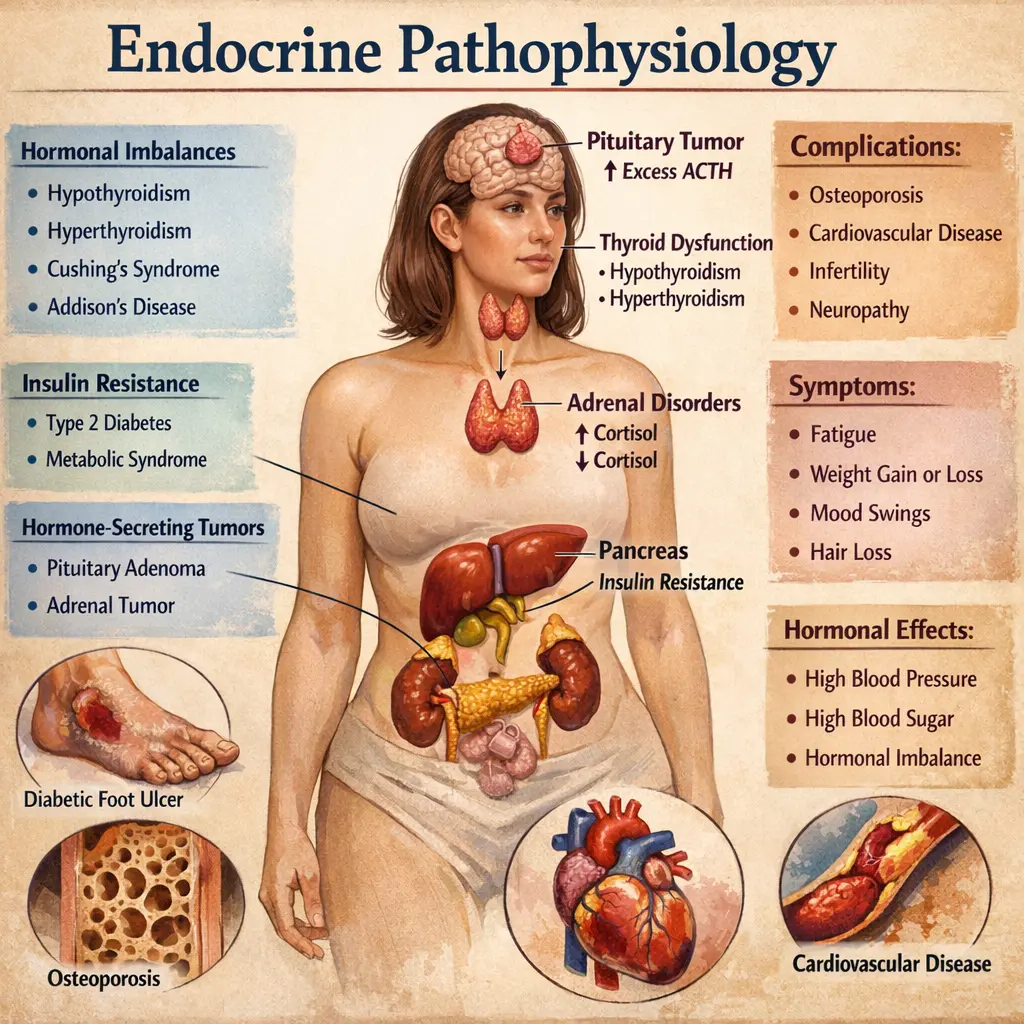
Heart function refers to the heart’s role as a muscular pump that circulates blood throughout the body. Blood flow begins when oxygen-poor blood enters the right side of the heart, is pumped to the lungs for oxygenation, and returns to the left side. The left side then pumps oxygen-rich blood to the rest of the body, delivering nutrients and removing waste, ensuring all organs and tissues receive the oxygen they need.
Heart Function and Blood Flow
Heart function refers to the heart’s role as a muscular pump that circulates blood throughout the body. Blood flow begins when oxygen-poor blood enters the right side of the heart, is pumped to the lungs for oxygenation, and returns to the left side. The left side then pumps oxygen-rich blood to the rest of the body, delivering nutrients and removing waste, ensuring all organs and tissues receive the oxygen they need.
💡 Key Takeaways
- Understand the cardiac cycle (systole and diastole) and how heart valves ensure one-way blood flow.
- Trace blood through the heart and lungs: right atrium → right ventricle → lungs → left atrium → left ventricle, and explain the pulmonary vs systemic circuits.
- Describe cardiac output as heart rate × stroke volume and how the autonomic nervous system modulates them.
- Explain how blood flow relates to blood pressure and tissue perfusion, including factors like vascular resistance and vessel tone.
❓ Frequently Asked Questions
What is the heart's primary function?
To pump blood through the pulmonary and systemic circuits, delivering blood to the lungs for oxygenation and to the rest of the body.
What are the four chambers of the heart and their basic roles?
Right atrium collects deoxygenated blood from the body; right ventricle pumps it to the lungs. Left atrium collects oxygenated blood from the lungs; left ventricle pumps it to the body.
How does blood flow through the heart?
Right atrium → tricuspid valve → right ventricle → pulmonary valve → pulmonary artery → lungs → pulmonary veins → left atrium → mitral valve → left ventricle → aortic valve → aorta → rest of the body.
What is the cardiac cycle and the roles of systole and diastole?
The cardiac cycle is the heart’s sequence of contraction and relaxation. Systole contracts to pump blood; diastole relaxes to fill the chambers with blood.